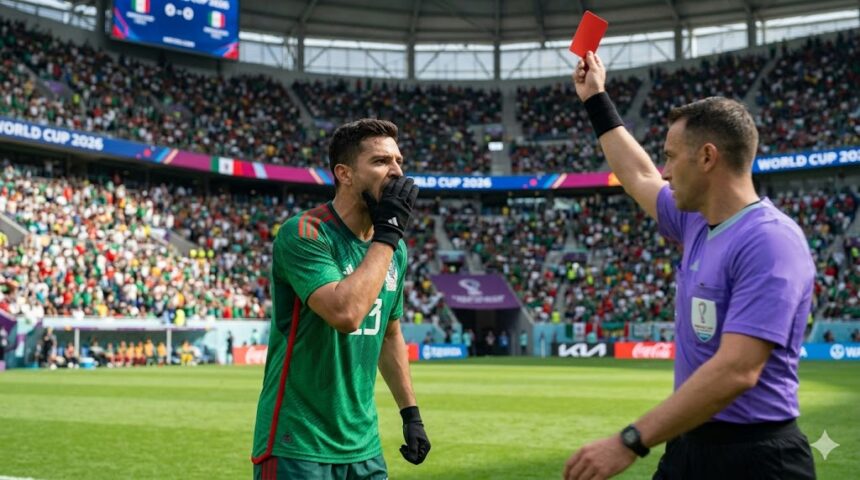
The mystery behind the hand over the mouth is over. That classic image of a forward whispering “everything” to a center back without cameras reading their lips is coming to an end. For the 2026 World Cup, FIFA has decided that transparency starts with the tongue—and will be punished with a red card.
The new directive is clear: Any player who deliberately covers their mouth to hurl insults, racist expressions, or derogatory terms at an opponent or referee will be ejected immediately. There will be no warnings, no courtesy yellow cards; it will be a direct path to the showers.

What Is FIFA Really After With This Measure?
The short answer is: Image and Control. In the era of AI lip-reading and social media, FIFA wants to eradicate the sense of impunity. If you can’t say it with your face uncovered, you shouldn’t say it on a professional soccer field.
The End of the “Law of the Jungle” on the Pitch
For decades, covering one’s mouth was the perfect shield for the most aggressive trash talk. Elite players have admitted to using this technique to mentally destabilize opponents with personal insults that, otherwise, would be sanctioned by the Ethics Committee.
The key to the regulatory change:
- Audio Detection: Ambient microphones and officiating systems are now calibrated to pick up nearby frequencies even with physical obstruction.
- Presumption of Guilt: If a player covers their mouth during a heated confrontation, the referee will have the authority to interpret the gesture as an intent to conceal a serious infraction.
- VAR Usage: Video review can intervene if the act of covering the mouth precedes a violent reaction from an opponent, analyzing the context of the verbal aggression.
Critical Note: Is this censorship or sportsmanship? For many purists, soccer is losing its “cunning.” But let’s be honest: Racism and homophobia have hidden behind a gloved hand for too long.
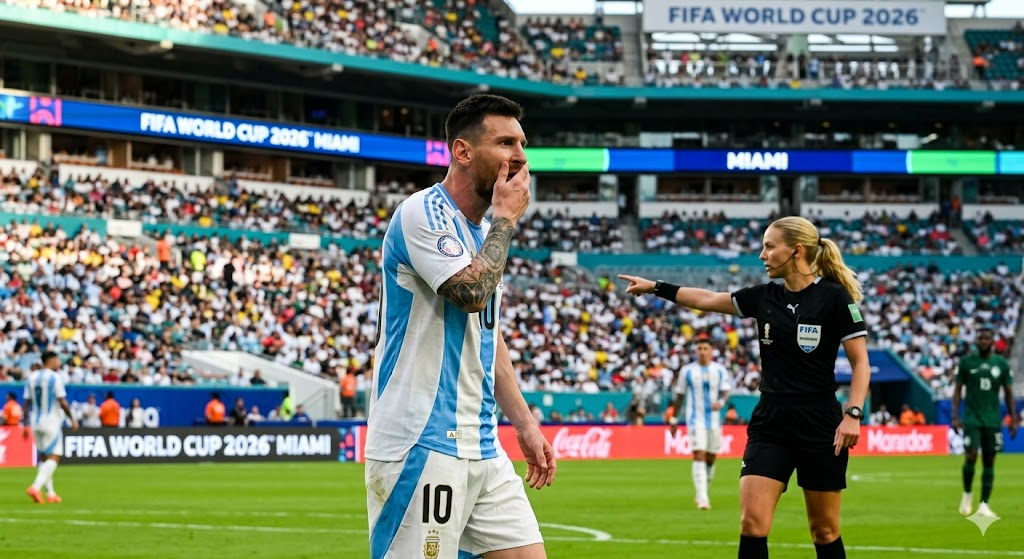
Table: The New Disciplinary Code vs. the Traditional One
| Action | Previous Rule | New 2026 World Cup Rule |
| Visible Insult | Red Card | Red Card + Enhanced Sanction |
| Covering Mouth to Insult | Not sanctionable (hard to prove) | Immediate Ejection |
| Whispering to an Opponent | Regulatory gray area | Under suspicion / Possible yellow card |
| Protesting with Covered Mouth | Verbal warning | Automatic yellow card |
How Will This Affect Hispanic Teams?
Our teams (Mexico, Argentina, Spain, Colombia, among others) are known for playing soccer with volcanic intensity. Dialogue—and sometimes conflict—is part of the DNA of Latin soccer.

- Player Reeducation: Coaching staffs will need to work on self-control. A heated moment ending with a hand over the mouth could leave a team with 10 players in a crucial knockout match.
- The Psychological Factor: Experienced defenders know that rattling a forward is half a goal. Now, they’ll have to find more creative (and visible) ways to do it without breaking FIFA’s “etiquette” rules.
- The VAR Eye: The 2026 World Cup in the U.S., Canada, and Mexico is expected to feature the largest technical deployment in history. There will be cameras dedicated exclusively to tracking the faces of each team’s leaders.
The Challenges of Implementation
Here’s the interesting part: How to distinguish between a player covering their mouth to give tactical instructions and one who is insulting?
- Tactical Instructions: The gesture will be allowed as long as there is no direct physical or visual confrontation with an opponent.
- The “Conflict Context”: The red card will only come into play in dispute situations. If the referee detects physical aggression combined with the gesture of concealing speech, the ruling will be immediate.
Image: ElHispanoParaTodos/PRESS