Hurricane Preparedness 2026: Do you live in Palm Beach or the Treasure Coast? Forget basic advice. Discover the ultimate guide to protect your family and home this season.
Living in our tropical paradise comes at a price. Here in South Florida, that toll is strictly collected between June 1 and November 30. That’s why preparation for the 2026 Hurricane Season is so important.

We all know the scene. A cone of uncertainty appears on TV, and within hours, Publix or Walmart shelves are stripped bare. Panic sets in, gas stations collapse, and bottled water becomes gold.
Let’s be honest: waiting for the NOAA to issue an official alert to start preparing is playing Russian roulette with your family’s safety and your assets.
If you live in Palm Beach County or anywhere on the Treasure Coast (Martin, St. Lucie, Indian River), the rules of the game change. We’re not Miami, but we’re not exempt from the direct hit of a major storm either, and proper, early preparation makes a huge difference when facing the season.
What do you need to know right now, no fluff?

Effective preparation isn’t about buying bread and milk at the last minute. Your absolute priority before the 2026 hurricane season begins is:
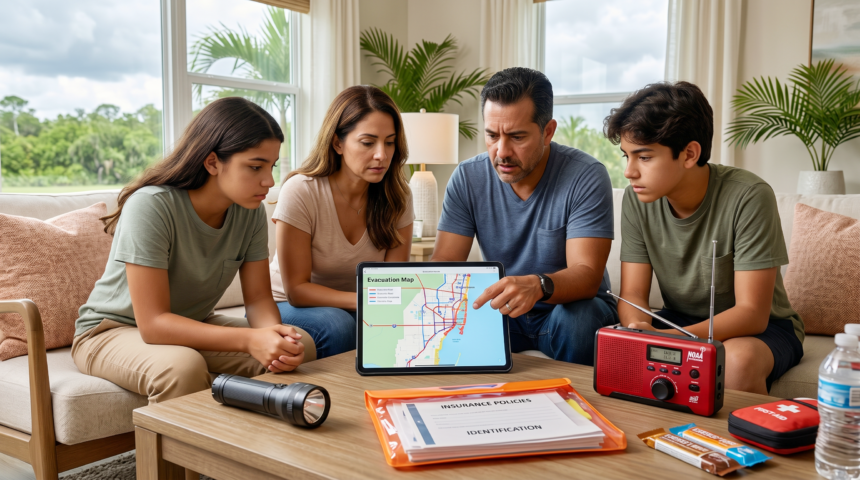
1) Identify your exact evacuation zone (A, B, C, D, or E),
2) Secure your vital documents and insurance policies, and

3) Ensure supplies for at least 7 days of total self-sufficiency without electricity or potable water.
Let’s get to the point. Here’s how you should really prepare this year, step by step, without leaving any loose ends.
Understanding the Risk: Beyond the Wind
The vast majority of Hispanics who arrive in South Florida fear hurricane-force winds. And it makes sense. However, NOAA’s statistics are cold and deadly: water is what claims the most lives, and preparation before hurricane season arrives is vital.
The Storm Surge Trap
Especially if you live near the Intracoastal Waterway in West Palm Beach or in the coastal areas of Fort Pierce and Stuart, the real danger is storm surge. That is, the wall of ocean water the hurricane pushes onto land.
- How does it affect you? If the forecast calls for a 9-foot surge and your home is 3 feet above sea level, you’ll have 6 feet of water in your living room. It’s that simple.
- Freshwater flooding: Torrential rains can flood entire communities in Port St. Lucie or Wellington, miles inland, hours after the hurricane’s eye has passed.
“The biggest mistake the average Floridian makes is thinking: ‘My house is made of concrete blocks, I’m staying.’ Your roof might hold, but if the water rises, concrete won’t save you from drowning. If they order an evacuation for water, you leave.”
The Survival Kit: From Novice to Expert Level
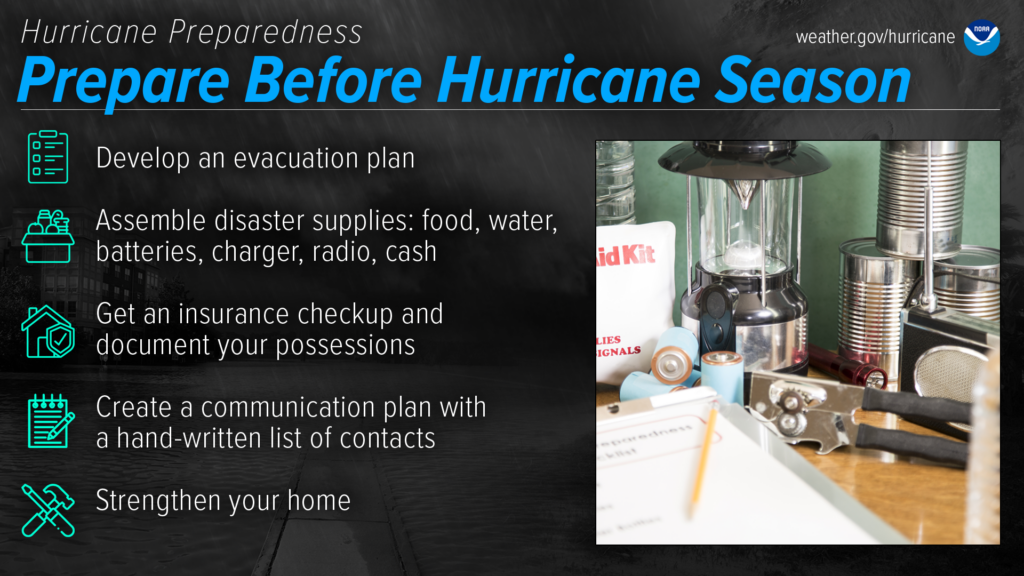
The NOAA’s official list is fine, but the reality of losing FPL power for weeks under Florida’s scorching sun demands something more robust.
Here’s a direct comparison of what people usually buy vs. what you really need.
| Item | Basic Kit (What everyone does) | Expert Kit (What will save your life) |
| Water | 1 gallon per person/day (3 days) | 1.5 gallons/person (7 days) + Portable water filters (e.g., Lifestraw). |
| Food | Generic canned goods, bread. | MREs (Meals Ready-to-Eat), butane camping stove, instant coffee. |
| Power | Flashlights and AA batteries. | Solar power bank for cell phones, USB-rechargeable fans, hand-crank NOAA radio. |
| Health | Band-Aids and rubbing alcohol. | 30-day supply of prescription meds, extreme mosquito repellent, antibiotic cream. |
| Hygiene | Toilet paper. | Baby wipes (your “daily shower”), industrial trash bags, bucket for improvised toilet. |
Three deadly mistakes when assembling your kit:
- Forgetting the manual can opener: Unbelievable but true. Hundreds of people with cans of food and no way to open them.
- Relying on ice: Ice melts in 48 hours. Don’t base your post-hurricane diet on refrigerated food.
- Ignoring pets: Your dog or cat also needs 7 days of food, extra water, and updated vaccination records in case you go to a shelter.
Evacuation: The I-95 and Turnpike Maze
The truth is evacuating in Florida is a logistical nightmare. If you wait too long, you’ll get stuck on Interstate 95 or the Florida Turnpike, turning your car into a metal trap when tropical storm-force winds arrive.
Know Your Zone (A, B, C, D, E)
Each county (Palm Beach, Martin, St. Lucie) has evacuation maps by letter. Zone A (coasts and mobile homes) is always the first to go.
- Step 1: Visit your county’s emergency management website today.
- Step 2: Enter your address and note your letter. Stick it on the fridge. Here’s the link.
- Step 3: If you live in a mobile home, ALWAYS evacuate, no matter what zone you’re in. No mobile home survives a Category 3+ storm.
Where to go? The myth of fleeing to another state
You don’t need to go to Georgia to be safe from storm surge. Often, the best shelter is just “ten miles away, not ten hours.” Look for a friend’s or relative’s home in a non-evacuation zone within your county or an adjacent inland county. Public shelters (schools) should always be your last option, as they’re uncomfortable, noisy, and offer no privacy.
Documents and Insurance: The Real Storm (After the Storm)
Here’s where things get interesting (and frustrating). The hurricane lasts 12 hours; the fight with your insurance company can last 2 years.
- The photo rule: Grab your cell phone TODAY. Walk through your house and record a narrated video detailing your belongings. Open closets, show appliances, furniture. Upload that video to the cloud (Google Drive, iCloud). If you lose everything, this video will be your only proof to the insurance adjuster.
- The hurricane deductible: Check your policy. Most insurance policies in Florida have a separate “hurricane deductible,” which is usually 2% or 5% of the property’s value. If your home is worth $400,000 and you have a 5% deductible, the first $20,000 in damages comes out of your pocket. Be aware of this financial reality.
- Waterproof folder: Store passports, Social Security cards, deeds, insurance policies, and inventory in a thick, waterproof bag (Ziploc). Take it with you if you evacuate.
Technology on Your Side
Finally, your cell phone is your best tool if you use it wisely. Download the American Red Cross and FEMA apps. Make sure Wireless Emergency Alerts (WEA) are enabled in your phone settings so it sounds like an alarm if there are tornado warnings (very common in the outer bands of hurricanes).
Don’t let complacency get the best of you. Luck favors the prepared. Take this weekend, go to the hardware store, review your insurance, and make a plan. Your family will thank you when the lights go out.
Image: NOA.GOV