If you think registering to vote or participating in a federal election in the United States is a “minor formality” or that authorities won’t notice if you’re not a citizen and cast an illegal ballot, I urge you to stop and read this case carefully. The truth is that, in the era of biometrics and digitized federal databases, the system is relentless when it detects electoral fraud.
- The identity he used for over 20 years
- He registered to vote and participated in elections
- His marriage was also tied to the fraud
- He returned to the U.S. under his real name
- 3 years in prison and deportation
- The anatomy of the crime: How does the system detect fraud?
- 1. Data cross-referencing: The end of anonymity
- 2. The judicial process: A conviction with no way back
- Table: Legal consequences of electoral fraud for foreigners
- Practical guide: How to protect yourself and comply with the law
How was he discovered, and what lessons should we learn to protect our legal status? Let’s get to the point.

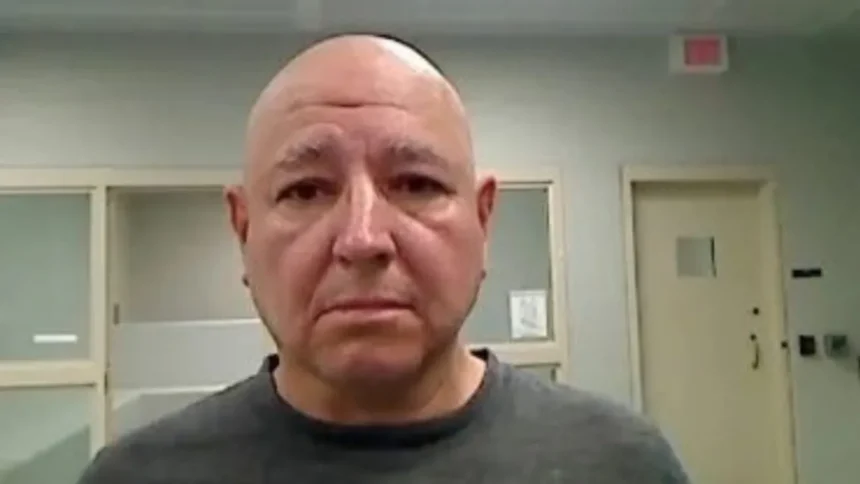
A 55-year-old Colombian citizen was sentenced to three years in federal prison in the United States after admitting that for over two decades, he used the identity of a U.S. citizen to obtain official documents, register to vote, and participate in several elections.
Carlos Felipe Jaramillo Grajales, a resident of Jacksonville, Florida, will also be deported to Colombia once he completes his sentence. The case exposed an elaborate identity theft scheme that began in 2003 and lasted until 2024.
The sentence was handed down on August 12 by federal judge Harvey E. Schlesinger. The court also issued a deportation order. Jaramillo Grajales pleaded guilty to multiple charges related to document fraud, aggravated identity theft, and making a false claim of U.S. citizenship.
The identity he used for over 20 years
According to court documents and the U.S. Attorney’s Office for the Middle District of Florida, Jaramillo Grajales began using another citizen’s personal information in March 2003. Under that person’s name, date of birth, and Social Security number, he obtained a Florida driver’s license.

The document was renewed several times, with the last renewal occurring in February 2024—more than two decades after the identity theft began.
In April 2003, just one month after obtaining the license, he applied for a U.S. passport. To support the application, he submitted a Puerto Rican birth certificate and the driver’s license, both corresponding to the identity he had assumed.
The passport was issued in May of that year. Jaramillo Grajales later renewed it in 2013 and again in 2023, keeping the stolen identity active for years.

He registered to vote and participated in elections
The fraud also extended to the electoral system. In December 2010, the Colombian man submitted a voter registration application in Florida and declared he was a U.S. citizen born in Puerto Rico.
The registration was approved. From then on, he voted in several elections, including the one held on November 3, 2020, in Duval County.
This way, the false identity not only allowed him to obtain government documents but also to present himself to election authorities as a U.S. citizen.
His marriage was also tied to the fraud
The investigation also revealed an immigration dimension. The woman who later became Jaramillo Grajales’ wife entered the U.S. in September 2003 on a tourist visa.
After marrying him, she applied for permanent residency and later U.S. citizenship under the premise that she was married to a U.S. citizen. The applications were approved, and she naturalized in August 2017.
The couple divorced in January 2020. However, years later, they remarried, and the relationship took on new significance in the federal investigation.
He returned to the U.S. under his real name
In May 2024, Jaramillo Grajales traveled to Colombia using the false identity. A month later, his then ex-wife traveled to the same country and filed a K-1 visa application for him, this time using his real name.
The visa was approved, and the Colombian man returned to the U.S. under his real identity. In June 2025, the couple remarried, and Jaramillo Grajales applied for permanent residency as the spouse of a U.S. citizen.
The maneuver, however, came under federal scrutiny and led to his prosecution and subsequent conviction.
3 years in prison and deportation
After pleading guilty, Jaramillo Grajales was sentenced to three years in federal prison. Once he completes his sentence, he will be removed from the U.S. and sent to Colombia.
The investigation was conducted by Homeland Security Investigations, the U.S. Department of State’s Diplomatic Security Service, and the Office of the Inspector General of the Social Security Administration.
Federal prosecutor Gregory W. Kehoe stated that U.S. immigration laws aim to protect the nation’s borders and the integrity of government institutions. The case also highlights how a stolen identity can be used for years to navigate various official systems without raising immediate suspicion.
For authorities, the sentence marks the conclusion of an investigation involving identity documents, immigration procedures, and voter registrations. Now, after more than 20 years of using another person’s identity, the Colombian citizen will serve his sentence before facing permanent removal from the U.S.

The anatomy of the crime: How does the system detect fraud?
Many people make the grave mistake of thinking that, because there is no single, centralized national ID system in the U.S., records are disconnected. This is a falsehood that costs people their freedom.
1. Data cross-referencing: The end of anonymity
The federal government, through agencies like the Department of Homeland Security (DHS) and the Social Security Administration (SSA), conducts constant audits.
- The Social Security number trap: When using someone else’s identity, the offender creates a mixed employment and tax history. When employer data (W-2 forms) clashes with county voter registration records, an automatic red flag is triggered.
- The digital electoral footprint: Every time a person signs a ballot or registers to vote, they are signing under “penalty of perjury” that they are a U.S. citizen. Lying on that document is a separate federal crime from identity fraud.
2. The judicial process: A conviction with no way back
In this specific case, the federal prosecutor presented compelling evidence that included:
- Historical voting records showing active participation in local and federal elections.
- Falsified documents (driver’s licenses, passports) linked to the identity theft victim’s name.
- Testimonies from local election authorities confirming the falsity of the information provided at the time of registration (voter registration application).
Table: Legal consequences of electoral fraud for foreigners
To visualize the magnitude of the risk, we’ve broken down the penalties that U.S. law imposes on those who, without being citizens, participate in electoral processes.
| Type of Violation | Criminal Penalty | Immigration Consequence |
| Illegal voter registration | Fines up to $10,000 and/or up to 5 years in prison. | Permanent inadmissibility: Immediate deportation and entry ban. |
| Illegal voting (Fraud) | Federal prison (sentences vary by state). | Mandatory removal: No right to pardon or immigration appeal. |
| Use of false identity | Charges for aggravated identity theft (minimum 2 additional years). | Permanent bar: Inability to obtain residency or citizenship in the future. |
Practical guide: How to protect yourself and comply with the law
If you are a legal resident (Green Card holder) or an immigrant with pending status, the advice is unanimous: do not go near a ballot box. Here’s how to stay out of serious trouble.
1. Only citizens vote: The right to vote is exclusive.
In the United States, the right to vote in federal elections (President, Senate, House of Representatives) is exclusively for U.S. citizens. No matter how long you’ve been paying taxes, own property, or have children born here, if you are not a citizen, you have no right to register or vote.
2. What to do when renewing your license: Beware of the ‘Motor Voter Act.’
In many states, when renewing your driver’s license, the Department of Motor Vehicles (DMV) will automatically ask if you want to register to vote. Mark NO firmly. If you accidentally mark “yes,” notify your county’s election office immediately to cancel that registration before it is processed, as simply being on the voter rolls is evidence of perjury before immigration authorities.
3. Consult an immigration attorney: Professional advice.
If you suspect that, due to a mistake or lack of knowledge, you appeared on voter registration records in the past, do not try to resolve it alone. Consult a certified immigration attorney before applying for naturalization or any immigration benefit. They can file a formal clarification with USCIS to minimize the damage caused by that administrative error before it turns into a fraud accusation.
The truth is that participating in elections without citizenship is the fastest way to destroy your future in the United States. For our Hispanic community, the lesson is clear: respecting the laws of the country that welcomes us is our greatest guarantee of staying and succeeding.