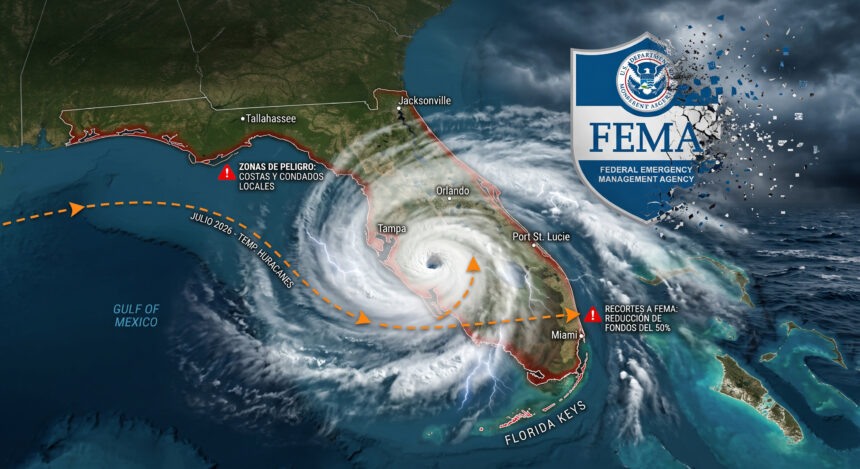
A new report from the Florida Policy Institute warns that proposed FEMA cuts by the Trump administration would reduce disaster recovery funding for local governments in Florida by up to 50% during peak hurricane season.
By El Hispano Para Todos Staff

August 19, 2026
Amid an active hurricane season, Florida communities face a new threat—not from the weather, but from Washington. A recent analysis by the Florida Policy Institute (FPI) warns that proposals from the Donald Trump administration to restructure the Federal Emergency Management Agency (FEMA) could drastically reduce disaster recovery funding, shifting billions of dollars in costs directly to state and local governments.
The FEMA Review Board, established by the current administration, has recommended reducing the federal reimbursement rate from 75% to 50%. However, the FPI notes that the impact on Florida would be even more devastating in practice. In recent hurricanes like Michael, Ian, Helene, and Milton, FEMA reimbursed Florida for 100% of costs. Lowering this cap to 50% means cutting in half the vital resources counties use to remove debris, restore power lines, and operate emergency shelters.
The direct danger to local communities
The report highlights the severe risks this policy poses to Florida’s infrastructure and economy. During 2023 and 2024, climate disasters caused approximately $38.85 billion in documented damages in the “Sunshine State,” with federal programs covering over $16 billion in recovery costs.

If the federal government withdraws, counties with tight budgets will be the first to collapse under the weight of debt. For smaller jurisdictions, like Bay or Monroe counties, fiscal reserves would vanish after the first major hurricane.
A “one-two punch” economic blow
The FEMA cuts do not come in isolation. The Florida Policy Institute’s analysis describes the situation as a potential “one-two punch” because in November 2026, Floridians will vote on Amendment 3, which would reduce property tax revenue. These are the very taxes counties and cities use to fund their half of disaster and emergency response.
With federal FEMA aid and local tax revenue shrinking simultaneously, governments would be forced to cut essential services—such as hospitals and libraries—or shift risks directly to households, worsening Florida’s current housing affordability crisis and already skyrocketing property insurance costs.

For Florida residents, the message from experts is clear: the state could be left virtually on its own to rebuild after the next major storm.