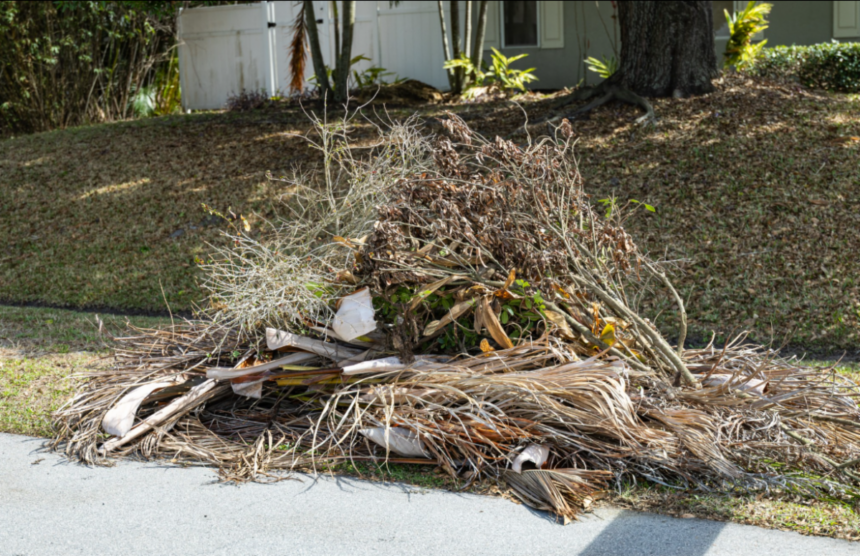
The City of Port St. Lucie is increasing the yard waste collection limit to 6 cubic yards at no extra cost. Learn the dates, rules, and how to avoid fines.
- Why This Massive Cleanup Is a Matter of Life or Death for Your Neighborhood
- The New Limit: What Exactly Are 6 Cubic Yards?
- Survival Guide: How to Prepare Your Yard Waste (And Get It Picked Up)
- 1. The Art of Bagging (Leaves and Small Debris)
- 2. Strict Rules for Branches and Logs
- 3. Zero Contamination: Keep the Pile Pure
- 4. Strategic Placement (The 3-Foot Rule)
- What If Your Yard Looks Like a Jungle and 6 Yards Aren’t Enough?
Florida’s weather just reminded us that winter here, though short, can be brutal for our gardens. If you’ve stepped into your yard lately, you’ve likely found a bleak landscape: wilted leaves, palm fronds scorched brown by the cold, and fallen branches everywhere.

You’re not alone. The entire city is dealing with this botanical disaster. But leaving that debris piled on the curb isn’t just an eyesore—it’s a ticking time bomb for our drainage system.
To address this, Port St. Lucie’s Solid Waste Bureau has announced a temporary increase in the weekly yard waste collection limit: from 4 to 6 cubic yards per household, from March 30 to April 24, 2026. This 50% increase comes at no additional cost to residents.
Let’s get to the point. The city is giving you a month-long grace period to clean up the mess left by the cold. But if you don’t follow the exact packaging and placement rules, the trucks will pass you by, leaving the waste in front of your home (and possibly drawing complaints from the homeowners’ association or code enforcement). Here’s how to take advantage of this benefit without making costly mistakes.
Why This Massive Cleanup Is a Matter of Life or Death for Your Neighborhood
You might think: “What’s the big deal if I leave a few dry branches on the lawn for a couple more weeks?” It matters—a lot.

Port St. Lucie relies on a delicate system of canals and storm drains to prevent flooding when spring storms hit. Loose leaves and dead branches are public enemy number one for stormwater drains. When it rains, this debris gets washed into the sewers, creating natural concrete blockages.
(Ever seen your street turn into a river after a 20-minute storm? Exactly. It’s usually because of poorly managed yard waste.)
Plus, cleaning up now is the first line of defense for storm preparedness. A dead branch today could become a projectile against your window tomorrow. The city needs you to do your part, and that’s why they’re making the process easier.

The New Limit: What Exactly Are 6 Cubic Yards?
Unless you’re a contractor or work in construction, the term “cubic yard” probably doesn’t mean much to you. It’s easy to miscalculate and end up with a mountain of branches the city will refuse to pick up.
For a quick visual: 6 cubic yards are roughly the size of three sets of washer and dryer units placed side by side.
That’s your maximum weekly limit during the special window from March 30 to April 24.
Quick Waste Service Comparison
| Service Feature | Standard Rule (Rest of the Year) | Temporary Rule (Mar 30 – Apr 24, 2026) |
| Volume Limit | 4 cubic yards | 6 cubic yards |
| Additional Cost | None (included in taxes) | None (Free) |
| Frequency | Weekly | Weekly |
| Packaging Rules | Mandatory | Mandatory (No exceptions) |
The clear warning: Just because the allowed volume has increased doesn’t mean the packaging rules have been relaxed. If you leave a pile of loose branches on the street, they’ll stay there.
Survival Guide: How to Prepare Your Yard Waste (And Get It Picked Up)
The city has strict guidelines. Sanitation workers operate heavy machinery and have massive routes; they don’t have time (or the obligation) to pick up loose leaves by hand. If you want your yard cleaned up on the first try, follow this protocol to the letter:
1. The Art of Bagging (Leaves and Small Debris)
All leaves, pine needles, grass clippings, and small plant debris must be in bags or rigid containers.
- Weight limit: Each bag or trash bin used for this cannot weigh more than 50 pounds.
- Pro tip: If the bag is so heavy that it’s hard for you to lift, it’ll be hard for the worker too, and they’ll likely leave it. Use sturdy bags to prevent tearing and spilling contents onto the street.
2. Strict Rules for Branches and Logs
This is where most homeowners make mistakes. You can’t just drag a fallen tree to the curb.
- Thickness matters: Branches must be less than 6 inches in diameter. If they’re thicker, you’ll need a private service.
- The 4-foot rule: No branch (cut or bundled) can be longer than 4 feet. The only exception to this rule is palm fronds.
- Weight: Like bags, piles or individual branches cannot exceed 50 pounds.
- Tactical stacking: Place piles neatly. Don’t create a giant bird’s nest. Stack them all in the same direction so the truck’s mechanical claw can pick them up in one motion.
3. Zero Contamination: Keep the Pile Pure
Yard waste is processed and often turned into mulch. Therefore, it cannot contain “contaminants.”
- No mixing allowed: NEVER mix yard clippings with dirt, rocks, household trash, plastic (outside of trash bags), treated wood, or metals. If the truck’s inspector sees a piece of wooden fence mixed with your branches, they’ll reject the entire pile.
4. Strategic Placement (The 3-Foot Rule)
Curb placement is critical to avoid property damage and ensure collection.
- Place piles on the curb in front of your own home. Don’t put them on the empty lot next door or your neighbor’s property.
- Safety distance: Keep the pile at least 3 feet away from mailboxes, storm drains, fire hydrants, utility poles, and overhead power lines. The truck’s crane needs space to operate without ripping your mailbox out by the roots.
What If Your Yard Looks Like a Jungle and 6 Yards Aren’t Enough?
Sometimes, storm damage is just too extensive, or maybe you decided to cut down several large bushes while the season was right. If you know ahead of time that your debris pile will far exceed 6 cubic yards (i.e., bigger than three washers and dryers), you have options.
Don’t try to hide the excess or sneak it out little by little over weeks (the grass under the pile will die).
Residents can request an estimate for additional yard waste removal. The city offers this service at a highly subsidized rate of $18.50 per cubic yard.
How to request extra pickup?
It’s simple. Just call the city’s direct line, 1PSL at 772-871-1775 and press option 5. A representative will give you an estimate and schedule the special collection so you don’t have to deal with private contractors who often charge three times as much for the same service.
The city is putting the tools on the table to restore the beauty and safety of our Port St. Lucie neighborhoods after this unusual cold snap. The window is short—it ends on April 24. Take advantage of this month, prune what’s dead, bag it properly, and prepare your home for the warm months ahead.
For more technical details on waste preparation, visit the official portal: www.cityofpsl.com/solidwaste.