The Crack No One Wanted to Hear: Anatomy of a Collapse on the Court
The atmosphere in the NBA is usually electric and full of spectacle, but some silences weigh more than any ovation. It happened in the blink of an eye. The player soared, chasing that moment of glory that only a dunk can offer, but physics and the human body decided to betray him in midair.
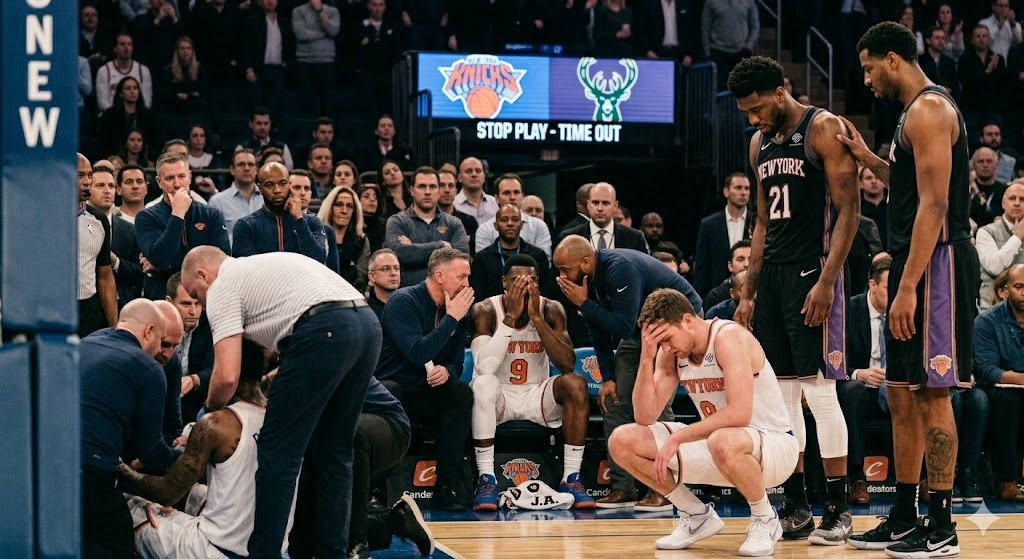
It wasn’t a collision with an opponent. It wasn’t a flagrant foul. It was simply the catastrophic failure of a limb that said “enough” under the pressure of superhuman power. The faces of his teammates—many covering their eyes or turning away with visible nausea—said it all: we were witnessing one of the most graphic and devastating injuries in modern basketball history.

Quick Response (Snippet Bait): The injury was caused by an open fracture of the tibia and fibula after an asymmetrical fall during a dunk attempt. These types of failures usually occur due to a combination of prior bone stress, accumulated fatigue, and a landing angle that the bone couldn’t withstand, sending shockwaves through the entire leg structure.
What Really Happened? The Minute-by-Minute Horror
To understand the magnitude of the event, you have to look beyond the viral video. The biomechanics of jumping require perfect coordination between the quadriceps, patellar tendon, and the bone structure of the lower leg.
Takeoff vs. Landing
Many analysts agree that the damage didn’t occur upon landing, but in the final power step. When the player planted his foot to propel himself, an unnatural vibration in the calf was visible.
- Breaking Point: The bone, subjected to extreme torsional force, gave way before the player even touched the rim.
- The Fall: Without a solid base to land on, the body collapsed, worsening the initial fracture and creating an image that television cameras tried, unsuccessfully, to avoid.
Was it really just bad luck? The truth is that in high-performance sports, the line between glory and the hospital is as thin as dental floss. Sometimes, the body simply surrenders to physics.
The Psychological Impact: When the Court Becomes a Battlefield
Seeing a teammate fall like that shatters the “invincibility bubble” of NBA players. Cameras captured league stars crying on the bench.

| Player | Immediate Reaction | Post-Incident Statement |
| Teammate | Instantly knelt to pray. | “I heard the bone break; I won’t be able to sleep tonight.” |
| Rival Star | Covered his face with his jersey. | “This is bigger than basketball; we’re a family.” |
| Coach | Called a timeout and assisted medical staff. | “The locker room is devastated; the game’s outcome doesn’t matter.” |
The Importance of Mental Health After a Visual Trauma
It’s not just the injured player who suffers. League physical therapists warn that this type of incident causes secondary post-traumatic stress in players who witnessed the crack. Many admit to feeling fear when jumping in subsequent games.
Why Did His Leg “Fail”? Key Medical Factors
Though it may seem like a random accident, sports medicine suggests it rarely is. Here are three factors that may have set the stage for this disaster:

- Undiagnosed Stress Fractures: Microfractures in the tibia that don’t cause intense pain but weaken the internal structure.
- Electrolyte Imbalance: Severe dehydration can cause such violent muscle contractions that, in extreme cases, they may contribute to an avulsion fracture.
- Modern Footwear: Some experts debate whether the excessive grip of today’s sneakers on overly clean wooden surfaces prevents the foot from “sliding” slightly, transferring all rotational energy to the bone.
Critical Note: “It’s not about bad luck; it’s about a machine (the body) working at 110% of its capacity until a part breaks.”
The Long Road to Recovery: Will He Be the Same?
An injury of this magnitude requires immediate surgery with the insertion of an intramedullary titanium rod. But the real challenge isn’t the bone—it’s the fear.
- Phase 1 (0-3 months): Immobilization and infection control (critical in open fractures).
- Phase 2 (3-8 months): Recovery of lost muscle mass in the calf and soleus.
- Phase 3 (9+ months): The psychological challenge of jumping and landing on the same leg again.
The history of the NBA is full of miraculous comebacks (like Paul George), but also of careers that ended prematurely. The Hispanic community and basketball fans worldwide hold their breath, waiting for this court warrior to someday fly again.
Image: ElHispanoParaTodos/PRESS