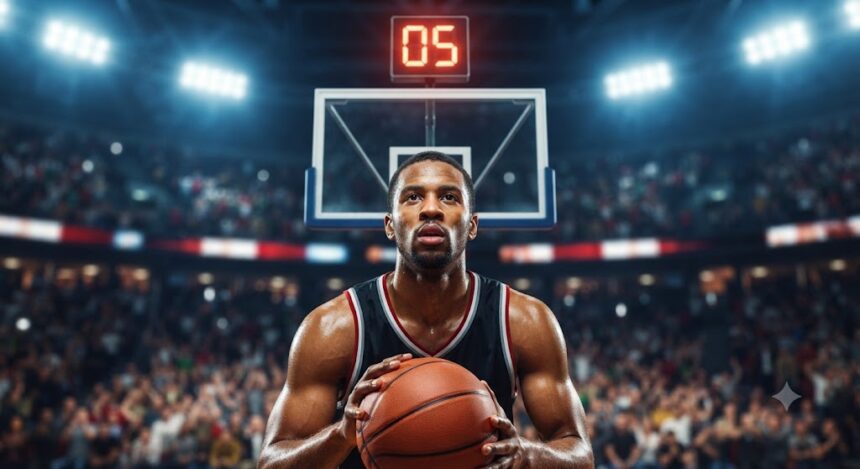
If you’re one of those who gets frustrated when the clock in the final quarter stops minute after minute for an endless parade to the free-throw line, this news isn’t just a technical adjustment—it’s a declaration of war on sluggishness. For years, we’ve watched as the outcome of thrilling games turns into a torture of tactical pauses, unnecessary gestures, and a clock that seems unwilling to move forward. The NBA, always mindful of audience metrics that show the modern fan has a finite attention span, has decided that the “time-out” must cease to exist in its purest form: the free throw.
The truth is, basketball is a game of fluidity, and any prolonged interruption is a direct attack on the sport’s aesthetics.

The Verdict from the Court (Snippet Bait): In an experiment set to begin in summer leagues and preseason tournaments, the NBA will test a new rule drastically limiting free-throw preparation time, imposing a technical penalty if a player exceeds 10 seconds of routine before taking the shot, aiming to speed up the game’s frenetic pace and avoid the “dead zones” on TV that have so heavily impacted broadcast Dwell Time.
The DNA of the Rule: Why Did the NBA Decide to Go Against the “Routine”?
This isn’t the whim of a bureaucrat sitting in a New York office. The NBA has faced an overwhelming numerical reality: games are getting longer, and the final minutes of a close game can last twice as long as the rest due to the “hack-a-player” strategy and pre-shot routines that resemble religious rituals.
Here’s the interesting part: the new rule doesn’t target the player’s technique but their “processing time.”
- Measurement Technology: The shot clock, which previously only counted the 24 seconds of an offensive possession, will now be the relentless referee of the free throw. The moment the referee hands the ball to the player, a countdown will begin on the jumbotron.
- Penalty Protocol: If the player doesn’t start their shooting motion before the clock reaches the final 3 seconds (or exceeds the limit), the ball will be ruled “dead,” and possession will pass to the opposing team. Yes, you read that right: losing the free throw for taking too long.
Is this an overreach that kills the shooter’s psychology? (Probably. Many purists will say the free throw is the only moment of calm in the chaos, but in a world where the NBA seeks to capture global audiences accustomed to channel surfing, who can defend the right to bounce the ball 15 times while TV airs commercials?)
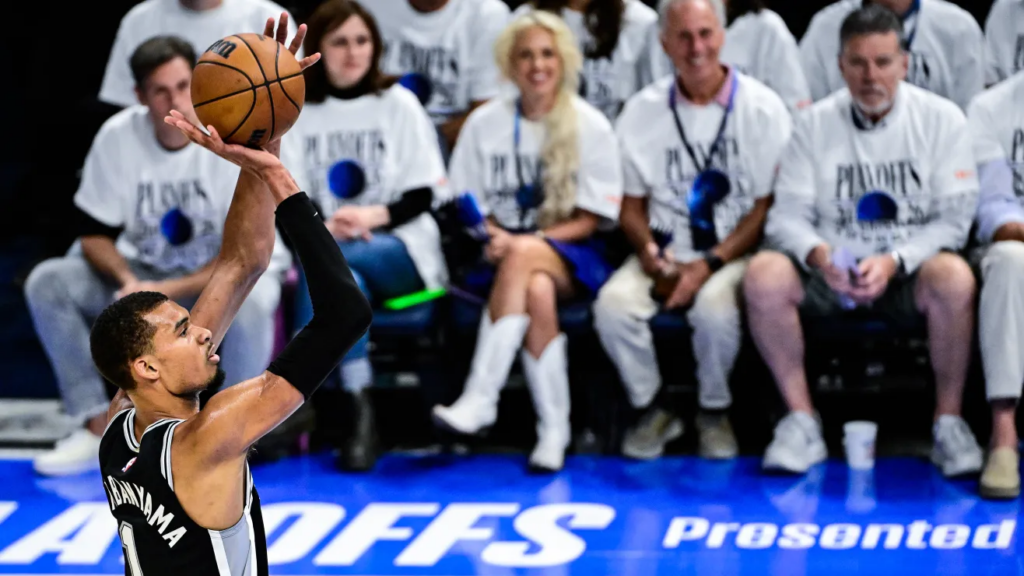
Anatomy of the Impact: Who Will Suffer Most From the Change?
Veteran players with highly elaborate routines will be the most affected. Think of those who need to dry their hands, talk to a teammate, look at the sky, and perform a series of specific movements before shooting.

- Psychological Pressure: By eliminating the “disconnection” time, the NBA forces players to shoot under an elevated heart rate. Those who can’t control their nerves in 5 seconds will miss more.
- Training Factor: Teams will need to hire specialists in rapid mental preparation. It’s no longer about teaching how to make the shot but how to execute the technical motion in an environment of “programmed urgency.”
- Star Reactions: Will we see LeBron James or Stephen Curry complaining publicly? Without a doubt. But the NBA has made it clear that entertainment is the priority. If the rule increases fluidity, players’ resistance will eventually give way to commercial pressure.
Comparative Table: The Evolution of Time at the Free-Throw Line
To understand how the behavior of basketball professionals has changed under the pressure of the clock, let’s compare the eras of the game:
| Action | Pre-2026 Era (The “ritual” style) | 2026 Experimental Era (The “flash” style) |
| Mental preparation | Unlimited (within reason). | Limited to 10 seconds total. |
| Ball bounces | Average of 8-12 bounces. | Maximum of 3 bounces suggested. |
| Interaction with referees | Extensive dialogue after the foul. | Brief ball handoff. |
| Legal consequence | Verbal warning (“hurry up”). | Loss of the shot opportunity. |
Impact on the Community: A Cleaner Sport or a More Sterile One?
This rule opens a deep debate among us basketball lovers. Many Hispanic fans, who grew up watching idols savor every second on the court, feel the NBA is “over-cleaning” the spectacle, turning it into a fast-consumption product. On the other hand, those who suffer through games that stretch into the early morning due to constant fouls see this as salvation.
“Basketball is rhythm. If you break the rhythm, you break the soul of the game. But I understand that for the fan who has to work the next day, watching a 45-minute fourth quarter is a nightmare. The rule seeks a balance, even if it sacrifices part of the ritual,” says a sports analyst covering the league for ElHispanoParaTodos.
A Fan’s Guide: How to Read the New Clock
If you’re going to watch preseason games or the Summer League, it’s vital to understand that the rulebook has changed. Don’t be surprised if you see an increase in “time violations.”

1. Identify the countdown: Observation Protocol.
Pay attention to the corners of the jumbotrons in the arena. You’ll see a secondary timer. If a player starts bouncing the ball when the timer reads 5, they’re risking losing possession. Discipline has shifted from the feet to the mind.
2. The penalty is automatic: Direct Consequences.
There’s no longer referee discretion. If time runs out, the whistle blows. Under this new rule, there are no second chances, giving the defense an unprecedented strategic advantage: using the clock as a psychological weapon against the shooter.
3. Mental game or tactical error?: The Strategy Factor.
We’ll see teams defending aggressively not to steal the ball but to force the offensive player into a foul and compel them to shoot under the pressure of the countdown. The free throw now has a new defensive dimension.
The implementation of this trial is, without a doubt, the most radical change in professional basketball mechanics in the last decade. While the world debates whether this kills the player’s “cunning,” the NBA has made its stance clear: the game of the future must be fast, fluid, and TV-perfect. We’ll keep track of this rule and how it affects the stars who define the league.
Image: ElHispanoParaTodos/PRESS