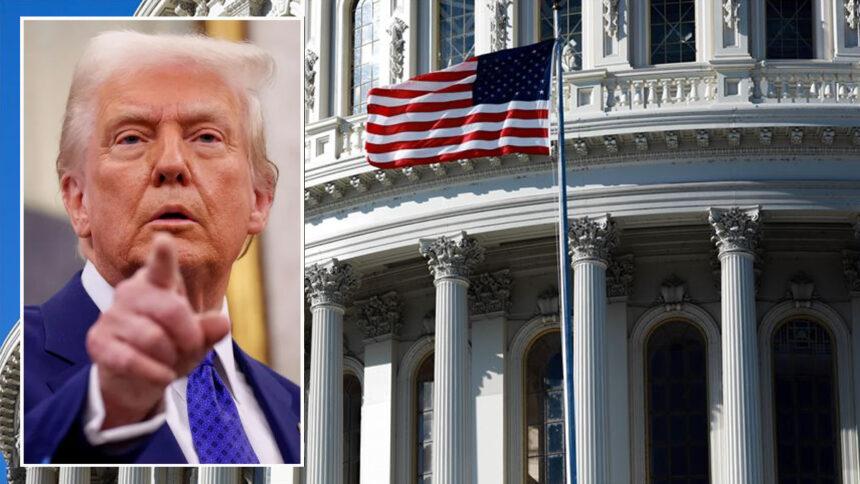
The “One Big Beautiful Bill”: Donald Trump’s Ambitious and Controversial Fiscal Plan and Spending Bill Proposal
With the decisive vote of Vice President J.D. Vance, U.S. President Donald Trump secured a major legislative victory this Tuesday with the Senate’s approval of his ambitious fiscal plan and proposed spending bill, a centerpiece of his economic agenda for a second term.
A monumental and multifaceted spending bill proposal, dubbed the “One Big Beautiful Bill” by Donald Trump himself, is at the center of an intense debate in the U.S. Congress.

Pushed by the Trump administration, the legislation seeks to redefine the nation’s fiscal priorities through a combination of large-scale tax cuts, a significant increase in defense and border security spending, and drastic reductions in social assistance programs.
The core of the bill is the permanent extension of the 2017 tax cuts, which would otherwise expire at the end of 2025. Additionally, the proposal introduces new tax exemptions, including the elimination of taxes on tips and overtime pay, measures popular among certain sectors of the working class.
The bill includes a $4.5 trillion extension of tax cuts implemented during Trump’s first term, the elimination of taxes on tips, overtime pay, and Social Security benefits, and a significant increase in defense and immigration control spending.
In exchange, it proposes deep cuts to key social programs, including Medicaid—the health insurance program for low-income individuals—the SNAP food assistance program, and the elimination of tax incentives for renewable energy adopted during the Joe Biden administration.

According to the Congressional Budget Office (CBO), the plan would add over $3 trillion to the national debt by 2034, an increase that has been described as a deficit explosion by fiscal analysts and lawmakers from both parties.
To offset the impact of these cuts on the fiscal deficit, the legislation includes substantial reductions in key social programs.
Among the most affected are Medicaid, the health insurance program for low-income individuals, and the Supplemental Nutrition Assistance Program (SNAP), commonly known as food stamps. These proposals have sparked strong opposition from Democrats and concerns among some moderate Republicans over the potential impact on millions of Americans.

In contrast, the bill allocates considerable funds to the Trump administration’s priorities in security and defense. This includes an increase in the budget for border wall construction, the hiring of more immigration agents to intensify deportations, and the development of a missile defense system called “Golden Dome.”
The Congressional Budget Office (CBO), a nonpartisan agency, has estimated that the proposal, in its current form, would significantly increase the national debt over the next decade.
The White House has refuted these projections, arguing that their calculations are based on a different baseline that assumes the extension of tax cuts and that resulting economic growth will offset the loss of revenue.
The debate over the “One Big Beautiful Bill” has highlighted the deep ideological divisions in Washington.
While supporters defend it as a formula to stimulate the economy and strengthen national security, critics denounce it as a wealth transfer to the richest at the expense of the most vulnerable.
The bill’s progress in the Senate is being closely watched, with a self-imposed deadline of July 4 set by the administration amid intense negotiations and a notable public dispute between Donald Trump and businessman Elon Musk over the legislation’s potential economic impact.