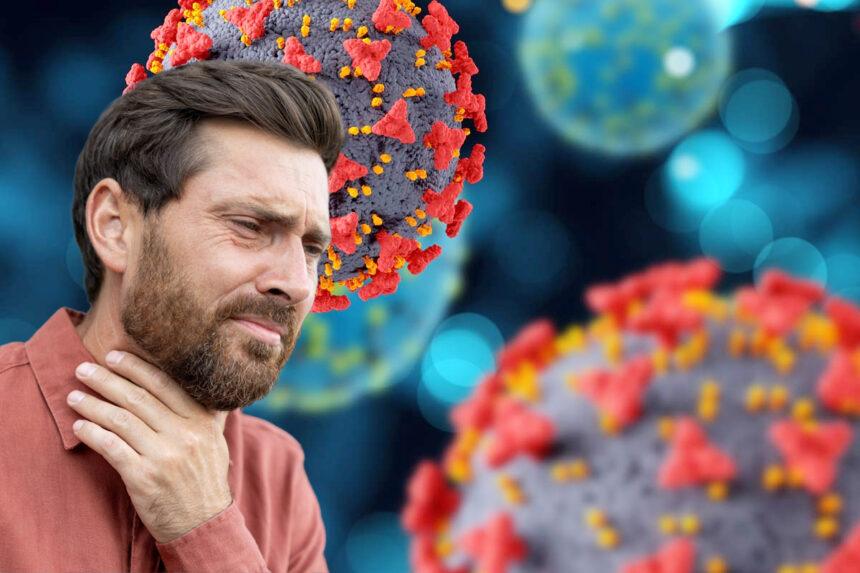
A new Omicron subvariant, named NB.1.8.1 and nicknamed “Nimbus,” is under monitoring by the World Health Organization (WHO) and other global health agencies due to its rapid spread across various regions.
While there is no evidence that this COVID variant causes more severe illness than other recent variants, it is important to know its symptoms and the measures to prevent infection, as it is already present in one-third of new cases in the U.S. and is raising concerns among experts and health authorities.

Symptoms Associated with the NB.1.8.1 Variant
The symptoms of the NB.1.8.1 variant are, in general, very similar to those of other variants in the Omicron family. Most infected individuals experience mild to moderate symptoms. The most common include:
- Sore throat: Some medical reports highlight a particularly sharp sore throat, occasionally described as a “razor blade” sensation.
- Congestion or runny nose.
- Cough.
- Fever or chills.
- Fatigue.
- Headache.
- Muscle and body aches.
As with other Omicron variants, loss of taste or smell is less common compared to earlier COVID-19 strains.
How to Protect Yourself and Prevent Infection
Prevention strategies against the NB.1.8.1 variant are the same as those proven effective throughout the pandemic. Protection relies on a multi-layered approach:
1. Vaccination:

- Stay up to date with vaccines: COVID-19 vaccines and boosters remain the most effective tool for preventing severe illness, hospitalization, and death. While breakthrough infections are possible, protection against the worst outcomes of the virus is strong.
2. Hygiene and Prevention Measures:
- Handwashing: Wash your hands frequently with soap and water for at least 20 seconds, or use an alcohol-based hand sanitizer if soap and water are not available.
- Mask use: Consider wearing a well-fitting, high-quality mask (such as N95 or KN95) in enclosed, crowded, or poorly ventilated spaces, especially during surges in transmission.
- Good ventilation: Improve air circulation in indoor spaces by opening windows and doors. Using air purifiers with HEPA filters can also help.
3. Distancing and Isolation:
- Maintain physical distance: Avoid close contact with people showing symptoms of respiratory illnesses.
- Stay home if you’re sick: If you experience symptoms consistent with COVID-19, isolate yourself to avoid infecting others and consider getting tested.
4. Stay Informed:

- Follow the recommendations of local and national public health authorities, as they may adapt guidelines based on transmission levels in your community.
In summary, while the virus continues to evolve, the tools to combat it remain the same. The combination of vaccination, hygiene, mask use in high-risk situations, and proper ventilation is the best defense to protect yourself and others from the NB.1.8.1 variant and future variants.

Generate Audio Overview