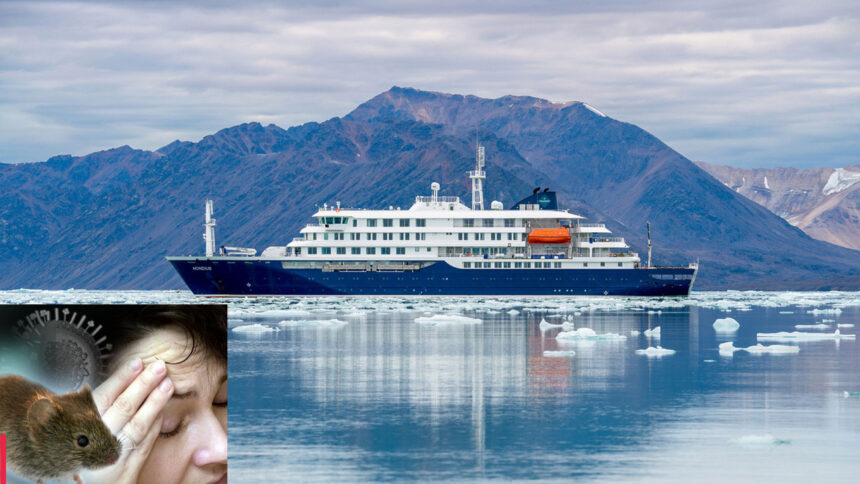
The WHO confirms a deadly hantavirus outbreak on the MV Hondius cruise ship after departing Argentina. Human-to-human transmission? Learn the symptoms and the truth.
The World Health Organization (WHO) has confirmed a severe hantavirus outbreak on the Dutch-flagged cruise ship MV Hondius, which departed from Ushuaia on April 1. With seven confirmed cases and three deaths so far, the ship is anchored off Cape Verde, blocked from entering a safe port, and facing the unprecedented suspicion that the virus (Andes strain) may be transmitting from human to human. However, epidemiologists assure that we are NOT on the brink of a new global pandemic.

Imagine this: you save for years for the trip of your dreams, a luxury Antarctic expedition departing from the end of the world (Ushuaia, Argentina). You board the ship thinking about glaciers and penguins, but within days, passengers start falling ill with brutal fevers and breathing problems. There’s no escape. You’re in the middle of the ocean, and suddenly, ports are slamming their doors shut. Sounds like a horror movie, right? Well, that’s exactly what the 147 people aboard the MV Hondius cruise ship are experiencing.
Let’s get straight to the point and analyze what’s happening, how it affects the Hispanic community, and what steps you should take if you have travel plans soon.
What Exactly Is Hantavirus, and Why Is It So Dangerous?
Most of us associate cruise ship illnesses with norovirus (that stomach bug that ruins your vacation for a couple of days). Hantavirus plays in a different league.
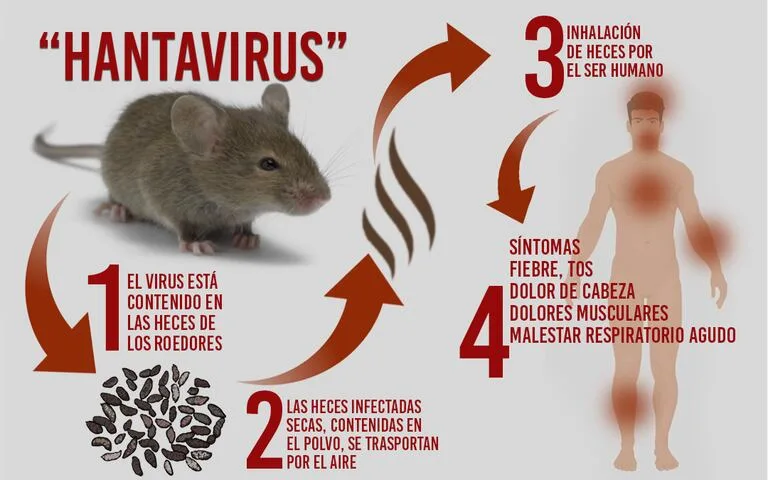
Hantavirus is a group of viruses primarily transmitted by infected rodents. Human infection typically occurs when we breathe in air contaminated with particles from the urine, saliva, or droppings of long-tailed mice.

- The norm: Hantavirus does not spread from person to person. You get sick because you cleaned a shed full of mouse nests or camped in a wilderness area infested with rodents.
- The terrifying exception (Andes Virus): There is a specific strain, endemic to the Patagonian region in Argentina and Chile, called the Andes Virus. This is the only strain in the world that has demonstrated the ability to transmit from human to human through close contact. (Yes, the very place the MV Hondius departed from.)
| Strain Type | Primary Origin | Human-to-Human Transmission | Mortality Rate |
| European/Asian Strain | Europe and Asia | None documented | 1% to 15% (Affects kidneys) |
| Sin Nombre Virus | United States | None documented | ~35% (Pulmonary Syndrome) |
| Andes Virus | Argentina / Chile | YES (Through close contact) | Up to 40% (Pulmonary Syndrome) |
The Anatomy of a Nightmare: The Journey of the MV Hondius
The MV Hondius is not your typical Caribbean cruise ship full of water slides. It’s a polar expedition vessel. It departed from the southern tip of Argentina with 147 people on board (88 passengers and 59 crew members) from 23 different nationalities.
Here’s the interesting part: the problem didn’t start at sea but on land. The WHO suspects that patient zero (or patients) contracted the virus before boarding the ship in the Patagonian region. Days later, a Dutch couple and a German citizen tragically died after developing fulminant pneumonia and acute respiratory distress syndrome.
Currently, the ship is a floating “ghost town.” Authorities in Cape Verde did not allow disembarkation as a precaution, and negotiations are underway to allow the ship to dock in the Canary Islands (Spain) under strict health protocols.

Are We Facing a New Pandemic? (Spoiler: Breathe Easy)
Every time we read “WHO,” “deadly virus,” “cruise ship,” and “human-to-human transmission” in the same sentence, our brains inevitably travel back to March 2020. It’s normal to feel panic. But the truth is that the biology of hantavirus does not lend itself to a COVID-19-style pandemic.
“The people on the ship are not a risk to the world. Hantavirus, even the Andes strain, requires prolonged, direct, and extremely close contact in confined spaces to transmit from person to person.”
For a virus to cause a pandemic, it needs to be highly contagious through the air over long distances or by asymptomatic individuals in early stages. Hantavirus does not meet these requirements. It’s inefficient at jumping between humans. It remains confined to very small, closed clusters (like a family sharing the same cabin… or a hallway on a ship).
Therefore, the short answer is no. You don’t need to rush out to buy toilet paper. But you should stay informed, especially if you travel to rural areas of South America or live in regions with a strong presence of wild rodents.
Warning Signs: Don’t Mistake It for a Common Flu
Hantavirus has a tricky incubation period. It can take anywhere from 1 to 8 weeks to show symptoms after exposure. If you’ve been in high-risk areas (hiking in Patagonia, cleaning closed sheds, etc.) and experience these symptoms, you should seek medical attention immediately and mention your travel history:
- Initial Phase (Flu-like): Sudden high fever, deep muscle aches (especially in thighs, hips, and back), extreme fatigue, dizziness, and chills.
- Gastrointestinal Phase: Nausea, vomiting, diarrhea, and abdominal pain (present in half of the cases).
- Critical Phase (4 to 10 days later): Dry cough, severe difficulty breathing, sensation of suffocation (lungs fill with fluid). This is where the situation becomes life-threatening.
Vital Safety Measures for the Hispanic Community
If you work in agriculture, property cleaning, rural real estate, or are simply a camping enthusiast, these rules are not optional. They are your lifeline:
- Extreme ventilation before entering: If you’re cleaning a shed, garage, or cabin that has been closed for a long time, do not enter immediately. Open doors and windows and let the place air out for at least 30 to 60 minutes before stepping inside.
- No dry sweeping: Never sweep or use a vacuum in a dusty area with possible mouse droppings. This stirs up virus particles into the air you’ll breathe. Spray everything with a 10% water and bleach (chlorine) mixture and clean with damp cloths.
- Mandatory protection: Use N95 masks or higher and rubber gloves when handling anything that looks like a rodent nest.
- Seal your home: Close any hole or crack in your home larger than a pencil eraser. Use steel wool and caulk.
- Camp smart: Don’t set up your tent near woodpiles, trash dumps, or areas with visible burrows. Use tents with sealed floors.
The outbreak on the MV Hondius is a tragedy that reminds us of nature’s power and how vulnerable we can be far from home. While our hearts go out to the affected families still adrift, waiting for a port to welcome them, we have a duty to protect ourselves with real information and without panic.
Image El Hispano para todos