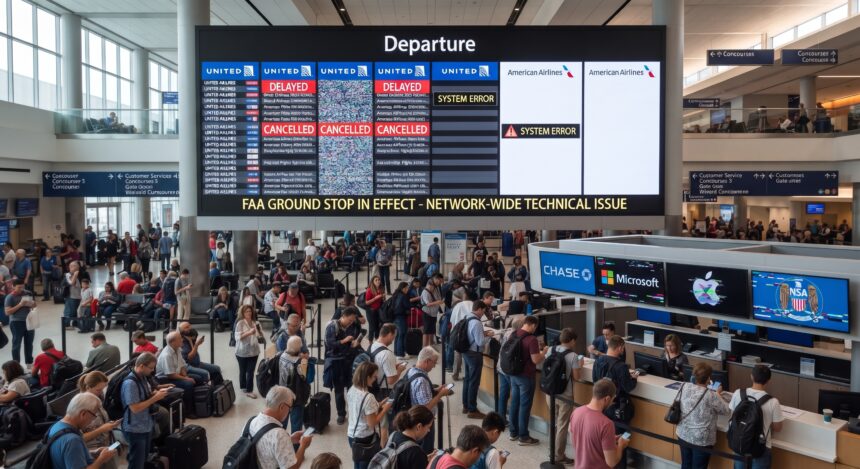
Software glitches, failed updates, and outdated equipment explain outages at Microsoft, FAA, Chase, United, Apple, and NSA. Read the full report.
- Software glitches, failed updates, and outdated equipment explain outages at Microsoft, FAA, Chase, United, Apple, and NSA. Read the full report.
- Anatomy of Six Days of Digital Chaos: Case by Case
- The Structural Backdrop: Aging Infrastructure and the Domino Effect
- Why Did Theories About AI and a «Global Blackout» Spread?
- The Real Threat to Users After the Outages
In less than a week, millions of people in the United States and around the world saw corporate emails, commercial flights, bank transfers, smartphone downloads, and even classified government communications come to a halt.

The unusual coincidence of disruptions at Microsoft, the Federal Aviation Administration (FAA), JPMorgan Chase, United Airlines, Apple, and the National Security Agency (NSA) sparked a wave of speculation on social media about a supposed coordinated cyberattack or out-of-control artificial intelligence.
However, preliminary reports from the affected companies, technical investigations, and the official stance of the federal government point to a far less cinematic but equally concerning reality: a succession of software errors, failed internal updates, and the wear and tear of outdated critical infrastructure.
This Wednesday, November 18, U.S. Secretary of State Marco Rubio put the rumors to rest by stating there is no evidence that the disruptions are connected or that they stem from a coordinated hostile operation.
In the same vein, Secretary of Homeland Security Markwayne Mullin stated that the country’s technologies remain secure and called for calm.

Anatomy of Six Days of Digital Chaos: Case by Case
Although the proximity of the dates created a sense of systemic collapse, the technical breakdown confirms that each incident had a distinct and isolated trigger:
| Date (Nov. 2026) | Affected Entity | Impacted Services | Officially Reported Cause | Was There a Cyberattack? |
| 12–14 | Microsoft 365 | Outlook, Teams, Copilot, Exchange Online, and SharePoint globally. | Latent error in a previous network capacity update triggered by a recent change. | Ruled out by Microsoft (also ruled out AI agents). |
| 13 | FAA (Aviation) | Nationwide ground stop for nearly 5 hours; 17 of 22 control centers and over 1.5 million passengers affected. | Network saturation from excessive data after installing a router in Amarillo, Texas, and work by contractor L3Harris. | Ruled out; attributed to maintenance failures and outdated equipment. |
| 16 | JPMorgan Chase | Online banking, branches, and delays in Zelle transfers with other banks. | Software bug (bug) in Chase’s on-premise hardware systems. | Ruled out by the financial institution. |
| 16 | United Airlines | Widespread flight departure delays (no impact on in-air aircraft or United Express). | IT failure in the internal system that calculates aircraft weight and balance before takeoff. | Ruled out; internal software failure. |
| 17 | Apple | iCloud, App Store, Apple Music, AppleCare, and in-store payment terminals. | Failure derived from an internal update deployed that morning. | Ruled out by the company. |
| 17 | NSA | Classified internal communications network (NSANet). | Described by the agency itself as «routine maintenance». | No signs of external intrusion. |
The Structural Backdrop: Aging Infrastructure and the Domino Effect
Beyond ruling out foreign sabotage, the string of failures exposed two deep vulnerabilities in the digital backbone of the United States: the fragility of technological transition and the hyper-dependence among major platforms.
1. 25-Year-Old Equipment Keeping the Skies Running The most serious episode for the public was the aviation shutdown on Friday, November 13. According to the FAA, its communications and radar network was overwhelmed by a flood of «excessive data»—at a rate of 1,000 connection attempts every four or five seconds—linked to a router installed three weeks earlier at a radar station in Amarillo, Texas. Transportation Secretary Sean Duffy directly pointed to the technological obsolescence of the system. While new equipment is being analyzed in an L3Harris lab, U.S. aviation was forced to operate in emergency mode, relying once again on Cisco routers that are 25 years old.

2. When One Failure Slows an Entire Sector Monday, November 16, demonstrated how a local failure can trigger an immediate ripple effect in shared systems. Although the software error was confined to JPMorgan Chase’s internal servers, customers of Bank of America, Wells Fargo, U.S. Bank, Capital One, and Truist reported issues with their Zelle payments. Early Warning Services—the operator of Zelle, co-owned by seven major banks—clarified that its network never went down; however, because it shares settlement infrastructure, any transfer entering or leaving Chase was held up in a queue. A similar situation occurred with Microsoft 365, a platform that hosts over 450 million paid corporate licenses, and with Apple, whose failed update even blocked in-store purchases in cities like New York and Chicago.
Why Did Theories About AI and a «Global Blackout» Spread?
The rapid spread of fear on digital platforms was driven by a perfect storm of three factors:
- The rise of fears about artificial intelligence: In recent months, warnings from tech leaders and a UN scientific panel about the potential misuse of autonomous AI agents predisposed the public to blame this technology. However, independent experts like cybersecurity researcher Justin Cappos confirmed that while AI-assisted malware poses a real future threat, there is no evidence linking it to this week’s outages.
- A parallel cyberattack that fueled confusion: During those same days, a real cyberattack did occur—but it was entirely separate—targeting web tools used by nearly 200 major international portals, including sites linked to companies like BBC, IKEA, and HSBC. Mixing this incident with the FAA, Chase, or Apple outages reinforced the false narrative of a single massive attack.
- Misinformation about a «72-hour blackout»: Viral accounts recycled announcements of planned infrastructure drills to falsely claim that the United States was facing an imminent 72-hour outage of electricity, internet, and banking.
The Real Threat to Users After the Outages
With nearly all services restored, cybersecurity experts warn that the greatest danger to citizens was not the outages themselves but the wave of opportunistic scams that typically follow.
To avoid falling victim to fraud (phishing) exploiting this week’s confusion, analysts recommend three immediate steps:
- Do not resend duplicate payments without verifying: If a Zelle transfer or Apple Pay payment was pending during the outages, first check the transaction history in your bank’s official app before sending money again.
- Beware of «refunds for outages»: Neither Chase, Microsoft, nor Apple send text messages or emails requesting passwords, verification codes, or access to external links to «release» delayed funds or compensate for service disruptions.
- Consult only official channels: If you experience persistent login errors with iCloud or bank accounts, check the service status directly on each company’s official status page or call the number printed on the back of your card.
The lesson from these six days of technological turbulence is clear: without the need for an external enemy, the extreme complexity of modern software and the overdue debt of modernizing critical infrastructure are enough to pause the daily routine of an entire country.