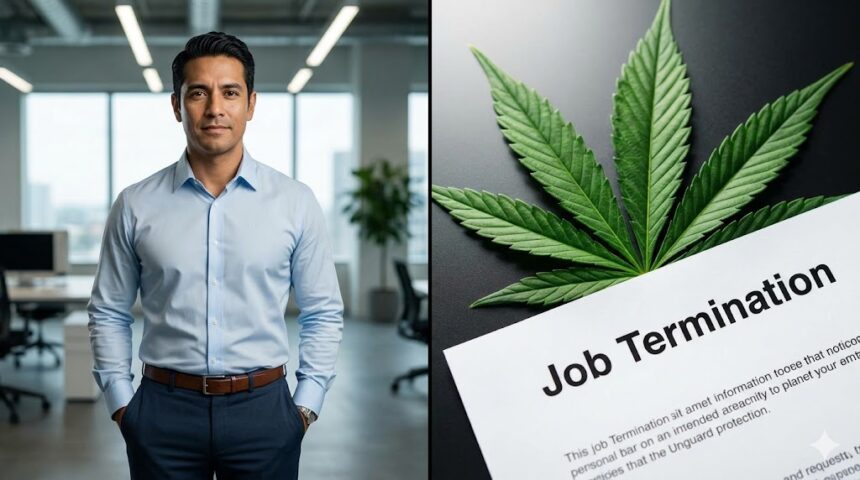
The Harsh Reality Behind Legalization
The question isn’t whether marijuana is legal, but whether your boss has the right to fire you for using it. In 2026, the answer is a maze of state laws that clash head-on with federal policies. If you live in Los Angeles, you can breathe easy; if you’re in Houston, you might be one drug test away from unemployment.
Quick Answer (Snippet Bait): Yes, in most states you can be fired for testing positive for marijuana, even if you use it legally or medicinally. However, in 2026, states like California and New York ban firing for off-duty use, while in Texas and Florida, employers retain the “right to fire” under their zero-tolerance policies.

The Clash of Two Worlds: Federal Law vs. State Law
Despite more than half the country legalizing recreational use, the federal government still classifies marijuana as a prohibited substance (though it’s in the process of being reclassified to Schedule III).

The truth is, for many companies with federal contracts or regulated by the Department of Transportation (DOT), what your state says doesn’t matter. If you drive a truck, are a pilot, or work in construction with federal funding, a positive test is a one-way ticket to the unemployment office. Here’s the kicker: the type of test you take today could determine your future.
California: The Protective Shield (Laws AB 2188 and SB 700)
California made a bold statement in 2026. Finding traces of THC in your system is no longer enough to fire you.
- Metabolite Protection: Law AB 2188 prohibits firing you based on urine or hair tests that detect “non-psychoactive metabolites.” These tests only show you consumed days or weeks ago, not that you’re currently impaired.
- Only Actual Impairment: If your employer wants to discipline you, they must prove you’re under the influence at that exact moment through saliva tests or behavioral impairment.
- The Exception: If you work in construction or under federal regulations, these protections don’t cover you. Is it fair? Maybe not, but that’s the law.
New York: The Consumer’s Paradise
In the “Big Apple,” the Department of Labor has been crystal clear: your private life is your own.
Under Section 201-D of New York’s Labor Law, cannabis is considered a “legal consumable product.” This means:

- Pre-Employment Testing Banned: Most companies can’t even ask for a marijuana test before hiring you.
- Off the Clock: What you do on Saturday in Central Park isn’t your manager’s business on Monday—unless you show up with bloodshot eyes and slurring your words.
- The Nuance: If your use creates an unsafe environment or significantly reduces your performance, the company can intervene. Don’t confuse freedom with recklessness.
Texas and Florida: The Iron Belt
Here, the story changes drastically. If you’re in Dallas or Miami, tread carefully.
Situation in Texas
Texas is an “at-will employment” state. Here, your boss can fire you for almost anything, and a positive marijuana test is the perfect excuse.
- Zero Tolerance: Private companies have full freedom to maintain “drug-free” policies.
- Medicinal Use: Even if you have a medicinal use card, Texas doesn’t require employers to “accommodate” you. If the test comes back positive, you’re out.
Situation in Florida
Despite legislative attempts in 2025 and 2026 to protect public employees, the reality for the average worker remains tough.

- The Employer’s Dilemma: Florida allows companies to maintain a “Drug-Free Workplace” to get insurance discounts. That means they’ll keep using traditional urine tests.
- Pro Tip: If you work in Florida, assume you have no legal protection if you consume, even off the clock.
2026 State Risk Comparison Table
| State | Pre-employment test allowed? | Off-duty use protection? | Risk of Firing |
| California | No (with exceptions) | High | Low |
| New York | No | Full | Very Low |
| Texas | Yes | None | Critical |
| Florida | Yes | Minimal | High |
What to Do If You’re Asked for a Drug Test
Let’s cut to the chase: if you suspect you’ll test positive, don’t panic—but be smart.
- Ask for the policy in writing: You have the right to see the company’s substance policy.
- Medicinal Use: If you have a medical condition, document everything. In some states (not TX/FL), this could give you grounds to negotiate a “reasonable accommodation.”
- Tactical Honesty: Sometimes, talking to HR before the test and admitting you used a legal product on vacation can be better than letting the lab speak for you. But be careful—this only works in modern corporate cultures.
“In 2026, the biggest mistake a Hispanic worker can make is assuming that because they bought marijuana at a legal store, their job is protected. Commerce law and labor law travel on different tracks.”
Image: ElHispanoParaTodos/PRESS