
The U.S. Citizenship and Immigration Services announced that the Department of Homeland Security has initiated the process to terminate all categorical family reunification parole programs for citizens of seven Latin American and Caribbean countries, as well as their immediate family members.
The decision, the immigration authority stated, responds to a shift in federal policy aimed at curbing what the current administration considers misuse of humanitarian parole.

The DHS argues that these mechanisms allowed individuals with insufficient security vetting to bypass traditional admission channels, despite Congress having designed parole as an exceptional tool subject to individual assessments.
Which countries are affected by the end of family reunification programs?
Those affected by the decision of the Trump administration are citizens of Colombia, Cuba, Ecuador, El Salvador, Guatemala, Haiti, and Honduras.
The agency emphasized that while family reunification is a legitimate goal, it cannot take precedence over the government’s obligation to prevent fraud, avoid system abuses, and protect national and public security.
According to the DHS, the Family Reunification Parole programs had control flaws that could be exploited by malicious actors, creating an unacceptable level of risk.

How will the programs end?
A notice published in the Federal Register, the department indicated, details how the termination of these programs will be implemented.
For foreigners who have been granted parole under the FRP program and whose parole remains valid as of January 14, 2026, it will expire on that date, unless the individual has a pending Application to Register Permanent Residence or Adjust Status (Form I-485) filed or postmarked by December 15, 2025, or earlier, and remains pending as of that date.
In such cases, the conditional residence permit will remain valid until its expiration or until USCIS issues a final decision on the application, whichever comes first.

If the adjustment of status is denied, parole will terminate immediately, and the individual must leave the country.
The DHS also clarified that once the parole period ends, employment authorization granted under the FRP programs will be automatically revoked.
The agency added that each beneficiary will receive an individual notification informing them of the termination of their status and work permit.
Authorities also warned that foreigners who do not have another legal basis to remain in the United States after the programs close must leave the country before the deadline of their travel permit.
To do so, they must notify their intention to depart using the CBP Home app.
They also assured that those who meet the requirements may access incentives such as financial assistance for return, support in obtaining travel documents, an exit bonus, and possible waivers of civil fines.
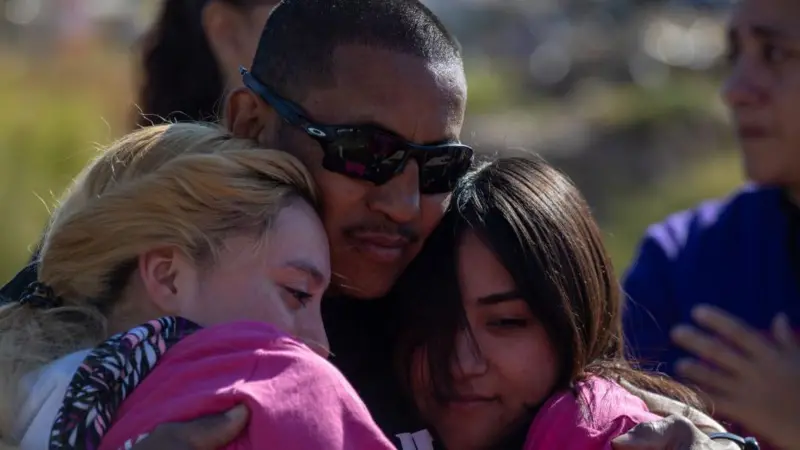
Image: DiarioNY