If you thought the arrival of body cameras on ICE (Immigration and Customs Enforcement) agents’ uniforms would usher in a new era of crystal-clear accountability on U.S. streets, the fine print of the new government directive will bring you back to reality with a jolt. The truth is, after years of budget delays and overwhelming social pressure stemming from recent deadly operations, the technological rollout comes with a powerful bureaucratic lock.
- The anatomy of the measure: Why now and under what rules does it operate?
- 1. The promise of accountability versus discretionary control
- 2. The experts’ critique: The danger of “selective editing”
- Table: Operational contrast — What the cameras promise vs. the limits of the rule
- Practical guide: What the community should know about operations with cameras
The massive deployment of devices across the country’s operational fields aims to dispel the shadows over arrests and raids. However, the clause granting the agency’s leadership the power to indefinitely withhold or block recordings of serious incidents under the subjective criterion that they do not serve “the best interest of the agency” has set off alarms among civil rights experts and public safety analysts. Are we looking at a tool for justice or an institutional mechanism for image control? Let’s get to the point.

The heart of the institutional controversy (Snippet Bait): The Immigration and Customs Enforcement (ICE) will implement the mandatory use of body-worn cameras for all its field agents, promising greater technology on the streets. Nevertheless, the official directive stipulates that the public release of videos in cases of deaths or serious injuries will only occur if it is determined to be “in the best interest of the agency,” granting the director the authority to indefinitely block or delay the release of compromising material.
The anatomy of the measure: Why now and under what rules does it operate?
To understand the magnitude of this announcement, one must analyze the political and operational pressure the agency has faced in recent months, marked by high-intensity operations and tragic incidents that demanded urgent institutional responses.
1. The promise of accountability versus discretionary control
For a long time, community organizations and legislators have demanded that immigration agents wear body cameras as a standard practice, just as is done in the most advanced local police departments across the country.
- The official argument: From the government’s perspective, the incorporation of technology aims to protect agents from unfounded accusations, document resistance during arrests, and provide an unalterable evidentiary record.
- The fine print of the regulation: The problem lies in the internal disclosure protocols. While there is a review committee that can recommend the release of videos of incidents involving serious injuries or deaths within 72 hours, the ICE director retains absolute authority to block the leak or dissemination if they detect “specific and pressing circumstances” that justify keeping the material under wraps.
2. The experts’ critique: The danger of “selective editing”
Public policy analysts and university professors specializing in police video surveillance have noted that such policies distort the original purpose of body cameras.
- The uncomfortable truth: Instead of functioning as an instrument of citizen oversight, a disclosure policy based strictly on the “agency’s interests” risks becoming a public relations tool. In other words, segments or recordings that reinforce the official narrative of security and efficiency will be facilitated, while complex or controversial angles could be buried under bureaucratic secrecy.
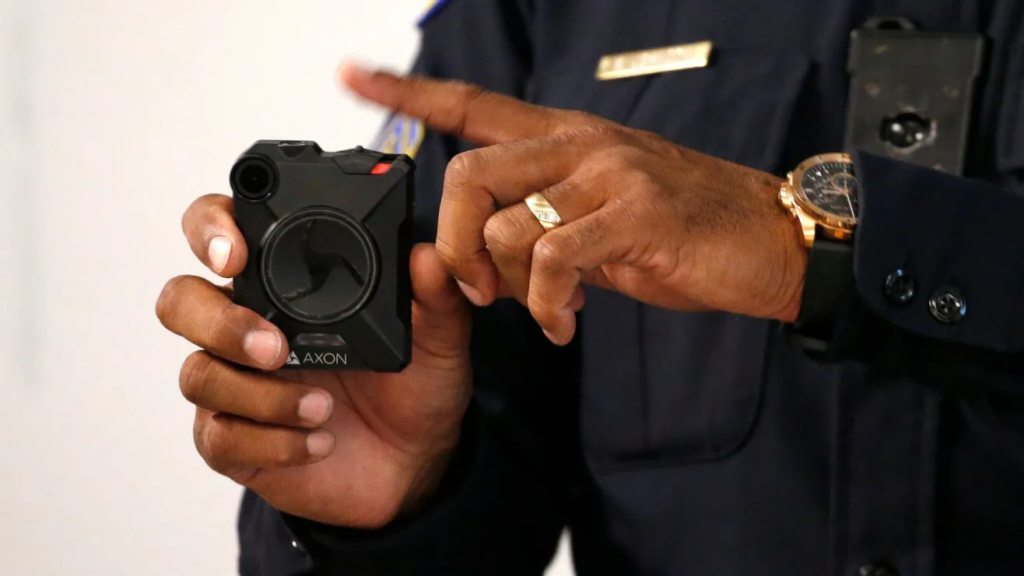
Table: Operational contrast — What the cameras promise vs. the limits of the rule
To surgically visualize the scope of this directive, we contrast the declared objectives of the technology against the legal restrictions established in ICE’s internal directive:

| Evaluation Axis | The Public Promise (Transparency) | The Regulatory Reality (Discretion) |
| Operational Use | Mandatory activation during arrests, search warrants, and emergency responses. | Exceptions for operational security or sensitive investigative techniques. |
| Access to Serious Incidents | Protocol review in cases of lethal force or severe injuries. | Strictly subject to whether its release is “in the best interest of the agency.” |
| Decision-Making Power | Internal review committees composed of commanders and attorneys. | Ultimate authority of the ICE director to indefinitely block or delay material. |
| Privacy Protection | Release of truthful material to clarify disputed facts. | Mandatory redaction of agents’ faces, names, and badge numbers before any potential leak. |
Practical guide: What the community should know about operations with cameras
The presence of body cameras on ICE agents’ lapels changes the visual dynamics of encounters on the street or at home, but it does not alter the fundamental constitutional rights that protect people in the United States.
1. Stay calm and maintain strategic silence: Cameras record, but they don’t replace your rights.
If ICE agents show up at your workplace or near your home wearing body cameras, remember that the device will record audio and video of everything that happens. Do not physically resist or argue heatedly. You have the right to remain silent, to refuse to sign documents without an attorney’s advice, and to ask if they have a judge-signed warrant before allowing entry into a private property.

2. Your cell phone is your own neutral witness: The importance of documenting on your own.
Even if officers are wearing cameras, you (or any bystander, family member, or witness) have the legal right in public spaces to record the authorities’ actions on video, as long as you do not physically interfere with the operation. Having your own independent recording ensures there is an immediate record that does not depend on the federal agency’s internal disclosure filters.
3. The legal avenue to demand videos in court: Safeguarding evidence in cases of abuse.
If an incident of alleged abuse of power or rights violations occurs during an operation, recordings from ICE’s body cameras become crucial evidence in immigration courts or civil courts. Defense attorneys can formally request these files through discovery motions, compelling the agency to turn over the material regardless of whether they decided to make it public to the media.
The truth is that the arrival of body cameras at ICE represents an undeniable technological step forward, but it is born burdened by regulatory opacity that leaves too many gaps in the dark. For our Hispanic community, institutional oversight should never translate into giving up due process and the demand for full transparency. Being informed about how these tools actually work is the best defense against any abuse of power.
Image: ElHispanoParaTodos/PRESS