


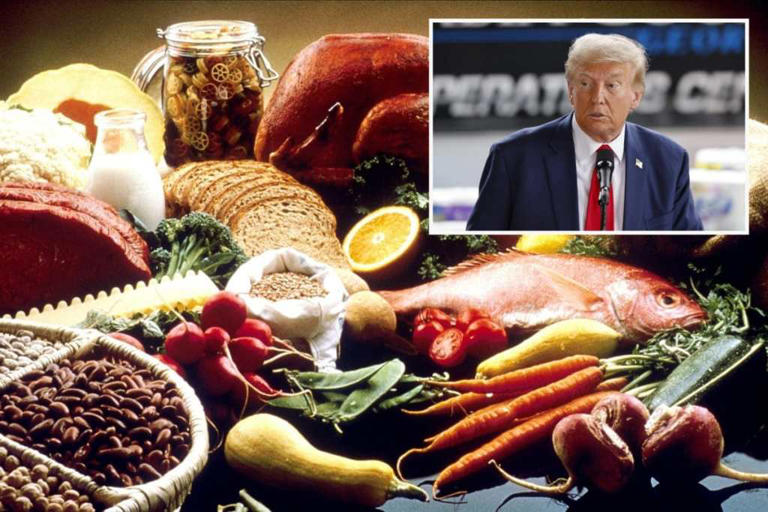
In an effort to ease the growing inflationary pressure on the national economy, President Donald Trump signed an executive order this Friday to eliminate tariffs on imported beef, coffee, and tropical fruits. The move also serves as a political measure amid concerns over the Democratic victory in recent local elections and ahead of the start of the midterm election campaign.
Despite the government highlighting increased revenue from tariffs, consumers have repeatedly complained about excessive price hikes.

As a result, voters in the midterm elections earlier this month cited economic concerns as their top issue, and it was the factor that triggered significant Democratic victories in the gubernatorial races in Virginia and New Jersey, as well as in the New York mayoral race.
Another Negative Sign of Tariffs
In April, Trump imposed tariffs on most countries and claimed there would be no negative effects on consumers, such as price increases, despite economic evidence to the contrary.
However, beef prices have reached record highs, causing significant concern among consumers and pushing the government to take steps to try to lower them. Nevertheless, the trigger for the price surge in this product was the 50% tariff on imports from Brazil, a major beef exporter, combined with a decline in U.S. beef production.
The executive order also eliminates tariffs on tea, fruit juices, cocoa, spices, bananas, oranges, tomatoes and certain fertilizers, most of which are not produced in the United States.

This executive order comes in addition to Friday’s announcement of a series of trade agreements with Ecuador, Guatemala, El Salvador, and Argentina to reduce tariffs on agricultural imports from those countries. Earlier this week, Trump suggested he would lower coffee tariffs to encourage imports, as its price has been affected similarly to beef.
The executive order also states that some agricultural products will be exempt from the “reciprocal” tariffs imposed this year, after analyzing factors such as the domestic production capacity of certain goods in the United States.
This measure contradicts the reciprocal tariffs Trump announced on April 2, where he significantly altered U.S. trade policy by imposing a minimum 10% tariff on most countries worldwide, arguing that the U.S. trade deficit was “an unusual and extraordinary threat to the national security and economy of the United States.”

Additional tariffs were added to this minimum tariff based on each selected country and specific products.
While the U.S. Treasury began collecting significant revenue, the economy is experiencing persistent inflation, and prices continue to rise.
After an initial review on September 5, Trump stated that “current domestic demand for certain products and the domestic capacity to produce certain goods” led to the decision to reduce tariffs again, as the cost of living remains a constant concern for Americans, according to various polls.
Image: DiarioNY





