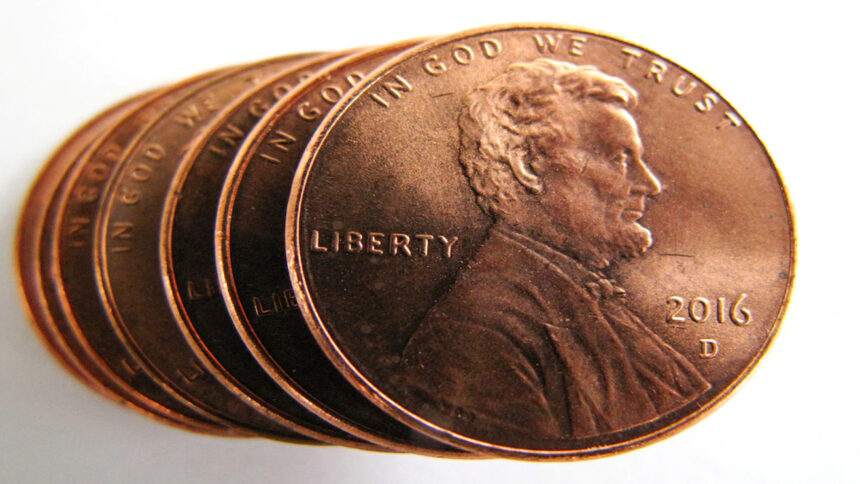
The United States has bid farewell to one of its most iconic coins: the one-cent penny. In a ceremony at the Philadelphia Mint, officials minted the last regular-issue unit, ending 232 years of continuous production. The decision, driven by budgetary concerns, marks the close of an era in which the small “penny” served as a daily symbol of saving, commerce, and popular culture.
The event had a more historical than celebratory tone. Mint officials noted that producing the penny had become unsustainable: each unit costs 3.69 cents in materials and manufacturing, more than triple its face value. “While circulating production has ceased, the penny remains legal tender.

An estimated 300 billion are in circulation, far exceeding the amount needed for commerce,” the institution stated in a release.
The Mint clarified it will continue producing limited-edition pennies for “historical and collectible purposes”, but mass production is now over. The move is expected to save about $56 million annually for the federal budget, according to the Treasury Department.
The penny’s retirement aligns with a global trend: several countries have already phased out their lowest-denomination coins, deeming their production uneconomical amid the rise of electronic payments. In the U.S., bills and coins now account for a minimal share of total transactions, overtaken by cards, mobile apps, and digital systems.
Introduced in 1793, the penny was for generations the most humble—and also the most beloved—symbol of the dollar.

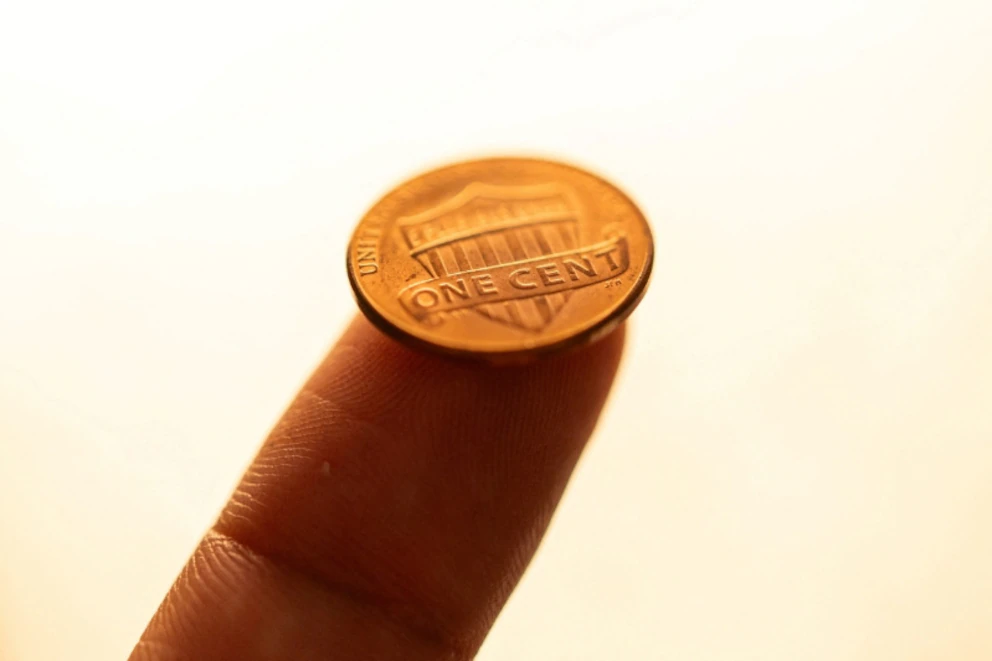
Its obverse has featured President Abraham Lincoln since 1909, and its reverse, since 2010, a shield symbolizing the union of states. Its copper hue—though now only surface-deep, as pennies have been made of zinc coated with copper since the 1980s—became a cultural icon in the U.S.
The penny’s farewell comes with a touch of nostalgia. Numismatic museums and collectors marked the event as a historic milestone, while merchants and citizens expressed mixed feelings. Some fear widespread price rounding; others see its disappearance as another sign of the digital transformation and post-pandemic economic pragmatism.
For decades, studies by Congress and the Treasury had warned that the country’s smallest coin was a costly luxury.

The debate flared whenever metal prices rose, pushing minting costs above the coin’s actual value. Still, its removal had been politically sensitive: abolishing a symbol so deeply rooted in American culture required consensus and a broader modernization narrative.
The Trump administration revived the review of the monetary system, and the current administration finalized the decision with a focus on fiscal efficiency. Economists agree the impact will be limited: businesses and banks will round to the nearest cent without significantly affecting retail prices.
The end of production also reflects a generational shift. For millions of Americans, the penny evoked childhood savings jars, church donations, or vending machines that accepted exact change. Today, those traditions fade alongside the coin that accompanied them for over two centuries.
In the coming months, the Treasury will begin a gradual phase-out. Pennies will remain in circulation until they wear out, but their fate is sealed.
Image: Infobae