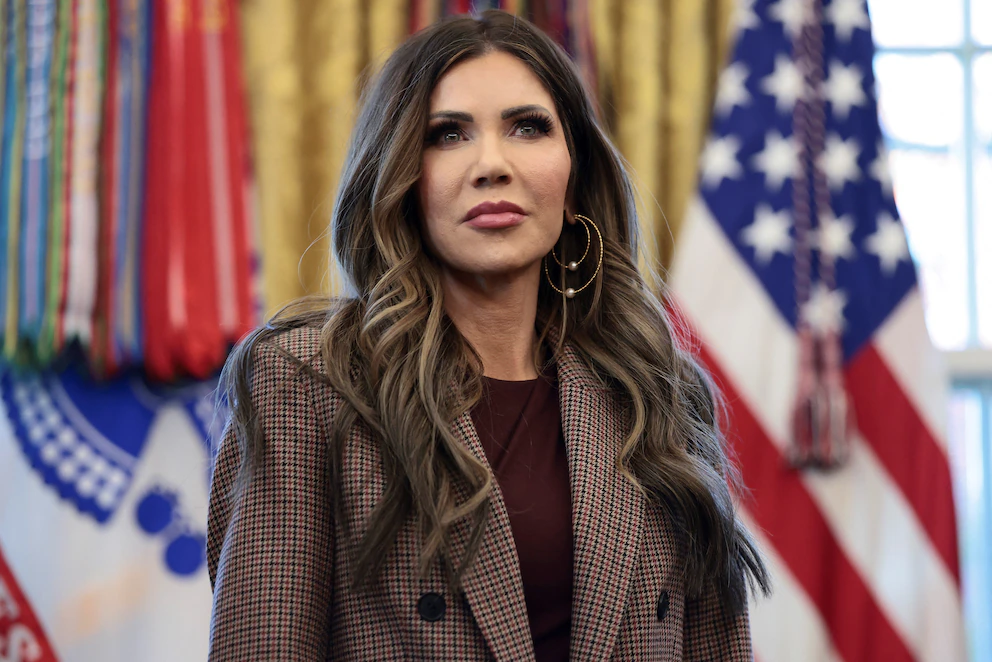
The U.S. government is preparing to expand its immigration ban to include more than 30 countries, according to Department of Homeland Security (DHS) Secretary Kristi Noem. This measure will broaden the restrictions previously established in June, which already affected citizens from 19 nations.
Noem noted that the specific list of countries subject to the travel ban is still under review and that the final decision will be made by President Donald Trump. “I won’t be specific about the number, but it’s over 30. The president is still evaluating the countries,” the official stated.

Noem emphasized national security as the priority, explaining, “If they don’t have a stable government, if they can’t tell us who these people are or help us verify them, why should we allow them to enter the United States?”
A Violent Incident and New Immigration Policies
The announcement of the expansion of the immigration ban comes days after an Afghan citizen, Rahmanullah Lakanwal, was accused of shooting two members of the National Guard in Washington.
Lakanwal arrived in the United States under a resettlement program in 2021. Following the incident, the administration tightened restrictions on the 19 countries initially included on the list, among them Afghanistan, Somalia, Iran, Haiti, Venezuela, Libya, and Sudan, among others.
The White House and DHS argue that stricter vetting is necessary to ensure that those entering or residing in the country do not pose a threat. “More verification is needed to make sure those who enter are not a risk,” the government stated.

Details of the Restrictions and Reactions
The current travel ban, established in June under a presidential proclamation, affects both immigrants and temporary visitors, including tourists, students, and business travelers. In addition to barring entry for citizens from 12 countries, it imposed additional restrictions on individuals from seven other nations.
The actions announced in recent weeks have also included the suspension of asylum decisions, the halting of immigration benefit processing for individuals from the banned countries, and the cancellation of visas for Afghans who collaborated with the United States during the war.
Additionally, work permits for refugees and asylum seekers will be valid for shorter periods, requiring these individuals to undergo more frequent reviews.

Immigrant Advocacy Groups and Lawmakers Reject the Escalation of Restrictions
Various immigrant advocacy groups and lawmakers have expressed their opposition to the escalating restrictions. They argue that such measures affect individuals who have already undergone strict vetting and accuse the new policy of amounting to “collective punishment.” They also report the suspension of naturalization ceremonies for applicants from the affected countries.
According to internal communications from the State Department, the administration is considering including up to 36 countries on the list.
The government maintains that the tightening of measures is in response to the need to “protect against external threats,” as stated in the presidential proclamation. However, critics of the initiative argue that restrictions are being generalized based on nationality, without considering the exhaustive processes already applied to applicants.
The Department of Homeland Security did not respond to requests for comment regarding the effective date or the final list of countries included in this new immigration ban.
Image: Infobae