The economic slowdown no one told you about: Why your money buys less in 2026
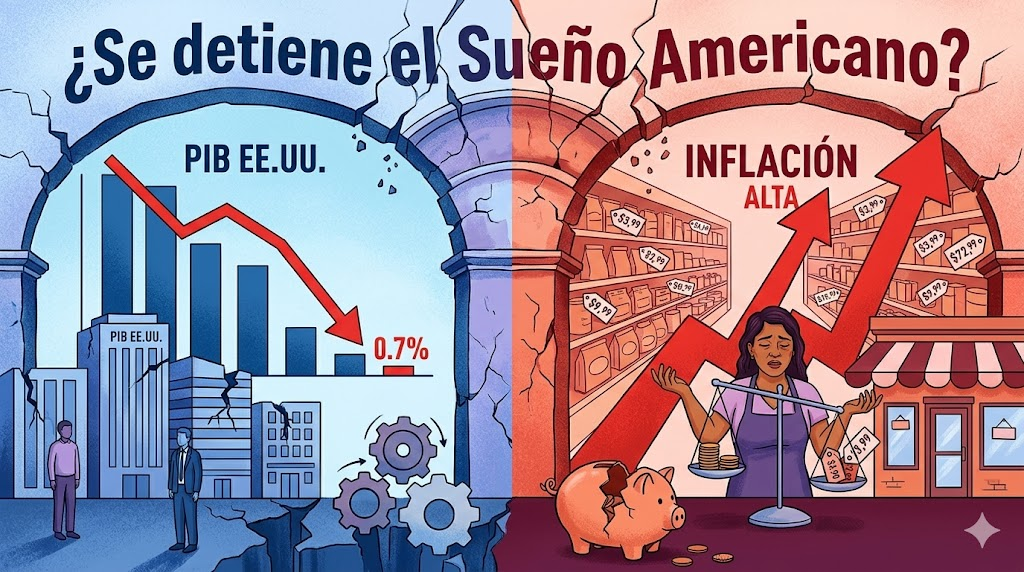
The reality on the streets is very different from Washington’s rhetoric. As the American Dream stalls, Latino families are stretching their grocery budgets, while new data from the Commerce Department confirms what many already felt in their wallets: the U.S. economy has cooled dramatically, closing 2025 with growth of just 0.7%.
Key Fact for Your Wallet: GDP growth was revised downward from the initial 1.4% to a concerning 0.7% annualized. Meanwhile, the price index (core PCE inflation) remains at 3.1%, creating a “scissor effect” that crushes purchasing power.
Credit: ElHispanoParaTodos/PRESS
What does 0.7% growth really mean?
To put it in perspective, in the third quarter of 2025, the economy was growing at a 4.4% pace. Falling to 0.7% isn’t just a “slowdown”—it’s a sudden stop. This cooling is mainly due to three factors that directly impact our community:

- The impact of the government shutdown: The late-2025 federal paralysis shaved more than a percentage point off growth.
- Cautious spending: Families have stopped buying durable goods (cars, appliances) due to high interest rates.
- Plummeting exports: With a strong dollar and trade tensions, “Made in USA” products are selling less abroad, affecting jobs in manufacturing and logistics.
The “Sticky Inflation” phenomenon
Despite near-zero growth, prices aren’t dropping. The Core PCE (the Federal Reserve’s preferred measure, excluding food and energy) rose to 3.1% in January 2026. Why? The cost of services and housing refuses to fall.
2025 vs. 2026 Projections
| Indicator | 2025 Close (Q4) | 2026 Trend | Impact on Latinos |
| GDP Growth | 0.7% | 1.3% – 1.9% (Est.) | Fewer new job openings. |
| Inflation (PCE) | 3.1% | 2.8% (Target) | Cost of living will remain high. |
| Interest Rates | 5.25% – 5.50% | Possible cuts | Buying a home will remain a challenge. |
How does this affect the Latino community in the U.S.?
Our community drives small businesses and consumption. This scenario of low growth and high inflation puts us in a vulnerable position:
- Access to credit: With a cooling economy, banks tighten lending. If you’re seeking a loan for your business or a mortgage, conditions will be stricter.
- “K-Shaped” Labor Market: We’re seeing an uneven recovery. While the tech and AI sectors remain strong, jobs in services and construction—where Latinos are heavily represented—are showing signs of fatigue.
- The specter of stagflation: Technically, we’re flirting with “stagflation” (stagnation + inflation). It’s the worst of both worlds because prices rise while wages stagnate.
Nexus Opinion: Don’t be fooled by some analysts’ optimism. If growth doesn’t rebound above 2% soon, 2026 will be a year of “financial survival” for many households. It’s time to prioritize saving and avoid variable debt.
Strategies to navigate this economic cooling
- Debt Review: If you have high-interest credit cards, try consolidating now. If the Fed cuts rates to stimulate GDP, look into refinancing.
- Invest in Skills: The artificial intelligence sector accounted for a third of growth in 2025. Learning digital tools is now an unemployment insurance policy.
- War Budget: With 3% inflation, your money is worth 3% less than last year. Adjust your fixed expenses before the labor market cools further.
Image: ElHispanoParaTodos/PRESS