The Reality at the Grocery Store: It’s Not You, It’s the System
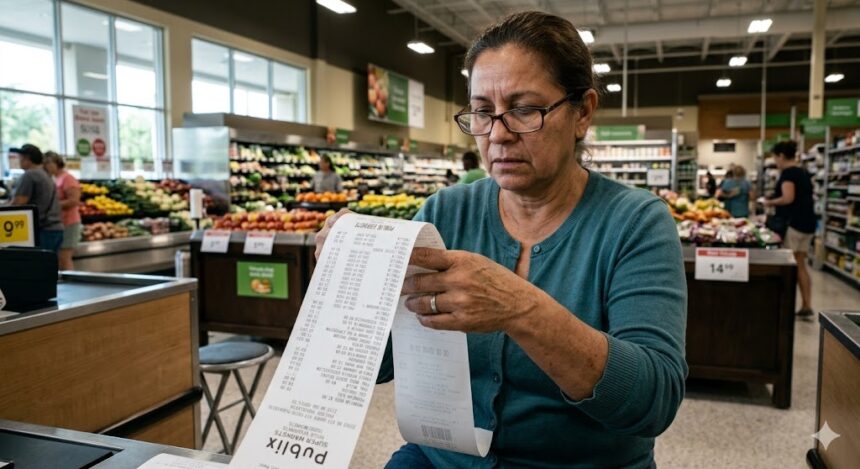
The empty feeling when you see your shopping cart isn’t a collective hallucination. It’s a brutal statistic. Today, 9 out of 10 Americans confirm that the cost-of-living crisis has directly hit their financial stability. We’re no longer talking about “tightening our belts”—we’re talking about families having to choose between paying for car insurance or stocking the pantry.
- The Reality at the Grocery Store: It’s Not You, It’s the System
- Why Doesn’t Your Paycheck Last Until the End of the Month? (Snippet Bait)
- The “Four Horsemen” of Family Spending
- 1. Rent: The “Black Hole” of the Budget
- 2. The Interest Trap (APR)
- 3. Auto and Health Insurance
- 4. “Shrinkflation”
- Comparative Table: Average Spending 2023 vs. 2026 (Estimated)
- How to Protect Yourself? “Financial Resistance” Strategies
- Impact on the Hispanic Community: The Cultural Factor
Key Fact: While nominal wages have risen slightly, real purchasing power has evaporated due to persistent inflation in basic services, rent, and energy. The middle class, the engine of this country, is operating in survival mode.
Why Doesn’t Your Paycheck Last Until the End of the Month? (Snippet Bait)
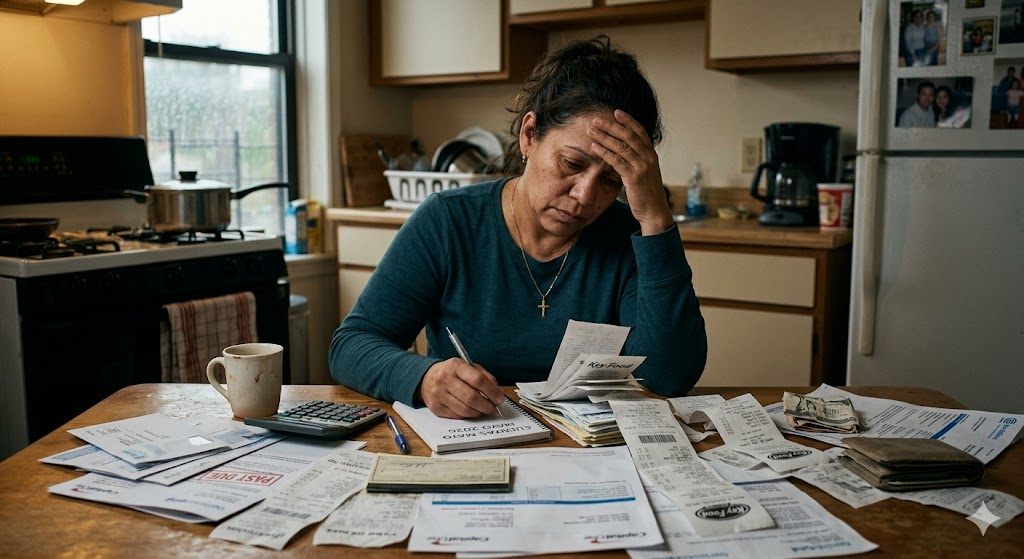
The cost-of-living crisis in the U.S. is defined as the critical imbalance between the accelerated rise in the prices of essential goods and the stagnation of real incomes. Currently, over 90% of the population reports a negative impact, driven mainly by three factors: the prohibitive cost of housing (which consumes more than 30% of income), food inflation, and the rising cost of consumer credit (credit cards and interest).

The “Four Horsemen” of Family Spending
To understand how we got here, we need to look under the hood of household economics. It’s not just that eggs are expensive—it’s a perfect storm.
1. Rent: The “Black Hole” of the Budget
In states like Florida, California, or New York, rent is no longer an expense—it’s a mortgage without ownership. The phenomenon of Rent Burdened (people who spend more than 50% of their income just on housing) has become alarmingly normalized.
2. The Interest Trap (APR)
With the Federal Reserve keeping rates high to “cool” the economy, those hardest hit are people using credit cards for emergencies. You’re paying interest on interest just to buy milk and gas.
3. Auto and Health Insurance
This isn’t talked about enough. Insurance premiums have risen by up to 22% in the last year. It’s an invisible tax no one warned you about when you moved or bought that SUV.

4. “Shrinkflation”
You pay the same but get less. Companies have reduced product sizes to avoid scaring you with the final price. It’s a psychological trick that silently drains your budget.
Comparative Table: Average Spending 2023 vs. 2026 (Estimated)
| Spending Category | Perceived Impact | Mitigation Strategy |
| Housing / Rent | Critical (+15-25%) | Contract negotiation or searching for emerging “Zip Code” areas. |
| Food | High (+12%) | Bulk purchases and store brands (Private Labels). |
| Energy / Utilities | Moderate-High | Home energy audit and state subsidies (LIHEAP). |
| Transportation | High | Route optimization and strict preventive maintenance. |
How to Protect Yourself? “Financial Resistance” Strategies
If you’re part of that 90% affected, resignation isn’t an option. This is where Hispanic pragmatism comes into play.
- The 30-Day Audit: You can’t fix what you don’t measure. Track every penny. You’ll be surprised how much goes to subscriptions you don’t use or that $7 coffee that “doesn’t count.”
- The “Side Hustle” Is No Longer Optional: In today’s economy, relying on a single income source is like playing Russian roulette. From remote consulting to local services, diversifying is surviving.
- Aggressive Refinancing: If you have high-interest debt, look to consolidate. Don’t let compound interest work against you.
Nexus Reflection: Do we really need the latest car model when the cost of insurance is equivalent to half a month’s rent? Sometimes, the greatest act of financial rebellion is living below our means while the system pushes us to consume what we can’t afford.
Impact on the Hispanic Community: The Cultural Factor
For us, family comes first. The cost-of-living crisis in the U.S. is forcing many Hispanic families to return to the multigenerational household model. While this helps share expenses, it puts immense pressure on the “sandwich generation”—those caring for both parents and children simultaneously.

Image: ElHispanoParaTodos/PRESS