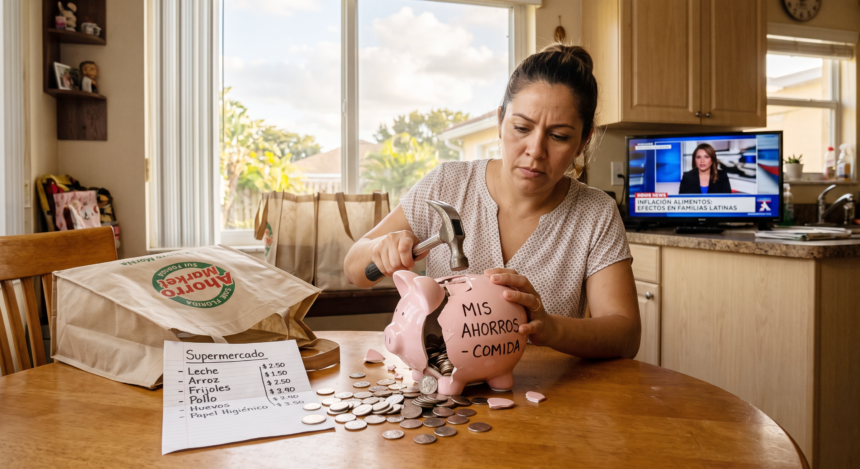
Filling the shopping cart has become a challenge that is draining the resources of millions of families.
According to recent data from the Urban Institute, nearly 20% of adults in the United States (1 in 5) have found it necessary to dip into their personal savings to pay for basic groceries.

For the Latino community in South Florida—where housing prices, rents, and property insurance are already at record levels—the increase in food costs represents a direct and severe blow to family finances.
The Numbers Behind the Food Crisis
The latest 2025 Well-Being and Basic Needs Survey paints a concerning picture of how people are coping with food inflation that has driven prices up 30% over the past five years. The study highlights that:
- Savings depleted: 19.6% of working-age adults (18 to 64) had to tap into long-term savings to cover grocery expenses.
- The plastic trap: More than 1 in 4 people used credit cards for food purchases. While some manage to pay off their balance, 19.6% only make the minimum payment, and 8.7% are falling behind on payments.
- Extreme options: 10% of consumers are using “Buy Now, Pay Later” services for groceries, and a troubling 5.2% turn to quick or payday loans, known for their exorbitant interest rates.
The Domino Effect on Hispanic Households in South Florida
The root of the problem is a stark disparity between income and the rising cost of living. According to the research, while average wages nationwide have increased by 43% since 2017, home prices have surged 81% and rents 54%.
In counties like Miami-Dade, Broward, and Palm Beach, much of the biweekly paycheck is obligatorily spent on rent or mortgage payments. When it comes time to go grocery shopping, Latino families face a severe lack of liquidity.

Turning to savings or debt to buy milk, rice, or meat creates a vicious cycle. When Hispanic families use credit cards for groceries and can’t pay the full balance at the end of the month, they begin accumulating interest. Over time, this further reduces their monthly purchasing power and risks their future financial stability, making it harder to handle medical emergencies or home repairs.
Survey finds 1 in 5 Americans use savings to pay for groceries This report expands on the study’s details and explains how persistent inflation is forcing consumers to drain long-term financial resources just to cover basic needs.
Financial Protection Strategies
Experts recommend that the community explore all alternatives before sacrificing emergency funds or taking on new high-interest debt. Some options include visiting local food pantries in South Florida, buying generic brands, comparing weekly specials, and seeking free financial counseling through local organizations that support the Hispanic community.

Image El Hispano para todos