If you live in Florida and feel like your mortgage payment has taken a shocking leap, you’re not alone. The Sunshine State has become the most expensive place in the entire United States for homeowners insurance in 2026.
For many families, especially within the Hispanic community, keeping the “American dream” of homeownership is turning into a real financial challenge.

The Epicenter of the Crisis: What Does It Really Cost?
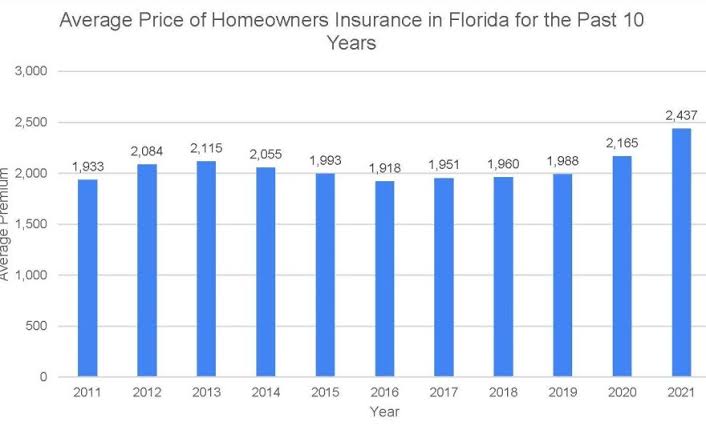
Nationwide, the average cost of homeowners insurance hovers around $2,543 annually for $300,000 in coverage. However, in Florida, the averages reported for 2026 range between $7,136 and $8,292 per year, depending on the source and insurer.
Even though 2026 is finally seeing some reductions (such as the 8.7% cut announced by the state insurer Citizens), geography makes a brutal difference:
| Florida Region | Estimated Annual Range (Coverage $300k) |
| North / Inland (e.g., Sumter County) | $1,620 – $2,400 |
| Central (e.g., Orlando, Orange) | $2,180 – $3,200 |
| South Coast (Miami-Dade, Broward) | $9,750 – $12,200 |
| The Keys (Monroe County) | Over $14,850 |
The Disproportionate Impact on the Hispanic Community
The crisis hits the Hispanic community particularly hard for two key reasons: location and information barriers.
A large portion of the Hispanic population is concentrated in South Florida (Miami-Dade, Broward, Palm Beach) and fast-growing metropolitan areas like Osceola. These are exactly the “ground zero” zones for the highest premiums.

Additionally, the technical language of insurance policies is often a trap. Many Hispanic homeowners discover too late the difference between a regular deductible and a hurricane deductible. Unlike a fixed amount of $1,000, the hurricane deductible is a percentage of the insured value of the home (usually 2%, 5%, or 10%). On a $300,000 home, a 2% deductible means you’ll have to pay $6,000 out of pocket before the insurance covers a single nail after a storm.
Image El Hispano para todos