The Goal, the Home Run, and the Suitcase: The New Face of the Migrant
Forget for a moment the classic image of the migrant who arrives with nothing to work in construction or cleaning. There is a new migratory wave that wears high-tech uniforms and brand-name cleats. They are not just MLB or MLS stars; they are thousands of young people who see the U.S. sports system—from college scholarships to development leagues—as an escape route and a path to social mobility that is changing the statistics of traditional migration.
Quick Answer (Snippet Bait): Sports have become the “aspirational face” of Latino migration because they offer a fast-track to legal status, immediate socioeconomic advancement, and a cultural bridge that eases integration in the U.S. Unlike conventional labor migration, the migrant athlete arrives with pre-built social capital, allowing them to act as an ambassador for their community and a driver of specialized remittances.
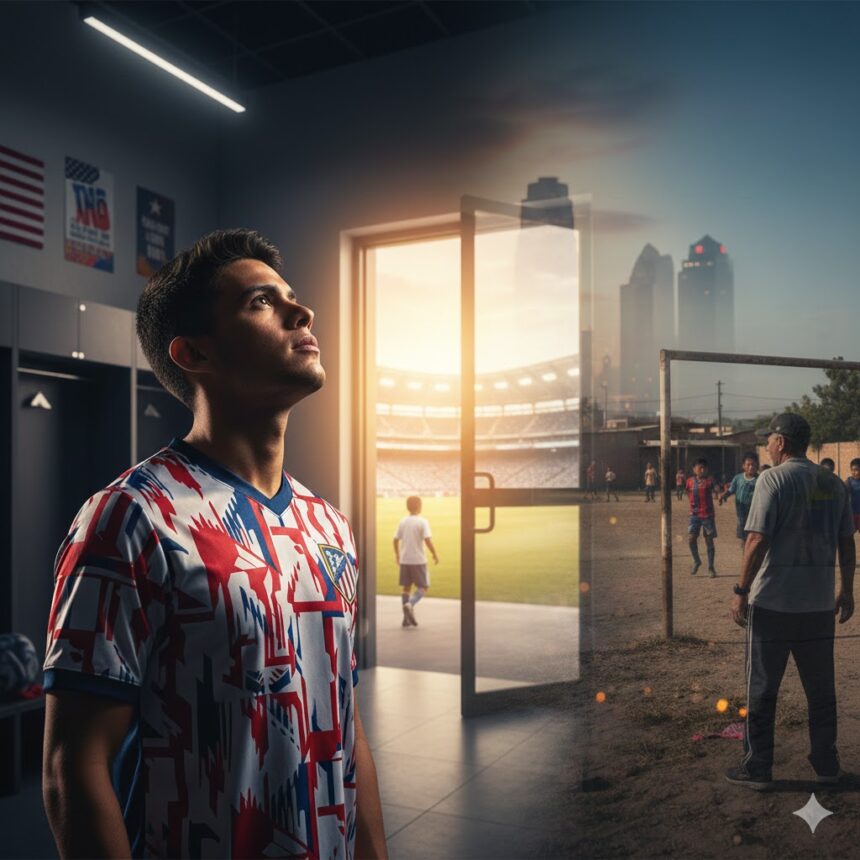
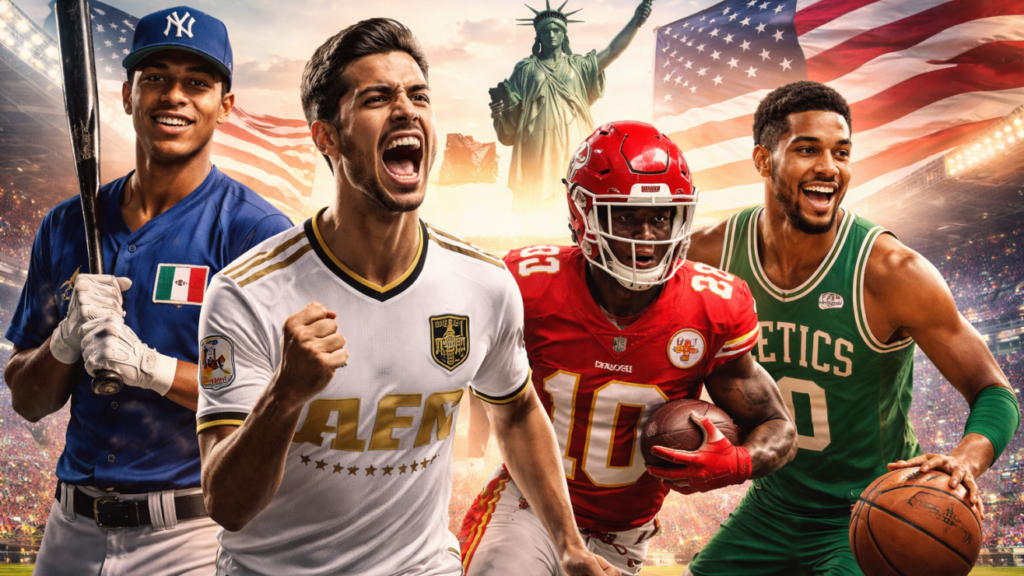
Latin American talent has an increasingly visible presence in U.S. professional sports. Credit: Image created with AI for editorial purposes. | Impremedia
The “Messi Effect” and the Reverse Colonization of the MLS
We cannot discuss sports migration without mentioning how soccer (or soccer as they call it) has gone from being a niche sport to a territory dominated by Spanish. The arrival of elite players is not an isolated event but the peak of a pyramid whose base consists of thousands of young people from academies in Argentina, Colombia, and Mexico who now see Miami or Los Angeles as their natural destination before Europe.
Advertisement
Why the U.S. Prefers Latino Athletes Today
Audience Affinity: The Hispanic market in the U.S. has a purchasing power exceeding one trillion dollars. Leagues know this: bringing in a Colombian player sells tickets in Queens; a Mexican player fills stadiums in Texas.
Cost-Benefit: Talent developed in CONMEBOL leagues is often more cost-effective and resilient than that from hyper-protected European academies.
Cultural Resilience: The Latino athlete is used to “fighting from the bottom,” a mindset that fits perfectly with the grind of U.S. professional sports.
The Anatomy of Success: More Than Just Muscles
What sets this sports migrant apart from the rest? Here, the data gets interesting.
Impact Factor
Traditional Migrant
Migrant Athlete
Immigration Status
Long/uncertain processes
P-1 or O-1 Visas (Extraordinary Talent)
Remittance Impact
Survival-level sending
Investment in local infrastructure (schools, stadiums)
Social Integration
Gradual and sometimes isolated
Immediate (the locker room is a social microcosm)
Public Perception
Often stigmatized
Local hero / Example of overcoming
From “Neighborhood Leagues” to Professional Scouting
Here’s what no one tells you: the scouting system has changed. It’s no longer about waiting for a player to debut in their country’s top division. U.S. college (NCAA) talent scouts are now tracking youth tournaments in rural areas of Central America.
The goal? To offer scholarships that are, in practice, disguised residency visas under the guise of education and sports. For a family in a humble neighborhood in Tegucigalpa or Caracas, having their child earn a tennis or soccer scholarship at a Florida university is like winning the migration lottery.
The Reality Check: Is Everything That Glitters Gold?
The truth is… it’s not always easy. Sports as a face of migration also have their shadows. Isolation due to language barriers, the pressure to support an entire family back home, and cultural gaps in training methods can break even the strongest.
Advertisement
“Many think that just by making it to a minor league in the U.S., you’ve made it. But the loneliness of a hotel in Ohio, not knowing how to order a coffee in English, and the pressure to send money home is a burden no training can prepare you for.” — Reflection from a former minor league player.
The Future: The “Hispano-Americanization” of Sports in the U.S.
By 2030, it is estimated that 25% of players in major baseball and soccer leagues in the U.S. will be of Latino origin or first-generation migrants. This is not just about sports; it is a soft power tool. Sports are achieving what politics could not: organic integration where the Spanish language is heard in stadiums in North Dakota as much as in Florida.