

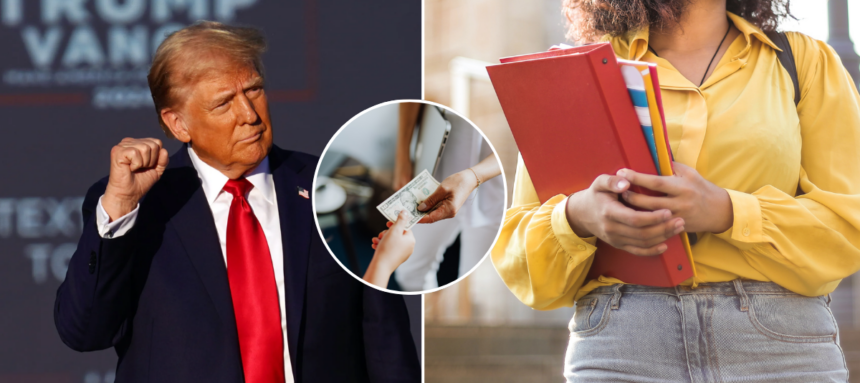
The Administration of President Donald Trump will begin garnishing the wages of student loan borrowers in default starting in January 2026, resuming a collection practice that was suspended at the onset of the Covid-19 pandemic.
The measure, confirmed by the Department of Education, tightens federal policy on educational debt and potentially affects millions of families across the country.

According to authorities, around 1,000 borrowers will receive administrative wage garnishment notices starting the week of January 7. That number will grow progressively in the following weeks and months as the government intensifies collection efforts on those with prolonged payment delinquencies.
End of Pandemic Forbearance
This will be the first time since 2020 that a portion of borrowers’ wages will be at risk of direct garnishment. During the health emergency, the federal government suspended forced collections as part of a broad economic relief package.
However, last May, the Trump Administration ended those moratoriums and resumed student loan collections, including those in default.
According to official data, more than 42 million Americans hold federal student loans, with an accumulated debt exceeding $1.6 trillion. Of that total, over five million borrowers are already in default—defined as a delay of at least 270 days—a figure that could rise to 10 million, according to White House estimates released last semester.

How Will Garnishment Work?
The federal government has broad authority to recover debts, including withholding tax refunds, Social Security benefits, and wages.
For student loans, the Department of Education can garnish up to 15% of a borrower’s net income. The law, however, sets a protection floor: workers must retain at least the equivalent of 30 times the federal minimum hourly wage per week, about $217.50.
Authorities assured that garnishments will only be applied after borrowers receive notices at least 30 days in advance and have the opportunity to resolve their situation.

The Department of Education defended the resumption of collections, stating it seeks to “protect taxpayers from bearing the cost of loans that borrowers voluntarily accepted.”
Consumer advocacy organizations have criticized the decision and urge borrowers to contact the Government’s Default Resolution Group to explore alternatives such as loan rehabilitation and more affordable payment plans before wage garnishment takes effect.
Image: Opinion





