

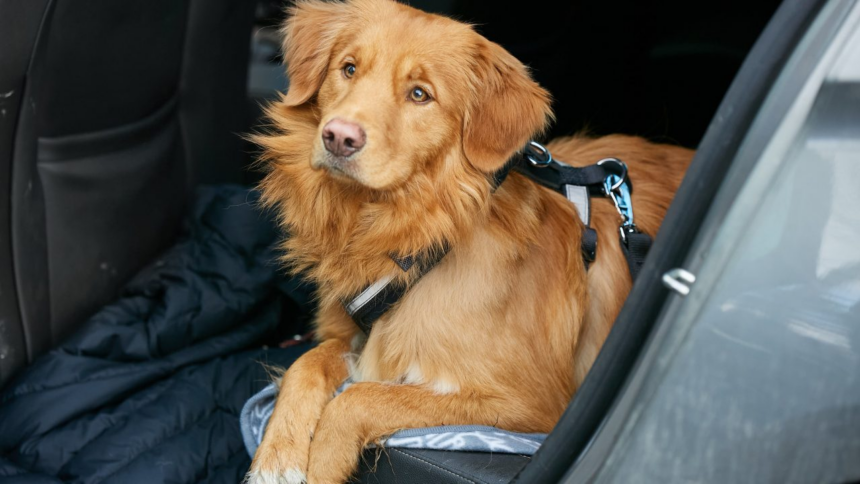
We are in the midst of the year-end travel season, and for many Latino families, the dog or cat isn’t just a “pet”—it’s family. However, statistics for accidents and disappearances in December spike by 40%.
December is a chaos of overcrowded airports, heavy traffic, and loud noises.

For us, it’s celebration; for them, it’s a threat to their routine.
If you plan to travel with your pet and take them in the car or on a plane this holiday season, you must understand that safety goes far beyond bringing their favorite toy. A sudden stop at 60 mph can turn a 20-pound dog into a deadly projectile for both of you.
Here, we won’t talk about “nice tips.” We’ll talk about life-saving protocols. If you’re crossing state lines or traveling through Latin America, this is the roadmap you must follow.
1. Car Safety: They’re Not Just Another Passenger—they’re Live Cargo
Many owners make the mistake of letting their dog ride on their lap or loose in the back seat while traveling. Fatal error.

- The Crash-Tested Harness: Don’t use a regular collar. In a crash, the collar can fracture their trachea. Buy a car-certified harness that attaches to the seatbelt.
- Travel Crates (Kennels): For cats and small dogs, the carrier is the safest place. It should be on the car floor or secured with a seatbelt.
- The Window is a Trap: Though they love the breeze, dirt particles at high speeds can cause corneal ulcers. Plus, a loud noise (like a holiday firework) can scare them and cause them to jump from a moving vehicle.
2. Medical Preparation: The “Holiday First-Aid Kit”
Before you leave, visit the vet. This year, airlines and hotels are stricter than ever with records.
Table: Documentation and Health Checklist
| Document/Requirement | Why It’s Mandatory | Recommended Validity |
| Health Certificate | Required by airlines and hotels. | Issued less than 10 days before travel. |
| Rabies Vaccination Proof | Crucial for crossing borders or states. | Updated (minimum 30 days prior). |
| Microchip | The only real way to recover them if they escape due to fireworks. | Verify data is current. |
| Mild Sedatives | Only with a prescription for highly anxious pets. | Test dosage days before. |
3. The “Fireworks” Factor at Your Destination
If your destination is Latin America or areas with large Latino populations in the U.S., you know December 31st will bring loud noises.
- Double Identification: In addition to the microchip, make sure they wear a collar with a tag that has your current cell phone number (not your home number, since you won’t be there).
- Safe Shelter: Upon arriving at the hotel or a relative’s home, identify an interior room where the noise is less audible. Play classical music or white noise to mask the explosions.
4. Air Travel: The New 2025 Rules
Airlines have reduced the number of pets allowed in the cabin per flight.

- Book Early: Don’t show up at the counter without having paid for your pet’s spot.
- Dimensions: The carrier must be “soft-sided” (flexible) to fit under the seat. If your dog is large and must travel in the cargo hold, ensure the airline has temperature-controlled protocols. In December, airport tarmacs like those in Chicago or Denver can be deadly due to the cold.
Pro Tip from El Hispano: “Never leave your pet alone in the car, even in winter. The temperature can drop drastically, creating a refrigeration effect, or the car can become a target for theft—a crime that increases by 15% in the last week of December.”
Essentials for Your Pet’s Travel Bag:
- Their regular food (changing diets during travel can cause severe diarrhea).
- Bottled water (water from different cities can upset their stomach).
- A piece of clothing with your scent to reduce their anxiety.
- Physical and digital copies of their vaccination records.





