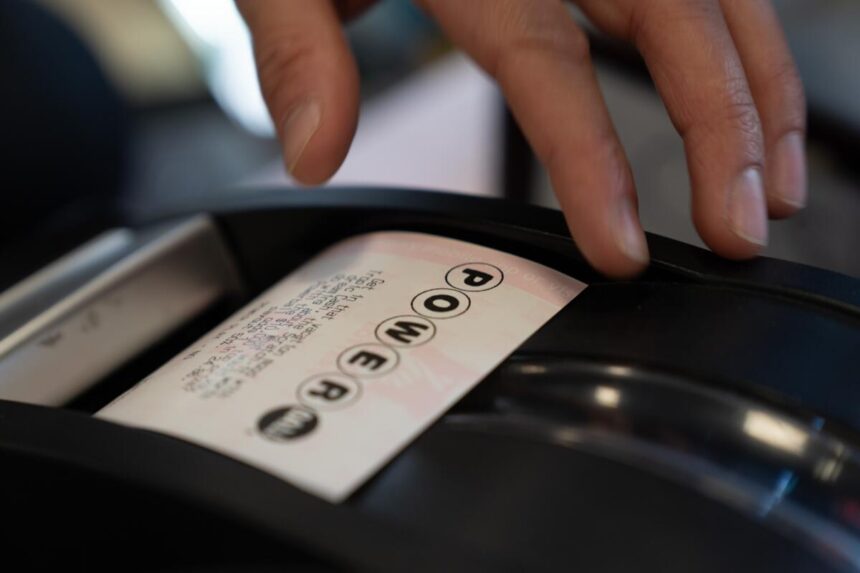
A lucky winner took home $1.8 billion in the Christmas drawing. Find out how much they’ll actually receive after taxes and the three mistakes they must avoid.
The $1.8 billion prize from this Christmas 2025 drawing is the second-largest in U.S. history.

The winner has two options: receive the total in 30 annual payments or a lump-sum cash payment of approximately $830.5 million. After the 37% federal tax and potential state taxes, the final net amount would be around $523 million.
Santa’s Gift That Came on a $2 Ticket
While the rest of the country opened gifts under the tree, an Arkansas resident secured an almost unprecedented windfall after a series of consecutive rollovers and high ticket sales across multiple states, becoming the most sought-after person in America.
The Christmas Powerball jackpot reached $1.817 billion, officially making it the second-largest prize in U.S. lottery history, surpassed only by the $2.04 billion won in California in 2022.
The winning numbers were 04, 25, 31, 52, and 59, with the Powerball number 19.

But beware: winning that much money is like receiving a financial missile. History shows that many winners end up bankrupt in less than five years.
What should this new multimillionaire do to avoid losing it all before New Year’s?
The Harsh Reality: Uncle Sam Takes the ‘Lion’s Share’
When you hear “$1.8 billion,” it sounds like infinite wealth. However, the U.S. tax system is ruthless when it comes to lottery winnings. Here’s a breakdown of the “cut” this prize will take before reaching the winner’s bank account.

Breakdown of the Winnings (Estimated Figures)
| Concept | Annual Payments (30 years) | Lump Sum (Cash Option) |
| Announced Amount | $1,800,000,000 | $830,500,000 (approx.) |
| Federal Withholding (24%) | -$432,000,000 | -$199,320,000 |
| Additional Federal Tax (13%) | -$234,000,000 | -$107,965,000 |
| State Tax (Average 5%)* | -$90,000,000 | -$41,525,000 |
| Estimated Net Total | $1,044,000,000 | $481,690,000 |
*Note: In states like Florida or Texas, the state tax is 0%, while in New York, it can exceed 10%.
The 5 Emergency Steps (Wealth Protection Protocol)
If you were the winner—or if you ever win a smaller prize—the Hispanic community must learn that silence is golden. Here’s the protocol recommended by Wealth Management experts:
- Sign the ticket and hide it: Before anyone else can claim it, the ticket is a bearer document. Store it in a bank safe deposit box, not under the mattress.
- Disappear from social media: “Friends” and long-lost relatives will appear within minutes. Change your phone number and, if possible, leave your home for a few days.
- Hire the ‘Winner’s Trinity’: Don’t go to claim the prize alone. You need a tax attorney, a top-tier CPA, and a financial advisor with a fiduciary certification.
- Consider anonymity: In some states (like Delaware or Maryland), you can claim the prize through a trust to keep your name out of the news. In states like California, your identity will be public by law.
- Don’t make impulsive decisions: Don’t buy the mansion or the Ferrari in the first week. Wait at least six months for the adrenaline to wear off.
Why Did the Prize Grow So Much? The Psychology of the ‘Big One’
This year, the lottery fever was fueled by a streak of 35 consecutive drawings without a winner. The inflation we’ve discussed in previous articles also plays a psychological role: Latinos see the lottery as a quick escape from the suffocating economic situation of 2025.
Fun Fact: The odds of being struck by lightning are 1 in 1.2 million. You’re 250 times more likely to be hit by lightning than to win this Powerball. Yet, ticket sales in Hispanic neighborhoods rose by 22% this December.