

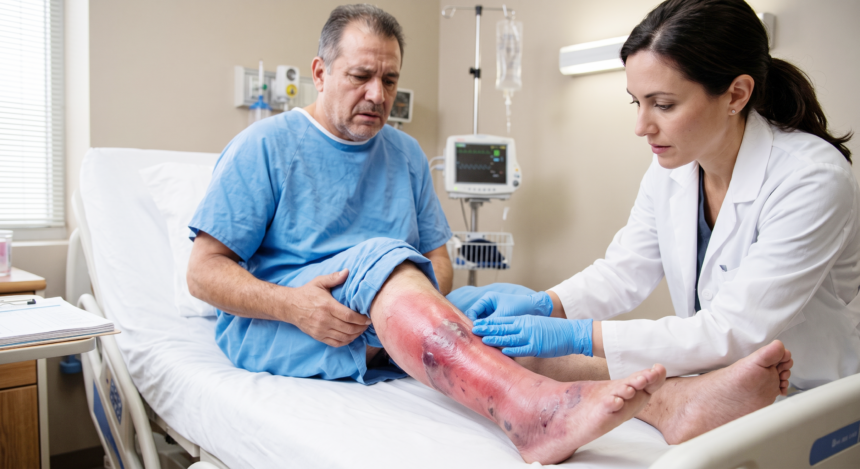
A rise in infections caused by the popularly known “flesh-eating bacteria” (Vibrio vulnificus) has put Florida health authorities on alert. This bacteria, which naturally inhabits warm marine waters, can lead to serious and even fatal complications if not detected and treated in time.
What is Vibrio vulnificus and how does it spread?
Despite its nickname, the bacteria does not “devour” flesh literally from the outside but releases toxins that destroy cellular tissue (necrotizing fasciitis) and stop blood circulation in the affected area.

There are two main routes of infection:
- Direct contact with wounds: Coming into contact with saltwater or brackish water while having cuts, scrapes, burns, insect bites, recent tattoos, or piercings.
- Consumption of raw seafood: Eating raw or undercooked seafood or shellfish, especially oysters, harvested from contaminated waters.
Note: The bacteria does not spread from person to person.
Key Symptoms: What Signs Should You Watch For?
Symptoms can appear quickly, between 24 and 72 hours after exposure. The severity depends on the route of entry:
If the infection enters through a wound
- Sudden and intense pain in the affected area (disproportionate to the size of the wound).
- Redness and swelling that spreads rapidly.
- Blisters with fluid or blood.
- Skin discoloration (purple or black tones due to tissue necrosis).
- Fever and chills.
If ingested through food
- Skin redness and lesions.
- Fever, chills, and a dangerous drop in blood pressure (septic shock).
- Nausea, vomiting, abdominal pain, and diarrhea.
Who Is at Greater Risk?
While anyone can contract the infection, the risk of developing a serious or potentially fatal illness is significantly higher in people with weakened immune systems or preexisting conditions:
- People with chronic liver diseases (cirrhosis, hepatitis, alcoholism).
- Patients with diabetes or kidney failure.
- People undergoing cancer treatment or with HIV.
- Older adults or those taking medications that suppress the immune system.
In these high-risk groups, the bacteria can quickly enter the bloodstream (septicemia) and be fatal.

Key Steps to Prevent Infection
Prevention is the most effective method against Vibrio vulnificus. Health authorities recommend following these guidelines:
- Avoid swimming with open wounds: Do not enter the ocean, bays, or estuaries if you have cuts, scrapes, or injured skin.
- Cover your wounds: If you must be near seawater with an injury, use a waterproof bandage.
- Wash immediately: If you accidentally get a scratch in the water or come into contact with seawater, wash the area immediately with plenty of clean water and soap.
- Use protection: Wear water shoes when walking along the shore or rocky areas to avoid cuts from shells or coral.
- Cook seafood thoroughly: Avoid eating raw oysters or other shellfish. Cook them completely before consuming.
- Handle seafood carefully: Wear gloves when cleaning or handling raw seafood if you have any small cuts on your hands.
Image: El Hispano para todos





