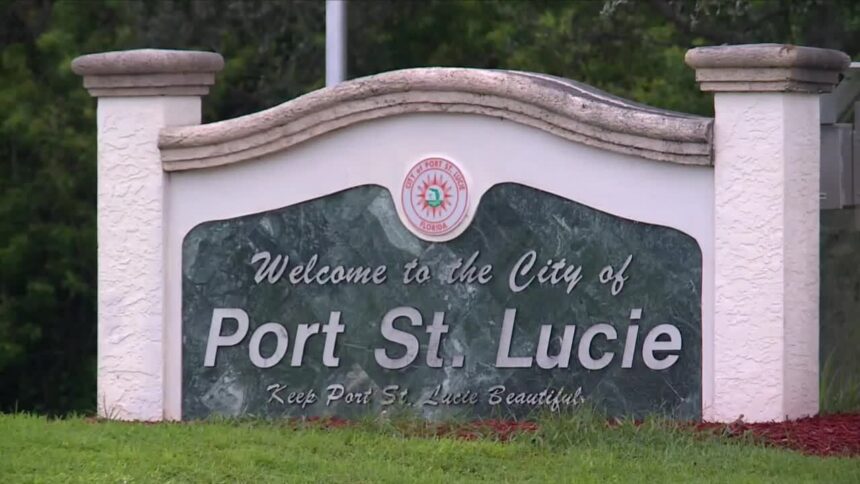
Port St. Lucie continues its streak of record, unstoppable growth. A recent report has revealed that, for the fifth consecutive year, the city leads the nation as the fastest-growing in population, according to the U.S. Census Bureau’s Vintage 2025 population estimates.
This steady and sharp population increase brings profound transformations to the region, directly impacting the local economy, cost of living, job opportunities, and daily quality of life for its residents.

A Sustained Population Boom
The pace at which the city is expanding is remarkable. By 2026, Port St. Lucie’s population has reached 281,097 residents, showing a strong annual growth rate of 4.86%. This steady influx of new residents presents exceptional economic opportunities but also significant structural challenges for the region.
Impact on the Economy and Jobs
The arrival of new residents has acted as a powerful economic engine for the area.
- The local economy has expanded impressively, with a 47% jump in its Gross Domestic Product (GDP).
- Entrepreneurial activity has flourished dramatically, showing a 108% increase in the formation of new businesses.
- Local wages have kept pace with this boom, rising by 32%, placing the average household income at $80,648 per year.
- However, while overall employment levels have remained stable, intense competition has caused the unemployment rate to rise slightly by 1%.
Housing, Cost of Living, and Infrastructure
As thousands of families choose Port St. Lucie as their new home, housing demand has surged, directly impacting the cost of living.
To keep up with this boom, the city’s housing inventory has grown by 18%. However, persistent demand continues to drive up real estate prices, an inevitable phenomenon in rapidly expanding cities.

The growth also puts pressure on the city’s infrastructure. Despite the massive population increase, local road mileage has grown by just 0.4% in recent years, presenting major challenges for traffic and daily mobility for drivers.
Quality of Life and Urban Safety
Socially, the rapid growth has driven a demographic shift that is elevating talent and education levels in the area.
- The percentage of residents with a college degree or higher education has increased by 18%, a key factor in building a highly skilled workforce.
- Regarding social and safety aspects, as is typical in cities experiencing population booms, the sudden influx of residents brings the need to increase resources for public safety and crime control. Local authorities face the ongoing challenge of ensuring that rapid urbanization does not compromise the community safety that has historically characterized the area.
Today, Port St. Lucie faces the major challenge of balancing its rapid economic development with preserving the well-being and quality of life for all its residents.