

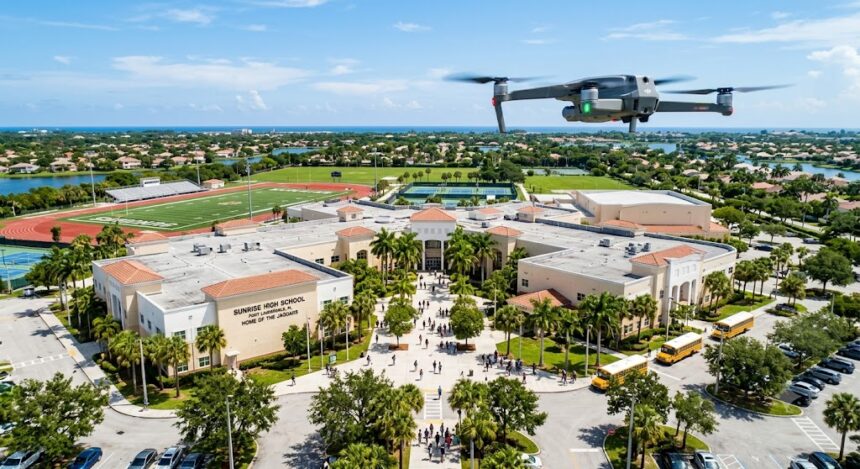
Nine schools in Florida, Georgia, and Colorado are implementing a drone system equipped with pepper spray capable of neutralizing an active shooter in 15 seconds, funded by state resources.
The search for solutions to curb the epidemic of gun violence in U.S. schools has led to the adoption of unprecedented technological measures. Nine educational institutions across Florida, Georgia, and Colorado have begun implementing an innovative defense system: aerial drones equipped with pepper spray, designed to immediately incapacitate an active shooter.

The project, funded with over $1.1 million in state funds, marks a shift toward the technological automation of school security. Its primary goal is to neutralize threats long before law enforcement can physically arrive on the scene.
How Does the Aerial Defense System Work?
The critical factor in any active shooter incident is time. While the average police response time can take several minutes, this technology is programmed to intervene almost instantly.
- Reaction speed: The devices are designed to fly through hallways, locate, and confront an active shooter in just 15 seconds after the system is activated.
- Non-lethal mechanism: Upon identifying the suspect, the drone deploys bursts of pepper spray. This causes temporary blindness and severe breathing difficulty, incapacitating the attacker without using lethal force.
- Remote-controlled operation: The drones are controlled from a secure location, allowing security personnel to have real-time vision through the device’s cameras and direct the tactical response without putting themselves in the line of fire.
Deployment and Funding
The implementation of this pilot system is a coordinated effort, financially backed by state governments seeking to equip their districts with cutting-edge preventive tools.
| State | Deployment Context |
| Florida | Leads the adoption of these technologies following a history of school safety reforms since 2018. |
| Colorado | Continues integrating advanced defense alternatives to protect its student communities. |
| Georgia | Joins the network of the first nine campuses to incorporate aerial devices into their emergency protocols. |
The state investment of $1.1 million covers the acquisition of the drone systems, the installation of necessary infrastructure in school hallways, and comprehensive training for authorized personnel to operate them.

A Debate Between Safety and the School Environment
While the technology offers a rapid tactical solution, its arrival in classrooms underscores a grim reality about the U.S. education system.
Supporters of the measure argue that any tool capable of stopping an aggressor in 15 seconds justifies the investment, as those seconds save lives. In contrast, some educators and psychologists express concerns about the environmental and emotional impact on students. They note that the presence of tactical devices ready to deploy chemical weapons (even if non-lethal) normalizes a state of alert that could turn schools into militarized spaces.
As this program advances in Florida, Georgia, and Colorado, school districts across the country will closely monitor its effectiveness to determine whether defensive drones will become the new standard for security in U.S. hallways.





