

A recent study by the Census Bureau reveals that Florida and 16 other states record more deaths than births. Learn about the consequences for the workforce and the economy.
A concerning demographic trend is reshaping the map of the United States. A recent analysis of Census Bureau data shows that Florida is among the 17 states in the country that have recorded more deaths than births in the past year.

This phenomenon, known as “natural population decrease,” poses serious challenges for the economic and structural future of these states, directly impacting population growth, workforce availability, and the long-term sustainability of the social security system.
Census Bureau Data
According to Census Bureau estimates for the period between July 2024 and July 2025, the birth landscape in the country is changing rapidly. In the past decade, only four states had a natural deficit, but that number has now surged to 17.
Florida Vital Statistics
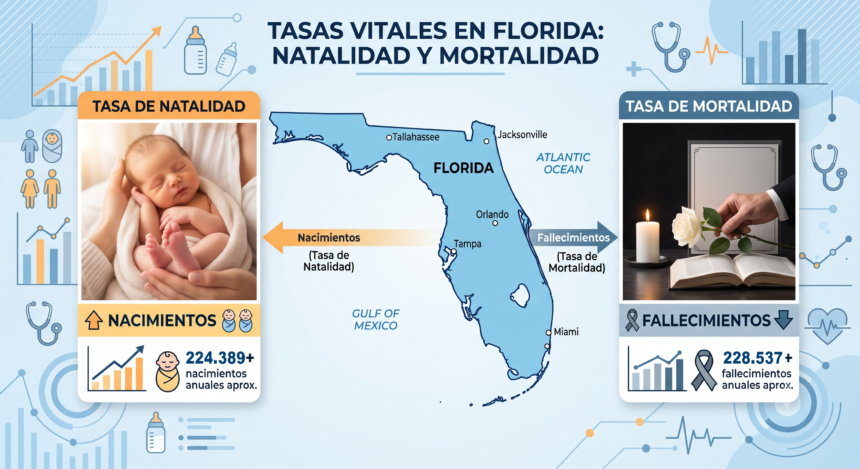
- Births: 224,389 live births to residents, with a birth rate of 9.7 per 1,000 inhabitants.
- Deaths: 228,537 deaths of residents, reflecting a slight decrease from the previous year.
- Natural growth: Deaths outpaced births, a demographic trend in which the state’s population growth is sustained mainly by migration.
The data shows that:
- Florida joins the list: The state reported a negative balance, solidifying the trend where deaths exceed births.
- National impact: Other states heavily affected by this negative balance include Pennsylvania, West Virginia, Maine, and Michigan, with most natural decreases concentrated in the Northeast and the Appalachian region.
- Main causes: Experts point out that this demographic shift is driven by the accelerated aging of the population, rising cost of living, and a sustained decline in the national fertility rate. Currently, the fertility rate in the United States remains below the replacement level of 2.1 children per woman.
Economic and Social Consequences
The fact that fewer people are being born than are dying creates a domino effect that concerns economists and state planners. The direct consequences of this demographic reality include:

- Shrinking Workforce: As the baby boomer generation retires, there are not enough young workers entering the labor market to replace them, which could lead to talent shortages and slow local economic development.
- Pressure on Social Security: A smaller number of active workers paying taxes compared to a growing number of retirees jeopardizes the sustainability of healthcare and pension programs.
- Total Dependence on Migration: To avoid population decline, affected states are forced to rely on new residents.
Florida’s Lifeline: Migration
Despite recording more deaths than births, Florida is not emptying out. In fact, it remains one of the states with the highest population growth in the country.
The reason? The state more than compensates for its “natural decrease” thanks to massive migration rates. Thousands of people, both from other states (domestic migration) and other countries (international migration), continue to move to Florida each year. However, experts warn that relying solely on migration to sustain the economy could make the state vulnerable to future changes in migration patterns.
Authorities and lawmakers now face the challenge of designing long-term strategies to attract young residents, reduce costs for families who want to have children, and adapt infrastructure for a future where births are no longer the engine of growth.





