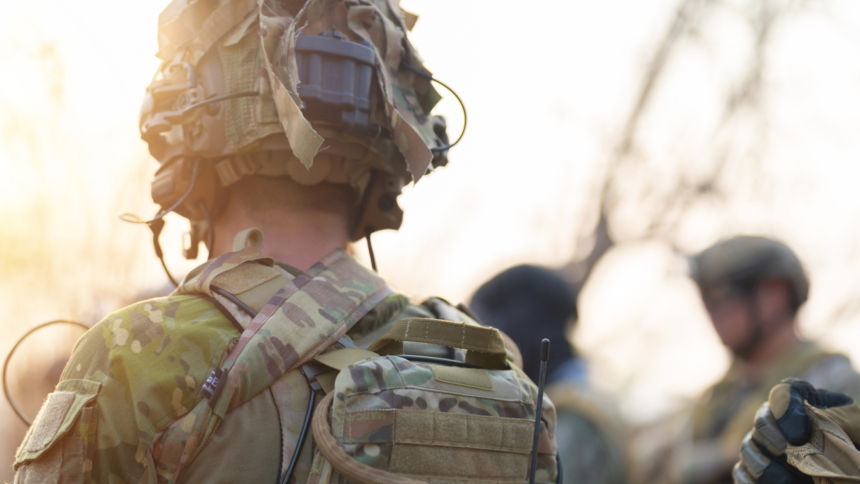
If you have a son, brother, spouse, or friend serving in the U.S. Armed Forces and deployed at military bases in the Middle East (such as in Iraq, Syria, or the Gulf states), you know that concern for their safety is a constant shadow. However, the nature of the threat has just changed dramatically.
- The anatomy of asymmetric warfare: Why resort to individual bounties?
- 1. The use of proxies and plausible deniability
- 2. The Pentagon’s response: Zero tolerance and active protection
- Table: Confrontation strategies — Iran’s approach vs. U.S. defense doctrine
- Practical guide: What does this escalation mean for military families and global security?
It is no longer just about the inherent risks of regional geopolitical conflicts or the sporadic launch of ballistic missiles and drones by militias allied with Tehran. The latest intelligence directive points to a strategy of direct and personalized hunting: the establishment of a quantifiable monetary bounty—estimated at around $30,000—offered to local elements and sleeper cells for each U.S. soldier captured or killed. The truth is that this tactic, reminiscent of the darkest chapters of the wars in Iraq and Afghanistan, aims to sow psychological terror and raise the human cost of the U.S. military presence in the region. How is the Pentagon responding to this provocation, and what does it mean for global security? Let’s get to the point.

The pulse of the military crisis (Snippet Bait): Defense intelligence reports have confirmed that networks loyal to Iran’s Revolutionary Guard have established bounties of up to $30,000 for the capture or death of U.S. soldiers deployed at strategic facilities in the Middle East. This measure seeks to incentivize low-tech but high-psychological-impact targeted attacks, forcing the Pentagon to raise security protocols to the highest level and threaten a swift military response to any loss of its personnel.
The anatomy of asymmetric warfare: Why resort to individual bounties?
To understand the logic behind this dangerous strategy, we must examine how Tehran operates on the contemporary military chessboard.
1. The use of proxies and plausible deniability
Iran rarely confronts the U.S. superpower directly and conventionally. The military cost of an open war would be devastating to its economy and regime. Instead, Tehran has perfected the art of hybrid warfare through intermediary militias in Iraq, Syria, Lebanon, and Yemen.
- The economic incentive in depressed economies: In regions devastated by war and inflation, a sum of $30,000 represents a fortune capable of tempting local fighters, common criminals, or radical sympathizers to carry out reconnaissance missions, sniper attacks, or improvised explosive device (IED) attacks against convoys and smaller bases.
- The advantage of tactical distance: By offering bounties through intermediaries, the Iranian regime seeks to maintain a façade of “plausible deniability,” attempting to deter massive direct retaliation while systematically eroding the morale and security of U.S. troops.
2. The Pentagon’s response: Zero tolerance and active protection
The Department of Defense has not taken this threat lightly. Regional commands have issued maximum force protection alerts (Force Protection Condition – FPCON) at all their bases within the U.S. Central Command (CENTCOM) area of responsibility.
- The uncomfortable truth: Military commanders have made it clear that any attack resulting in the death or kidnapping of a U.S. service member will provoke a disproportionate and direct kinetic response against the assets and infrastructure of the Revolutionary Guard, no matter where they are located. Deterrence is no longer based on diplomatic warnings but on the promise of immediate retaliation.
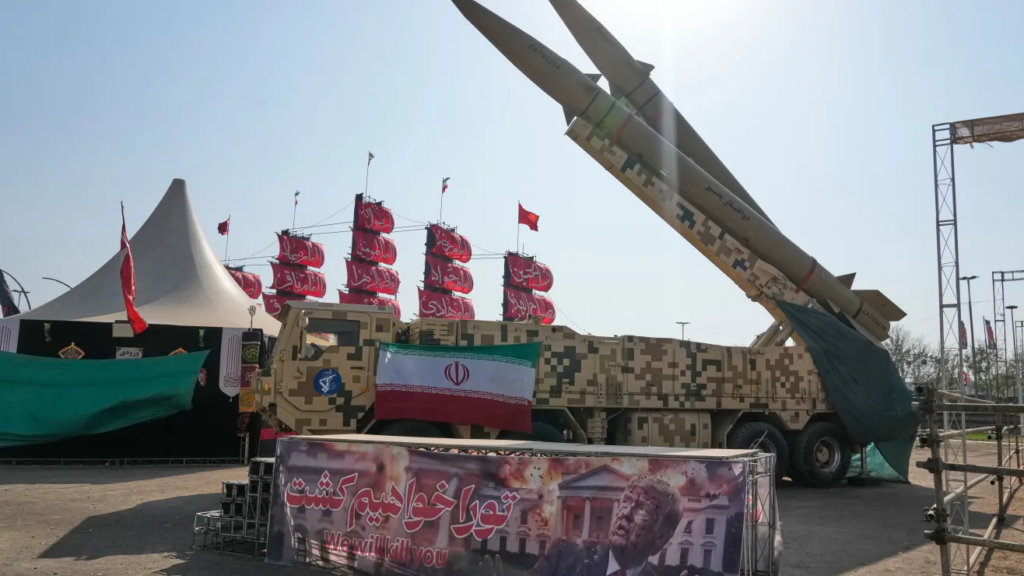
Table: Confrontation strategies — Iran’s approach vs. U.S. defense doctrine
To visualize with absolute precision the clash of military doctrines in this new phase of tension, we contrast the methods of both sides:

| Strategic Axis | Tehran’s Tactic (Asymmetric Warfare) | U.S. Doctrine (Decisive Response) |
| Nature of Attack | Covert operations, local militias, individual bounties for lives. | Massive deployment of cutting-edge technology, satellite intelligence, and advanced air defense. |
| Execution Channel | Regional armed groups (proxies) to maintain diplomatic distance. | Precision direct attacks against Revolutionary Guard bases and command centers. |
| Psychological Objective | Generate physical and emotional attrition, seeking a gradual withdrawal from the region. | Demonstrate that no aggression against a U.S. soldier goes unpunished with severe military consequences. |
| Risk Mitigation | Use of civilians and expendable fighters as attack instruments. | Strict reinforcement of base perimeters and digital/human counterespionage. |
Practical guide: What does this escalation mean for military families and global security?
We live in an interconnected world where decisions in Tehran or Washington directly impact the peace of mind in American homes. If you have family members or loved ones connected to the armed forces, it is crucial to understand the background of this situation.
1. Extreme vigilance in high-risk zones: The psychological impact on forward bases.
For soldiers stationed at small bases or forward outposts in the desert, the shadow of a bounty on their capture means that daily routine has completely disappeared. Internal security measures have tripled: absolute movement restrictions outside bases, constant counterintelligence patrols, and a ban on using personal phones or social media that could reveal real-time geolocation.
2. Unbreakable red lines: The U.S. diplomatic stance.
Washington has sent direct and forceful messages through intermediary diplomatic channels (such as Switzerland or Gulf countries): if a single U.S. soldier dies as a result of these bounties or targeted attacks, the U.S. response will not be limited to striking local militias but will directly target the territory and strategic interests of the Iranian regime. Containment has a very clear limit.

3. Managing anxiety and official information channels: Support for military families at home.
For families waiting at home on U.S. bases (such as in Texas, Florida, or North Carolina), hearing this type of news generates an immense emotional burden. The recommendation from military chaplains and family liaison officers is to stay away from alarmist rumors on social media and rely exclusively on official military branch communication channels, which have strict protocols to immediately notify families in the event of any real incident.
The truth is that Iran’s decision to place bounties on the lives of U.S. soldiers represents a dangerous escalation that pushes the region to the brink of a conflict of unpredictable proportions. For our community, which understands the human sacrifice involved in military service, this news underscores the enormous complexity of modern geopolitics. We will continue to closely monitor defense reports to keep you informed with the truth, without alarmism but with absolute seriousness.
Image: ElHispanoParaTodos/PRESS