

Saving for years to buy the home of their dreams, but being unable to afford the rising costs of homeowners insurance or property insurance makes this dream increasingly out of reach.
This is a common problem in Florida, where the average insurance premium costs homeowners an exorbitant $6,000 per year. That’s more than triple the national average and roughly three times what Floridians paid on average for insurance premiums in 2018.
It’s important to understand what’s driving up costs, especially since other states could soon face a similar situation.

In addition, several major insurance companies left the state last year, leaving residents with limited alternatives.
Three main factors are driving the insurance challenge. First, natural disasters are becoming more common and costly. Second, the price of reinsurance is skyrocketing. And finally, Florida’s litigation-friendly environment exacerbates the problem by making it easier for customers to sue their insurers.

Disasters, like sea levels, are on the rise
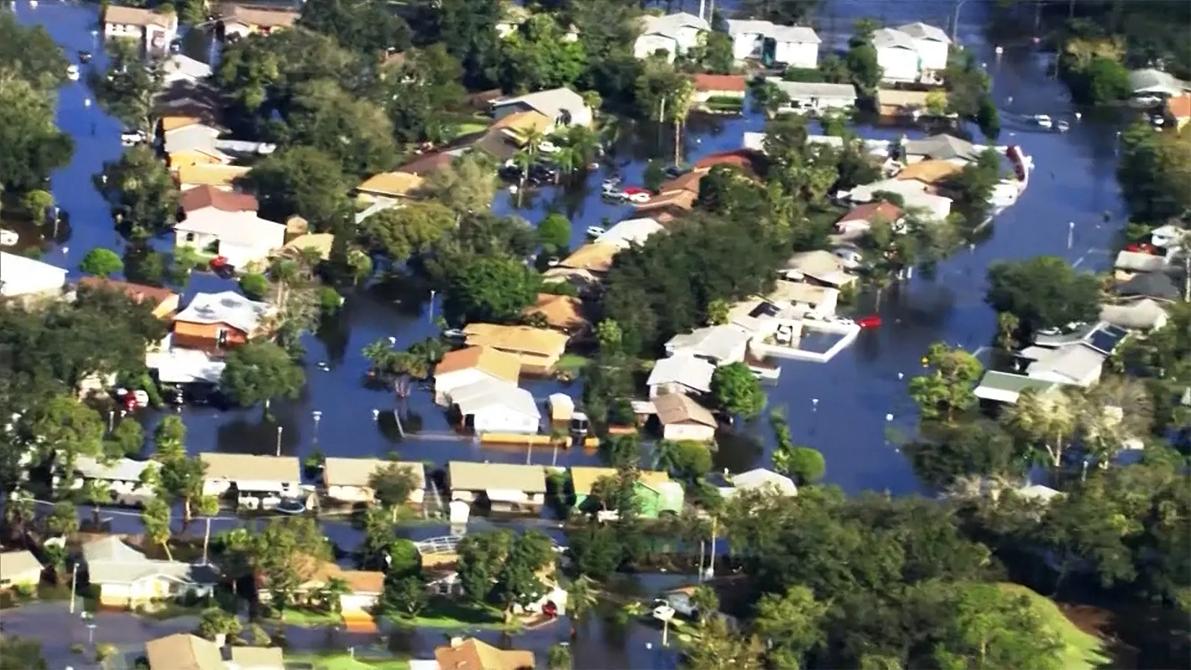
With its location on the beautiful but hurricane-prone Gulf of Mexico, Florida has long been vulnerable to the elements. Natural disasters cost the state between $5 billion and $10 billion each year, according to federal estimates.
However, that likely underestimates the current situation, as disasters have only grown larger, more frequent, and more costly since then. For example, climate change has warmed the oceans, which research shows fuels stronger and more intense hurricanes.
As a result, Florida has experienced billion-dollar disasters an average of four times a year over the past five years, compared to roughly one per year in the 1980s.
This increase in disasters not only puts lives at risk but also wreaks havoc on the insurance market, as companies are flooded with claims from one catastrophe after another. This makes it difficult for them to turn a profit or secure reinsurance to protect their stakeholders.


Why reinsurance matters
Insurance companies, at their core, make money in two ways.
First, they share risk among policyholders. Risk pooling is the practice of taking people or properties in similar situations, grouping them, and charging similar prices for insurance since they face the same risk.
Second, they reduce risk by purchasing reinsurance. Reinsurance acts as a safeguard for insurance companies; it’s essentially insurance for insurers. Reinsurers agree to cover a portion or specific type of insurance claim (for example, catastrophic hurricanes), providing a layer of financial protection.

The new era of climate disasters has hindered the process.
Reinsurance companies, facing a surge in claims due to more frequent and severe disasters, have been forced to raise their premiums for insurance companies. Insurers, in turn, have passed the burden on to policyholders.
To try to overcome these challenges, some companies have chosen to limit coverage to specific types of damage. For example, some insurance companies in Florida will no longer offer hurricane or flood coverage. And in extreme cases, insurance companies have pulled out of the state entirely.
Understanding this complex relationship between insurers, reinsurers, and policyholders is key to grasping the broader implications of Florida’s insurance crisis. It underscores the urgent need for comprehensive solutions and collaborative efforts to address the evolving challenges in the insurance ecosystem.

Learning from Florida… one way or another
Florida isn’t taking this lying down. In December 2022, state lawmakers responded to the growing instability in the housing market by passing Senate Bill 2A, a package of insurance reforms.
A significant part was a rule change designed to deter policyholders from suing their insurers. Previously, Florida law allowed insured individuals to recover attorney fees if they won any amount through litigation against their insurer.
The idea is that making this change will discourage unnecessary lawsuits. However, my research as an environmental justice professor shows that attempts to exclude lawyers from the negotiation process often lead to more costly litigation and reduced access to justice.
The bill also restricts assignment of benefits, a mechanism that allows third-party entities, such as roofing companies, to negotiate with insurance companies on behalf of Florida residents. While assignment of benefits increased advocacy, it was also linked to soaring claim costs.

The balancing act between providing broad opportunities and containing costs has sparked debate among justice advocates. Florida’s legislative response reflects an ongoing effort to strike a balance, ensuring fairness and accessibility while addressing the challenges faced by both insurers and policyholders.
Florida’s actions to address the property insurance crisis raise a critical question:
Will the state serve as a model for disaster-prone regions or act as a warning? After all, states like California and Louisiana have also seen insurance companies withdraw from their markets. Will their legislatures take inspiration from Florida’s?
For now, it’s too soon to tell: the policies have only been in place since the last round of hurricanes. But in the meantime, the rest of the U.S. will be watching, especially policymakers concerned with resilience and those who want to ensure that vulnerable populations don’t bear the brunt.
Image: Wfla





