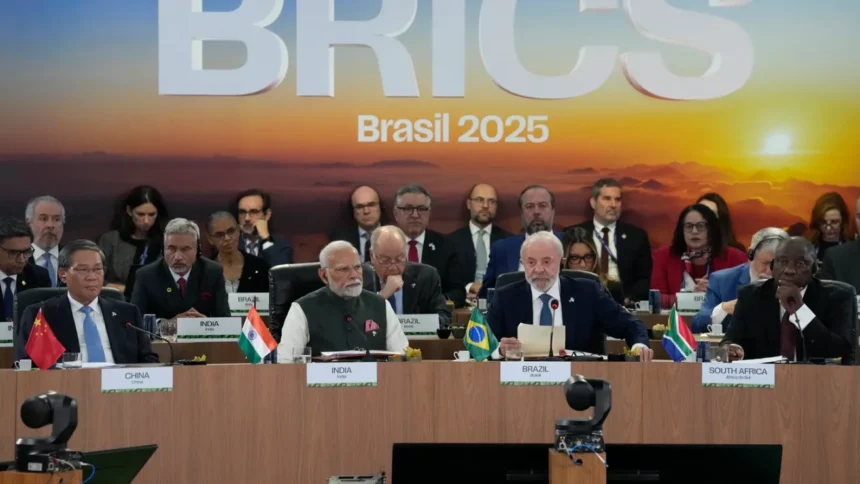
The BRICS bloc of nations, founded by the governments of Brazil, Russia, India, China, and South Africa, comprises some of the world’s most significant emerging economies seeking to counter U.S. hegemony and Western economies’ influence over the rest of the world.
- What Are the BRICS, and How Do They Plan to Dedollarize the World?
- Initially, the BRICS have proposed the possibility of using their own currencies or creating a common one for transactions to reduce the dollar’s power, which currently underpins the world’s reserve currency and is the most widely used globally.
- However, they have made progress in several areas:
- J.P. Morgan notes that if this process continues, it could lead to several significant consequences, such as:
- U.S. Concerns Over Weakening BRICS’ Actions
Raekwon and Mobb Deep Join Forces for Exciting North American Tour with Havoc, Tickets Available Now

Now, the bloc is attempting to devise measures that serve as a response to the tariff policies implemented by the United States against other countries, which in some cases have had severe effects on certain sectors or governments.
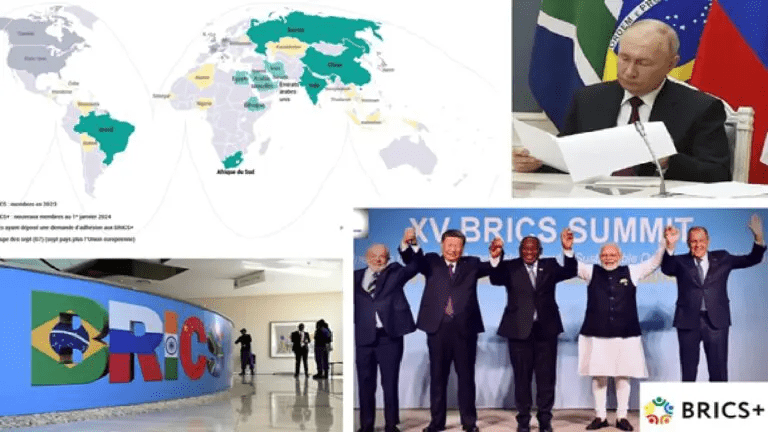
What Are the BRICS, and How Do They Plan to Dedollarize the World?
In response, the BRICS group has sharply criticized the policies of Donald Trump and even made moves that, if implemented, would significantly concern the U.S. government, as the economic union of Brazil, Russia, India, China, and South Africa represents 25% of global Gross Domestic Product (GDP).
This bloc originally emerged between 2009 and 2010 and has slowly gained ground in economic cooperation. If it consolidates and gains more supporters, it could indeed pose a threat to U.S. geopolitical dominance.
Initially, the BRICS have proposed the possibility of using their own currencies or creating a common one for transactions to reduce the dollar’s power, which currently underpins the world’s reserve currency and is the most widely used globally.

Though discussions have been intermittent, this initiative resurfaced during the 2022 BRICS summit when Russian President Vladimir Putin announced that the bloc was working on creating a “new global reserve currency” or, at the very least, prioritizing their own currencies within the group instead of the dollar.
Months later, following Russia’s invasion of Ukraine and the harsh economic sanctions imposed on it, countries opposed to the Western bloc witnessed how the U.S. and its allies can use a currency “as a weapon” to create significant impacts on adversarial governments.
In subsequent summits (2023, 2024, and 2025), BRICS members have continued advancing this agenda, now with the support of Brazilian President Luiz Inácio Lula da Silva, who has expressed his intention to use local currencies for financing trade within the group, in a process known as ‘dedollarization.’

According to J.P. Morgan, ‘dedollarization’ involves: “a significant reduction in the use of the dollar in global trade and financial transactions, decreasing national, institutional, and corporate demand for the dollar.”
This process has continued its slow development to undermine U.S. global hegemony, especially as the U.S. affects economies worldwide one by one.
However, they have made progress in several areas:
Russia and China have significantly increased their bilateral trade using their own currencies, the yuan and ruble, respectively, to bypass U.S. sanctions, while India and the United Arab Emirates have begun paying for oil exchanges in rupees.
Another example is the creation of a New Development Bank (NDB), an alternative financial institution offering loans without the conditions imposed by the World Bank and the International Monetary Fund (IMF).
J.P. Morgan notes that if this process continues, it could lead to several significant consequences, such as:
- Affecting the U.S. economy: A depreciation of the dollar and lower returns on U.S. financial assets compared to those of the rest of the world.
- Impact on capital markets: Reducing the dollar’s global dominance could lead to a reallocation of investments in other markets, negatively affecting returns.
- Increase in U.S. inflation: A weaker dollar could raise inflation in the U.S. by increasing the cost of imported goods and services, though these effects may be relatively minor, according to J.P. Morgan’s analysis.
- Increased volatility: Greater exchange rate volatility, particularly for a group of over 60 currencies directly tied to the dollar.
- Trade diversification: This process has already led to diversification in global trade, with a growing number of energy transactions quoted in currencies other than the dollar.
U.S. Concerns Over Weakening BRICS’ Actions
This gradual progress has raised concerns in the United States, where it is seen as a direct threat to its economic dominance, given the dollar’s role in imposing sanctions, controlling capital flows, and maintaining low borrowing costs.
Experts in Washington have warned that large-scale dedollarization could weaken the U.S. economy and reduce its global hegemony. As a result, President Trump has stated that the BRICS are actively seeking to undermine the U.S. position, as these countries “are forming a bloc to oppose us,” and he has threatened higher tariffs on member countries and those supporting this geopolitical initiative.
While many analysts believe the dollar’s dominance is difficult to reverse, the BRICS initiative reflects how governments worldwide are seeking a shift in geopolitical power.
Image: DiarioNY