This is the final rule known as “Biometric Data Collection,” which expands the use of facial recognition as part of the immigration control system at airports, land crossings, seaports, and other authorized exit points in the country.
According to U.S. Customs and Border Protection (CBP), every person traveling to or from the United States must stand in front of a camera connected to a secure system.

This system analyzes the traveler’s facial features and compares them with the photograph on their passport or other travel document.
Once the identity is confirmed, the system indicates whether the traveler may proceed or must undergo additional inspection.
Immigration attorney Jeremy Anderson explained that this process has already been gradually implemented: “Every time you enter the United States, they take your photo, and when you leave through the airport, passing through TSA, they also take it,” he noted.
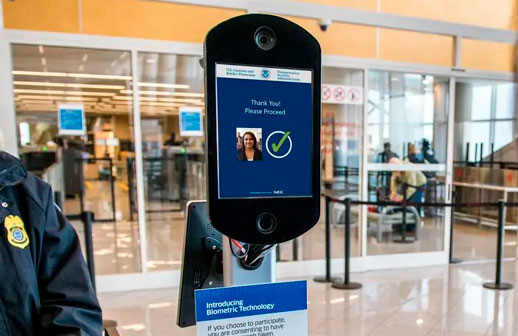
According to DHS, the collection of biometric data will allow authorities to identify criminals and potential terrorists, prevent visa and document fraud, detect individuals who overstay their permitted time in the country, and prevent the illegal reentry of previously deported individuals.
Anderson warned that, although immigration law has not changed, biometric information can be used if an officer detects irregularities: “If an officer suspects you are violating your visa rules, they can access this information to support that suspicion,” he stated.

The rule does not require U.S. citizens to participate, who may do so voluntarily.
U.S. Customs and Border Protection (CBP) assures that photographs of U.S. citizens are deleted within 12 hours, while images of foreign nationals may be retained for up to 75 years as part of the official biometric identification system.
Image: T51