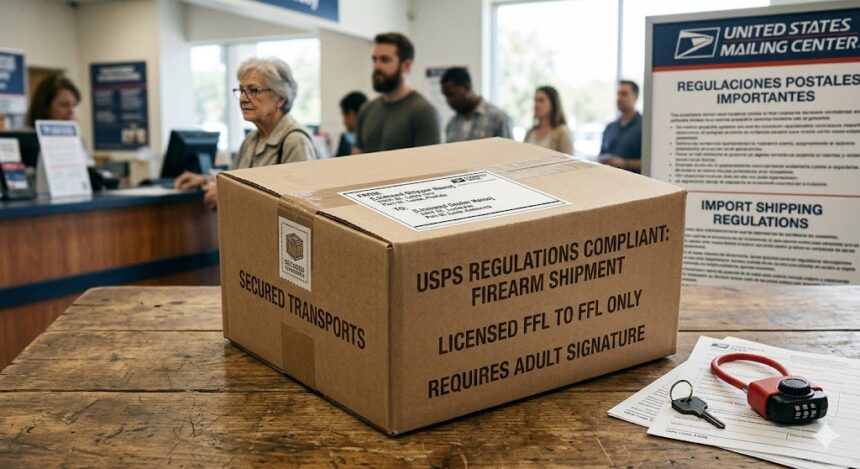
If you think you can just toss your Glock into a cardboard box, slap on a “Priority Mail” stamp, and drop it in the corner mailbox, stop right now. You might be buying a one-way ticket to federal prison with no layovers.
The idea that the U.S. Postal Service (USPS) is the “Uber of guns” is a dangerous myth circulating in online forums and chat groups. The reality is that while it is possible to mail firearms, the legal path is so narrow that one misstep turns you into a criminal in the eyes of the ATF.

Quick Answer (Snippet Bait): According to federal regulations and USPS rules (Publication 52), it is illegal for a private individual to mail a pistol or revolver (handguns) via USPS to another unlicensed person. Handguns can only be shipped through USPS by manufacturers, dealers, or collectors with a Federal Firearms License (FFL) and under extremely specific conditions. Private citizens generally must use private courier services (like UPS or FedEx) and always direct shipments to a licensed FFL recipient.
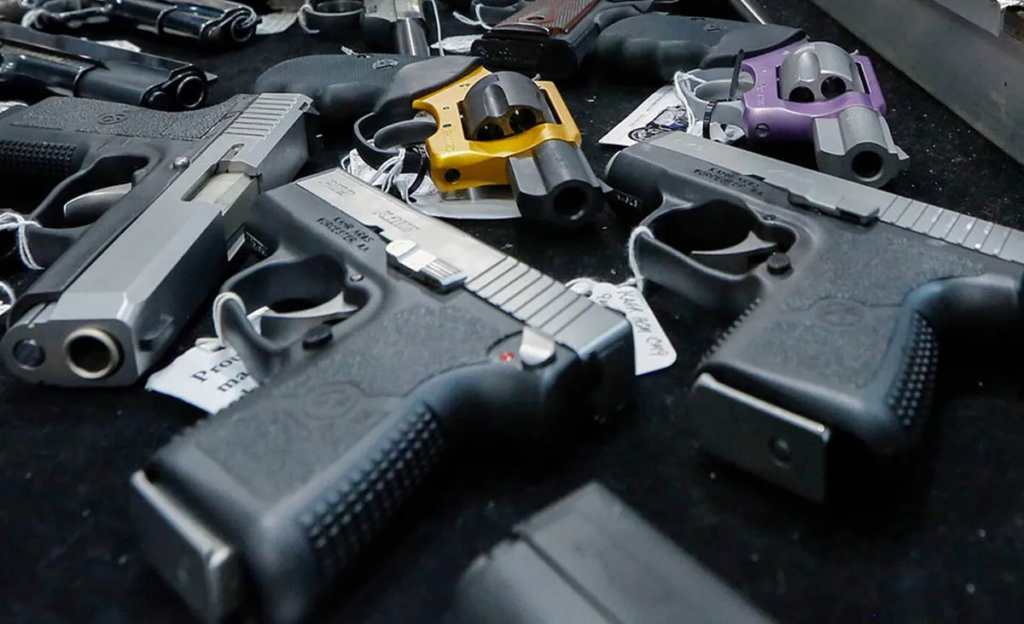
1. The Legal Maze: Why Is USPS So Strict About Handguns?
Unlike rifles or shotguns (long guns), handguns are treated with surgical precision by the Postal Service. This isn’t a whim of your neighborhood post office; it’s a legacy of the Firearms Mailing Act of 1927.
What Does the Law Actually Say?
The regulations clearly distinguish between who is sending and what is being sent. The truth is, USPS prefers not to handle handguns unless absolutely necessary.
- Pistols and Revolvers: These are banned for shipping between private citizens. Period. It doesn’t matter if it’s a gift for your cousin in Texas or an online sale.
- Rifles and Shotguns: There’s a little more flexibility here, but “a little” doesn’t mean “total freedom.” A resident of one state can mail a long gun to themselves in another state for hunting purposes, but the package must be addressed to themselves.
Do we really want anyone to be able to mail a firearm without a trace? Probably not, and the federal government agrees. Control over handguns is stricter because they are easier to conceal and are involved in most criminal incidents.
2. The Only Ones Who “Get Through the Window”: Who Can Use USPS
Here’s the interesting part. The Postal Service hasn’t shut the door on firearms—it’s just posted an armed guard (metaphorically) at the entrance. Only the following groups can legally mail handguns:

- Manufacturers and Dealers with FFL: If you have a federal license, you can ship to and receive from other licensees.
- Law Enforcement and Military: Under official orders or for service purposes, using specific forms (like USPS Form 1508).
- Government Agents: In the performance of their duties.
Legality Table: Who Can Ship What?
| Type of Firearm | Private Citizen to Private Citizen | Private Citizen to Licensed (FFL) | Between Licensed (FFL) |
| Handgun | PROHIBITED | PROHIBITED (via USPS) | PERMITTED |
| Rifle / Shotgun | PROHIBITED (Interstate) | PERMITTED | PERMITTED |
| Antiques (Pre-1898) | PERMITTED | PERMITTED | PERMITTED |
3. What About UPS and FedEx? The Private Alternative
This is where many Hispanics in the U.S. get confused. If USPS says no, does that mean you can’t ship your handgun to a repair center or a buyer in another state? Not necessarily, but the rules have changed dramatically in recent years.
Previously, you could go to a UPS center and ship your firearm to a manufacturer. Today, UPS and FedEx have tightened their internal policies. Most of these companies now require the sender to also be a Federal Firearms License (FFL) holder.
Here’s the golden advice: If you need to ship a handgun, the safest, most legal, and simplest way is to go to a local gun shop, pay a transfer fee, and let them handle the shipping. They have the license, they know the protocol, and they assume legal responsibility for tracking.

4. Packaging Requirements: Get It Wrong, Go to Jail
Let’s say you’re a police officer or a licensed collector. You can’t just toss the handgun into a box. USPS has safety rules that, if ignored, can cause serious accidents or thefts.
- No External Markings: The package cannot have any signs, drawings, or labels indicating it contains a firearm. This is to prevent theft during transit.
- 100% Unloaded: Seems obvious, right? Yet you’d be surprised how many people forget a bullet in the chamber. This is a serious crime.
- Ammunition Separation: It is strictly prohibited to ship ammunition in the same package as the firearm. In fact, USPS almost entirely bans shipping ammunition by air (it must go by ground and with ORM-D hazardous material labels).
- Adult Signature Required: The package must be sent with a service that requires an adult signature upon delivery.
“Ignorance of the law is no excuse.” In the world of firearms in the U.S., this phrase is the difference between a quiet weekend and a 10-year sentence in a federal penitentiary.
5. The Danger of “Ghost Guns” and the Mail
In the current landscape, there’s a lot of attention on ghost guns (3D-printed parts or 80% kits). If you’re thinking about mailing parts that can be assembled to create a handgun, be careful. The ATF has reclassified many of these components as “firearms.” Shipping them via USPS without following the rules for a completed handgun puts you at the same legal risk.
Image: ElHispanoParaTodos/PRESS