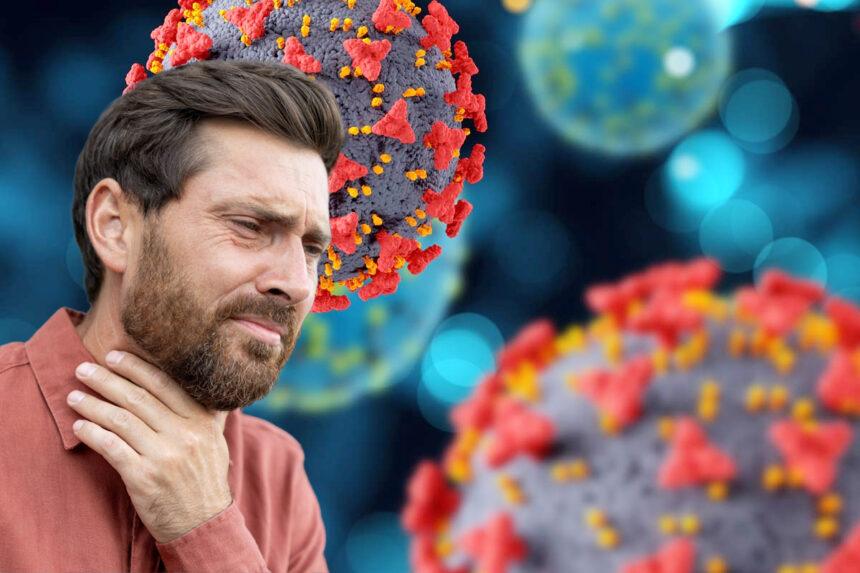
A new wave of COVID-19 infections, driven by more transmissible variants, is causing growing concern in several communities across the United States during the summer of 2025.
Recent data from the Centers for Disease Control and Prevention (CDC) indicates that the infection rate is rising or likely rising in at least 27 states nationwide.

Public health officials attribute this surge to a combination of factors, including waning immunity in the population and the emergence of new Omicron subvariants. This pattern of a summer spike in cases, followed by another in winter, appears to be consolidating as a biannual trend in the virus’s behavior.
“Nimbus” and “Stratus”: The Dominant Variants
Two new Omicron offshoots, unofficially nicknamed “Nimbus” (NB.1.8.1) and “Stratus” (XFG), have been identified as the main drivers of the current wave of infections. According to reports, these variants are characterized by their high transmissibility, though they have not been shown to cause more severe illness compared to their predecessors.
One symptom that has drawn the attention of doctors and patients infected with the “Nimbus” variant is an extremely sharp sore throat, described by some as “razor blades in the throat.” Other common symptoms remain respiratory, such as cough and congestion, along with fatigue and fever.
Communities and States on Alert
The increase in cases is not uniform across the country, but several regions and states have raised alarms due to pressure on their healthcare systems.

- States with Confirmed Growth: The CDC has noted sustained case growth in states such as Arkansas, Hawaii, Illinois, Iowa, Kentucky, North Carolina, Ohio, Pennsylvania, Texas, and Virginia.
- States with Probable Growth: An even broader list of states shows an upward trend, including California, Florida, Georgia, Indiana, Michigan, New Jersey, and New York.
- Most Affected Regions: A significant increase in COVID-19-related emergency room visits has been observed in the Southeast and Pacific Northwest regions.
- Specific Communities: Locally, cities like Chicago have reported a notable rise in patients seeking emergency care for the virus. Meanwhile, the Hawaii Department of Health has declared that virus activity is at a medium-high level, urging the public to take precautions.
Public health officials reiterate the importance of preventive measures, especially for individuals over 65, those who are immunocompromised, and people with chronic medical conditions. Recommendations include getting updated booster doses, wearing masks in crowded or poorly ventilated indoor spaces, and testing when symptoms appear.