If you were planning to speed up your path to a Green Card or renew your work visa, grab a calculator. U.S. Citizenship and Immigration Services (USCIS) has delivered a blow—both authoritative and financial—to immigrants’ wallets. Starting March 1, 2026, Premium Processing fees (Form I-907) have officially increased.
The reason? A word we all know well: inflation. According to the USCIS Stabilization Act, the agency has the authority to adjust its fees every two years based on the Consumer Price Index. In short, if the cost of living goes up, so do the immigration processes.

Quick Answer:
As of March 1, 2026, the cost of premium processing for most petitions (such as the I-140 and I-129) has risen from $2,805 to $2,965. Other forms, like the I-765 (OPT work permit), have increased from $1,685 to $1,780. Any application submitted with the previous amount will be automatically rejected.
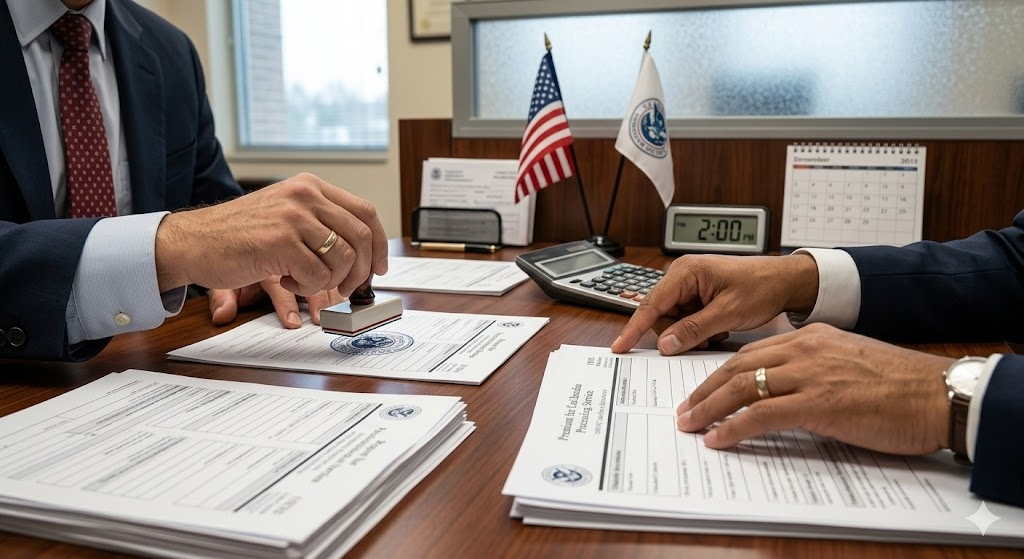
The New Price Breakdown: How Much Do You Have to Pay Now?
Not all processes increased by the same amount, but almost none were spared. Here’s a breakdown of the most critical changes so you don’t get an unpleasant surprise when sending your check.
2026 Premium Processing Fee Comparison Table
| Form and Process | Previous Fee | New Fee (March 2026) | Increase |
| I-140 (Employment-Based Green Card/NIW) | $2,805 | $2,965 | +$160 |
| I-129 (H-1B, L-1, O-1, TN) | $2,805 | $2,965 | +$160 |
| I-129 (H-2B or R-1) | $1,685 | $1,780 | +$95 |
| I-539 (Change of Status F, J, M) | $1,965 | $2,075 | +$110 |
| I-765 (OPT/STEM Work Permit) | $1,685 | $1,780 | +$95 |
What Does This Mean for Your Wallet?
If you’re a professional on an H-1B visa or applying for a National Interest Waiver (NIW) Green Card, your process just got $160 more expensive. It may not seem like much on paper, but when added to attorney fees and base application costs, the American Dream is becoming a luxury item.
The Date Trick: The Danger of the Postmark
This is where many get confused and lose months of time. USCIS is unyielding when it comes to dates.
- If you submitted your application before March 1: The old price will be honored.
- If your package has a postmark of March 1, 2026, or later: You must include the new amount.
Watch out for this: If you use private courier services (FedEx, UPS, DHL), the date that counts is the shipping receipt date. If you use traditional mail (USPS), it’s the postmark date. Don’t take chances; if the payment is incorrect, your entire package will be returned, and you’ll lose your place in line.

Is Premium Processing Really Worth It in 2026?
The truth is… it depends. With current delays, standard processing for an I-140 can take between 6 and 10 months. Premium Processing guarantees a response within 15 to 45 calendar days (depending on the visa type).
Expert Opinion: “Is it worth spending nearly $3,000 extra? If your legal status is about to expire or you have a job offer that can’t wait, yes. If you’re not in a hurry, standard processing remains your best bet for saving money.”
Where Will This Money Go?
USCIS claims these funds aren’t for “going on vacation.” Supposedly, the revenue will be used to:
- Hire more immigration officers.
- Improve online portal technology.
- Attempt to reduce the massive backlog of cases that has left thousands of families waiting for years.
3 Critical Steps to Avoid Rejection of Your I-907
- Verify the form edition: Always download the most recent version of Form I-907 from the official USCIS website. Using an outdated version is grounds for immediate rejection.
- Exact check or money order: Make sure the amount is written correctly in both words and numbers. For example: “Two thousand nine hundred sixty-five and 00/100”.
- Consult with your employer: In many work visa cases, the employer is responsible for paying this fee. Ensure their accounting department is aware of the increase.
Images: ElHispanoParaTodos/PRESS