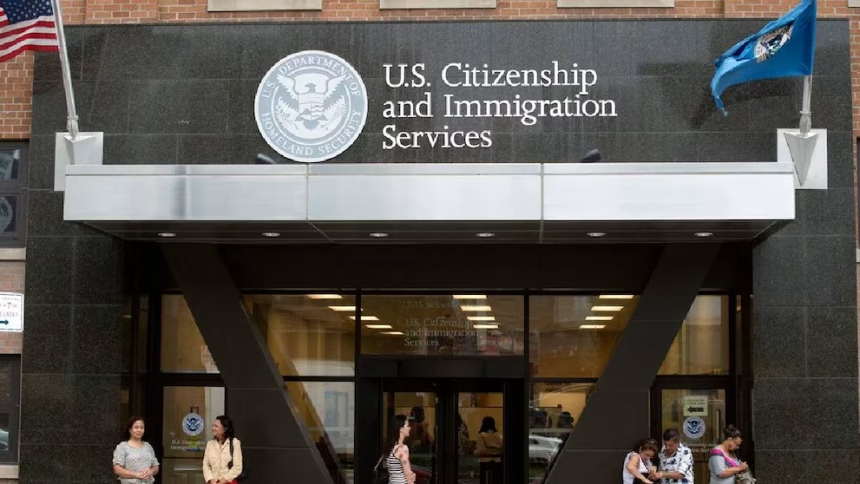
The U.S. Citizenship and Immigration Services (USCIS) issued policy memo PM-602-0201 (Good Moral Character Determination), which directs its officers to examine whether lawful permanent residents applying for U.S. citizenship deliberately failed to meet their financial support commitments to sponsored migrants. The directive took effect immediately in November 2026 and applies to both new Form N-400 applications and pending cases.
Main Focus Areas of the Review
- Failure to honor immigration sponsorship: Officials will assess whether the applicant neglected financial obligations assumed under Form I-864, I-864EZ, or I-864A (permanent residency), or under Form I-134 and I-134A (humanitarian parole).
- Impact of humanitarian parole: Although Forms I-134 and I-134A (used for citizens of Cuba, Haiti, Nicaragua, and Venezuela) do not impose a statutory legal obligation like Form I-864, deliberately abandoning that promise weighs against good moral character.
- Support for dependents: Officers will verify whether the applicant intentionally refused to financially support minor children or other dependents in the United States or abroad, regardless of whether a court order exists.
- Fraud or abuse of public benefits: Obtaining public assistance through false information, omitting income or sponsors, or schemes reflecting intentional evasion of self-sufficiency will be penalized.
Scope, Limits, and Exceptions
Lawfully receiving public benefits such as Medicaid, food stamps (SNAP), or Temporary Assistance for Needy Families (TANF) does not, by itself, prevent someone from obtaining citizenship. The memo specifies that a negative determination is not automatic and must be tied to specific conduct that violates community standards—not to situations of poverty, disability, or lawful receipt of assistance. Additionally, if a family member sponsored under Form I-864 received public assistance, the sponsor can generally demonstrate compliance by proving they maintained the required support of at least 125% of the federal poverty level.

During the review of the statutory period—typically the five years prior to the application, or three years for spouses of U.S. citizens—officers usually consider mitigating circumstances, such as involuntary job loss, genuine financial hardship, or subsequent payment of overdue support. USCIS also plans to update its Policy Manual and release a revised version of Form N-400 that will include specific questions about financial history and the use of public benefits.