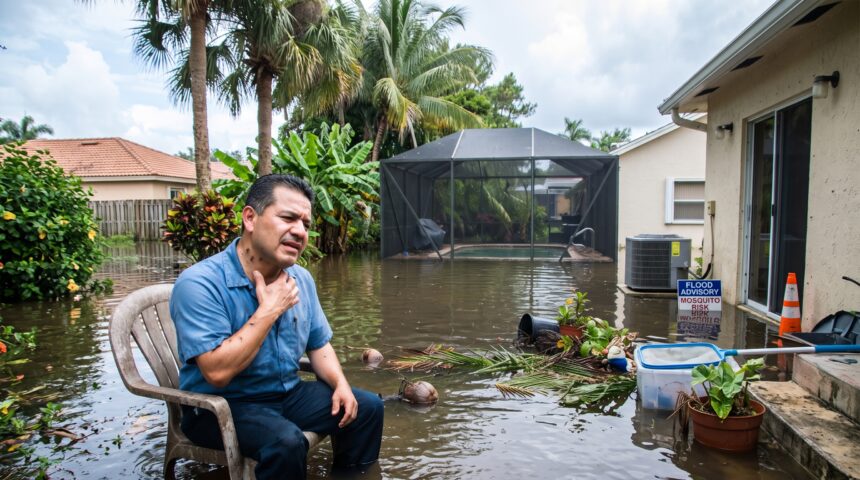
Discover how recent heavy rains and flooding in Florida have fueled a historic dengue outbreak. Learn about the risks in Palm Beach and the Treasure Coast, and find guides to protect your home.
- Discover how recent heavy rains and flooding in Florida have fueled a historic dengue outbreak. Learn about the risks in Palm Beach and the Treasure Coast, and find guides to protect your home.
- 🌊 The Impact on Palm Beach and the Treasure Coast
- ⚠️ What Dengue Symptoms Should You Watch For?
- 🛡️ Practical Guide: How to Prepare Your Home and Avoid Becoming Part of the Outbreak
The intense rains and subsequent flooding recorded across various regions of Florida have turned a climate emergency into a public health crisis. As the state grapples with one of the largest locally transmitted dengue outbreaks in decades—far surpassing previous years’ records—the massive accumulation of stagnant water threatens to trigger a new wave of Aedes aegypti mosquito proliferation.

The Florida Department of Health (FDOH) has active mosquito-borne illness advisories in multiple counties, including Palm Beach and the Treasure Coast counties (such as Martin and St. Lucie), where authorities have intensified calls for public prevention.
🌊 The Impact on Palm Beach and the Treasure Coast
Although the initial epicenter of the outbreak was concentrated in the Tampa Bay area, the climate reality of South and Central-East Florida makes Palm Beach and neighboring counties highly vulnerable zones.
- The danger of stagnant water: Recent downpours have left streets, parks, and residential yards flooded for days. The Aedes aegypti mosquito—the primary vector of the dengue virus—only needs a minimal amount of water (even the equivalent of a bottle cap) to reproduce and complete its life cycle in just a few days.
- Active water quality and health alerts: Agencies such as DOH-Martin and health offices in Palm Beach have issued preventive warnings due to overflowing drains and stormwater systems, reminding the public that floodwater not only carries bacteria but also exponentially accelerates populations of mosquitoes that transmit viruses like dengue, Zika, and chikungunya.
⚠️ What Dengue Symptoms Should You Watch For?
Dengue should not be taken lightly. Symptoms typically appear between 3 and 10 days after being bitten by an infected mosquito. Warning signs include:
- Sudden high fever (which can reach 40°C / 104°F).
- Severe headache and intense pain behind the eyes.
- Deep muscle and joint pain (commonly known as “breakbone fever”).
- Skin rashes that appear days after the fever begins.
- Nausea, vomiting, or extreme fatigue.
Important medical note: If you experience these symptoms after exposure to flooded areas or places with high mosquito activity, visit your trusted medical center. Avoid self-medicating with aspirin or ibuprofen, as these medications can increase the risk of bleeding if you have dengue. Use only acetaminophen (paracetamol) under medical supervision to manage fever and stay hydrated.
🛡️ Practical Guide: How to Prepare Your Home and Avoid Becoming Part of the Outbreak
The primary line of defense against dengue is preventing bites and eliminating breeding sites at home. Follow these key public health recommendations:

1. Apply the “Drain & Cover” Rule
- Eliminate puddles and containers: Empty, flip, or discard any objects that collect water outside your home: flowerpots, pet bowls, buckets, toys, tarps, clogged roof gutters, and old tires.
- Change water frequently: If you have animal water bowls or aquatic plants, change the water at least twice a week.
- Protect tanks and pools: Ensure that abandoned pools or storage tanks are properly treated or sealed with mosquito-proof netting.
2. Personal Protection Against Bites
- Use approved repellents: Apply insect repellents containing effective ingredients recommended by the Centers for Disease Control and Prevention (CDC), such as DEET, Picaridin, or lemon eucalyptus oil, especially when outdoors.
- Adjust your clothing: Whenever possible, wear long-sleeved shirts and long pants, preferably in light colors.
- Strengthen home barriers: Check that window and door screens are free of tears and keep doors closed to prevent mosquitoes from entering living spaces.
Stay informed through our official channels and follow updates from the Florida Department of Health to learn about mosquito control and vector spraying efforts in your community.