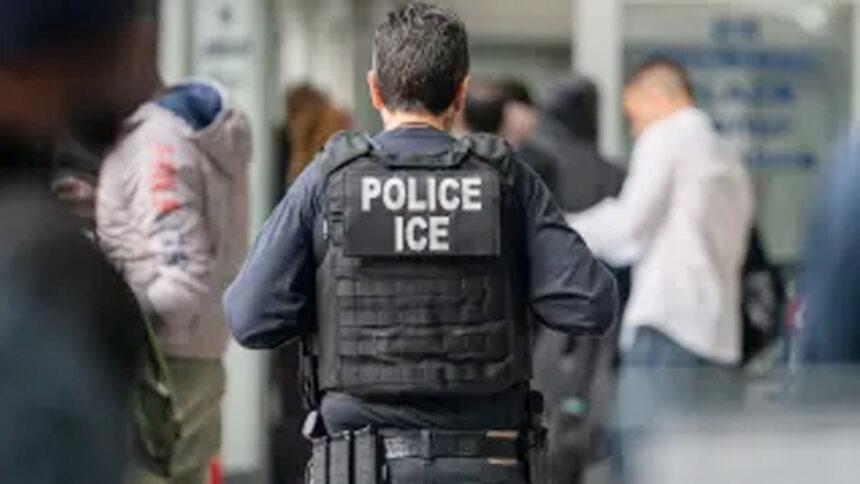
Worksite immigration raids not only spread terror,
they also impact local and national economies.
Immigration raids at workplaces across the United States set off a chain of negative economic effects that ripple through both local and national levels.

Every day, undocumented immigrants in the U.S. perform millions of essential jobs that sustain the country—from farm fields and construction sites to the homes of millions of Americans—across many sectors that rely on their labor.
From California to Florida, hundreds of immigrants have been arrested in aggressive raids by U.S. Immigration and Customs Enforcement (ICE) at worksites, immigration courts, and other locations that were not typically targeted in the past.
The raids that have drawn the most criticism from civil rights and immigrant advocacy groups are those conducted at workplaces.
This fear has driven many workers—those who have not been deported—from sectors like agriculture, elder care, hospitality, and other immigrant-dependent industries to either go into hiding or work in constant fear.

This has not only worsened conditions for undocumented workers but also for the industries that rely on their labor, which is now disappearing due to Trump-era policies, causing a deep economic impact.
Far from being just a law enforcement issue, these actions send shockwaves that affect businesses, workers, communities, and the economy as a whole.
Based on recent economic analyses and reports from various sources, the impact can be broken down as follows:

Impact of Raids on the Local Economy
Communities where raids take place suffer the most immediate and visible effects:
- Paralysis of Key Sectors: Industries like agriculture, construction, food processing, and hospitality, which often depend on immigrant labor, are instantly affected. The detention of workers leads to labor shortages, which can result in unharvested crops, delayed construction projects, and reduced service capacity in restaurants and hotels.
- Contraction of Local Spending: Fear spreads throughout immigrant communities. Families, afraid of being detained, drastically cut back on outings and spending. This translates into a sharp drop in sales for local businesses like grocery stores, restaurants, laundromats, and retail shops. Economic activity freezes, affecting both immigrant and U.S.-born business owners.
- Destabilization of the Labor Market: Contrary to the belief that raids “free up” jobs for citizens, economic studies show a different picture. Wages in affected sectors often stagnate or decline due to instability. Additionally, there is high employee turnover as businesses struggle to find replacements, which does not necessarily lead to better opportunities for native-born workers.
- Increased Burden on Social Services: When a family’s breadwinner is detained, remaining members—often U.S.-citizen children—may need to turn to public assistance. This increases pressure on food banks, child protective services, and other safety-net programs.
Impact on the National Economy
The local effects add up and magnify on a national scale:
- Reduction in Gross Domestic Product (GDP): Immigrants, including undocumented workers, are significant contributors to the economy. They are both producers and consumers. Their mass removal from the workforce reduces the country’s productive capacity. Estimates from the U.S. Congress Joint Economic Committee suggest that large-scale deportations could significantly shrink the national GDP, comparable to the contraction seen during the Great Recession.
- Decline in Tax Revenue: Immigrant workers, regardless of status, pay billions of dollars in federal, state, and local taxes each year, including income taxes, sales taxes, and contributions to Social Security and Medicare. Their removal from the system directly results in lower revenue for these vital programs, affecting their long-term solvency.
- Worsening Labor Shortages: The U.S. already faces worker shortages in several key sectors, partly due to an aging population. Immigrants have been crucial in filling these gaps. Raids and restrictive immigration policies intensify these shortages, which can lead to lower production, supply chain delays, and higher costs for businesses—costs that are eventually passed on to consumers in the form of higher prices (inflation).
- Direct Costs to the Government: Conducting immigration raids is an expensive operation. It involves significant spending on personnel, logistics, detention, and deportation processes. Some analysts argue that these funds could be invested in other areas of the economy.
In conclusion, while worksite immigration raids are framed as law enforcement actions, they have profound and largely negative economic consequences. Locally, they paralyze key sectors and shrink commerce, while nationally, they reduce the workforce, lower tax revenues, may exacerbate inflation, and represent a significant direct cost to the government.