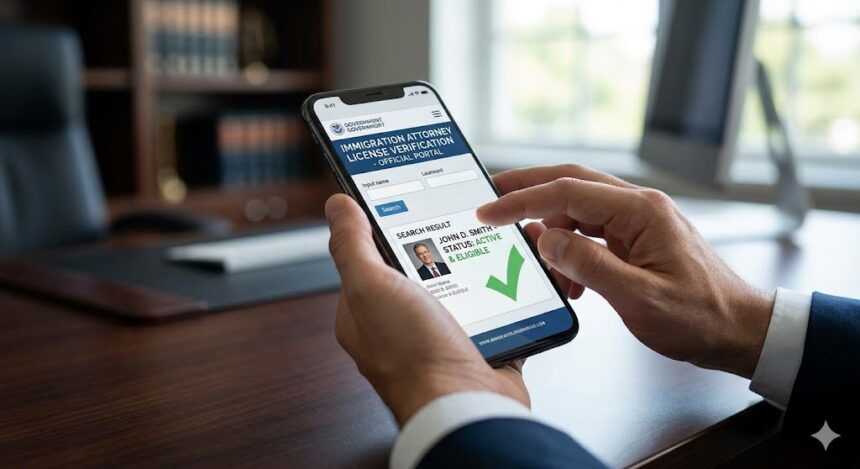
The Cost of Blind Trust: Why a Fancy Office Isn’t Enough
The reality is harsh: in the U.S. immigration system, one mistake is a life sentence. Many of our brothers and sisters arrive with hope in their hearts and end up in the hands of “notaries” or so-called agents who promise miracles—or a fraudulent attorney. The truth is that a poorly filled-out form or fraudulent representation can brand you with a “migration fraud” stamp for life, slamming the door on residency or citizenship forever.
This isn’t just about losing a couple of thousand dollars. We’re talking about your freedom and your ability to stay in this country.

Vital Fact: In the U.S., a “notary” is NOT an attorney. In many of our home countries, a notary is a high-ranking legal professional, but here, they’re simply someone authorized to witness signatures. Trusting your case to a notary is like asking a pharmacist to perform heart surgery.
Quick Answer: How to Verify an Attorney in 2 Minutes
To confirm the legitimacy of an immigration attorney, you must take three mandatory steps: 1. Check the State Bar registry in the state where they practice; 2. Verify they’re not on the EOIR’s “Disciplined Practitioners List” (Immigration Court); and 3. Confirm their membership in AILA (American Immigration Lawyers Association). If their name doesn’t appear with “Active” status, get out of there immediately!

1. The Treasure Map: Verification via the State Bar
Every attorney in the United States, without exception, must be admitted to the “Bar Association” of at least one state. While immigration law is federal (allowing a Florida attorney to represent you in Texas, for example), the professional must hold a valid state license.
- Step 1: Identify the state. Ask directly: “Which state are you admitted to practice in?”
- Step 2: Use Google precisely. Search “[State Name] State Bar Attorney Search.”
- Step 3: Analyze the profile. Don’t just look for the name. Check the “Status” field. It should say “Active” or “In Good Standing.”
- Step 4: Disciplinary history. If you see labels like “Suspended,” “Disbarred,” or “Public Reprimand,” you have your answer. No matter how kind they seem, their record says otherwise.
Table: Directories of the Most Common Bars for Hispanics
| State | Directory Name | What to Check Mandatorily |
| Florida | The Florida Bar (Find a Lawyer) | “Eligible to Practice” status |
| Texas | State Bar of Texas | Admission date and prior sanctions |
| California | State Bar of California | Malpractice insurance |
| New York | NY State Unified Court System | “Currently registered” status |
2. The EOIR Blacklist: The Government’s Filter
The Executive Office for Immigration Review (EOIR) maintains a public list of attorneys who have been suspended or disbarred from practicing before immigration courts. This is the most powerful filter because it comes directly from the Department of Justice.
How to check it?

You must visit the official Department of Justice (DOJ) website and search for the “List of Currently Disciplined Practitioners.”
- What does it mean if they appear there? It means the government has banned them from representing anyone in immigration cases due to serious ethical misconduct, fraud, or incompetence.
- The scammers’ trick: Often, these “former attorneys” continue operating in the shadows, charging in cash and using a puppet attorney to sign paperwork. If the name you’re dealing with is on this list, report them.
3. AILA: The Voluntary Seal of Excellence
While membership in the American Immigration Lawyers Association (AILA) isn’t mandatory, the vast majority of serious and up-to-date professionals belong to it.
- AILA provides continuing education. Immigration law changes every week (literally). An attorney who isn’t part of a professional network often falls behind on defensive strategies.
- Use their official search tool: AilaLawyer.com. If your attorney appears here, it’s an excellent sign they’re committed to the specialty.
4. Red Flags You Can’t Ignore
Sometimes the paperwork says they’re an attorney, but their behavior reeks of a scam. This is where your instincts come in—but backed by logic:

- 100% success guarantees: No one, not even the best attorney in the world, can guarantee an outcome before USCIS or a judge. If they promise you a Green Card “no matter what,” they’re lying.
- Cash-only payments: Reputable firms accept credit cards, checks, or wire transfers. Cash without a receipt is a scammer’s preferred trail.
- “Special relationships” with officials: “I have a contact inside USCIS who speeds everything up.” False. That’s influence peddling, and it’s a federal crime. If an attorney tells you this, run.
- Asking you to sign blank forms: NEVER sign a blank document. They could fill in false information that makes you permanently inadmissible.
Pro Tip: Always ask for a copy of everything submitted to the government. It’s your file, it’s your life. An attorney who refuses to give you copies is hiding something.
5. What to Do If You’ve Already Been Scammed
Shame or fear of deportation often silences victims. But listen carefully: reporting a scammer can help your case.
There are protections for crime victims. Additionally, filing a complaint with the State Bar may help you recover your money or, at the very least, stop this imposter from harming others. The FTC (Federal Trade Commission) also has a specific portal for reporting immigration scams in Spanish.
Image:ElHispanoParaTodos/PRESS