Sending a letter or package in the United States is about to become an everyday “luxury.” It’s not just your imagination; it’s an aggressive financial strategy by the Postal Service. If you’re someone who still mails documents via USPS or runs a small home business, you need to crunch your numbers before summer arrives.
The news has come as a shock: USPS has formally requested to raise First-Class Mail stamp prices by roughly 5%, aiming to implement the increase in July.

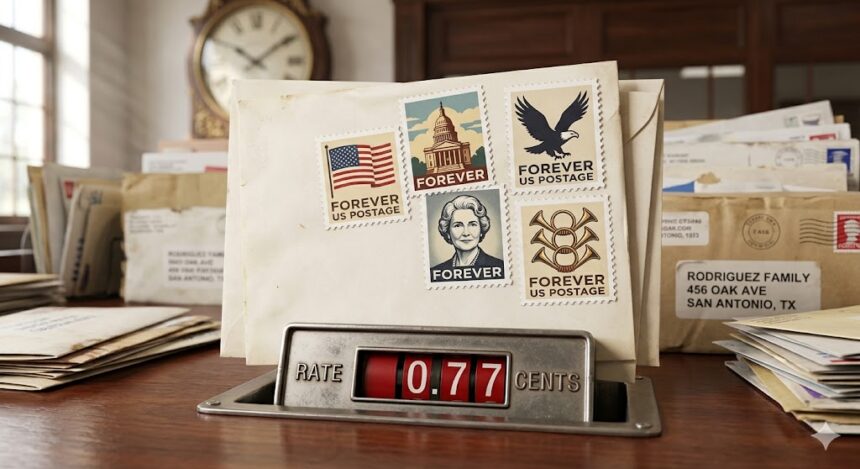
Quick Response (Snippet Bait): The USPS proposal seeks to raise the price of the Forever stamp from the current 73 cents to 77 cents. This adjustment won’t just affect regular letters but also certified mail, international packages, and priority shipping services. If approved by the Postal Regulatory Commission, it will take effect the second week of July 2026.
The Breakdown: How Much More Will You Pay Exactly?
This isn’t just about a few cents here and there. When you add up the annual volume, the impact is real. Louis DeJoy’s administration remains firm on its “Delivering for America” plan, which aims for financial self-sufficiency—but the cost is passed on to users.
Projected Rate Comparison Table
| Service | Current Price | New Price (July) | Percentage Change |
| Forever Stamp (1 oz) | $0.73 | $0.77 | +5.4% |
| Letters (1 oz metric) | $0.73 | $0.77 | +5.4% |
| Domestic Postcards | $0.56 | $0.60 | +7.1% |
| International Letters (1 oz) | $1.65 | $1.74 | +5.4% |
| International Postcards | $1.65 | $1.74 | +5.4% |
It’s interesting how just a couple of years ago, we celebrated stamps not even reaching 60 cents. Today, nearing 80 cents seems inevitable.
Why Are Prices Rising Again? (The Unfiltered Truth)
Many are asking, “Why again?” It’s no coincidence or a bad streak. There are three pillars supporting this decision, and while USPS calls it a “strategic adjustment,” for everyday Hispanics, it’s simply logistical inflation.
- The 10-Year Plan: The “Delivering for America” plan includes biannual increases. That’s right—expect adjustments every January and July until financial balance is achieved.
- Operational Costs and Inflation: Fuel for fleets, maintenance of processing centers, and employee benefits have all increased in cost. Physical mail is declining, but infrastructure costs remain fixed.
- Decline in First-Class Mail Volume: We’re sending fewer personal letters and more emails. To compensate for this loss in volume, USPS is “squeezing” a bit more out of the price per unit mailed.
How This Affects the Hispanic Community
For our community, USPS is vital. Think about sending birth certificates, passport renewals to consulates, or small remittance boxes (packages) to our home countries.

- Immigration Processes: Nearly all USCIS forms require physical mailings. An increase in certified mail and return receipts raises the indirect cost of legalizing your status.
- Small Entrepreneurs (Side Hustles): If you sell on eBay, Etsy, or Facebook Marketplace, this 5% increase must either be passed on to the customer or absorbed into your profits. Golden Tip: Review your shipping rates now.
“Guerrilla” Strategies to Save Before July
The good news is that the system has a small “loophole” you can take advantage of before the calendar hits July 1.
1. The Forever Stamp Trick
This is the oldest (and most effective) trick in the book. Forever stamps are worth the current price of First-Class Mail, no matter when you bought them.
- Action: Buy rolls of 100 stamps now at $0.73. When the price rises to $0.77 in July, they’ll still be valid, and you’ll have saved 5.4% immediately. It’s literally a guaranteed return on investment.
2. Digitize What You Can
If you still receive bank statements or bills by physical mail, many companies offer credits or waive paper-handling fees if you switch to electronic billing.

3. Compare with Competitors (UPS and FedEx)
Sometimes, for heavier packages, USPS stops being the cheapest option after these increases. Use platforms like Pirate Ship or Stamps.com to compare rates in real time. Often, UPS Ground can be more affordable than Priority Mail after July.
What’s Next? The Approval Process
Don’t assume this is already law. USPS presents the proposal to the Postal Regulatory Commission (PRC). However, historically, the PRC rarely blocks these increases, as the postal service legally has some autonomy to adjust prices based on inflation.
The reality is that unless there’s massive opposition or a political shift in Washington, you can count on your next July shipment being more expensive.
Image: ElHispanoParaTodos/PRESS