President of the United States, Donald Trump, announced a new tariff plan that will take effect on August 7, six days later than originally scheduled. The measure imposes a minimum 15% tariff on countries with which the U.S. has a trade deficit, and a 10% tariff on those with which it has a trade surplus. Some countries face higher tariffs for political reasons or for failing to reach a trade agreement before the deadline.
- Most countries saw their tariffs reduced compared to those announced on April 2, when Trump launched the first package under the so-called “Liberation Day” policy.
- Brazil will face an additional 40% surcharge, on top of the base 10%, as retaliation for the trial of former president Jair Bolsonaro, whom Trump considers an ally.
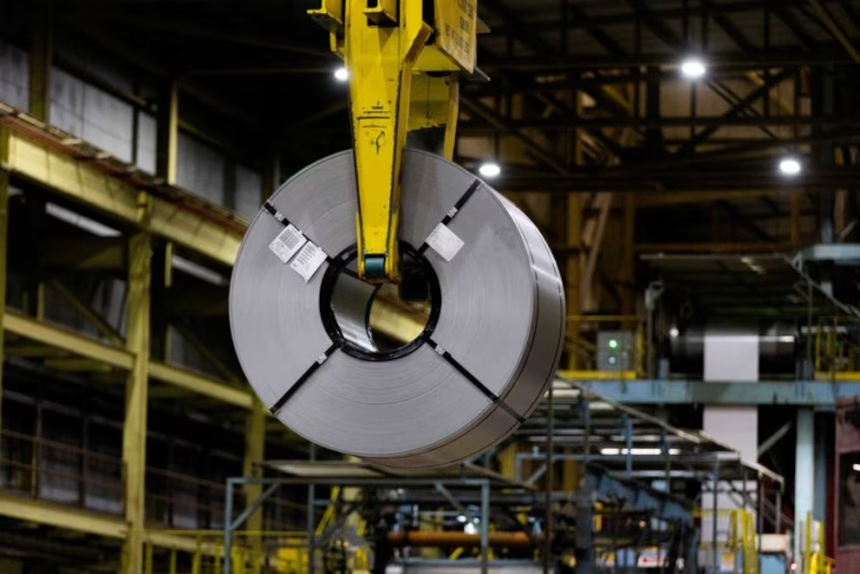
- In addition to the new global tariffs, 50% tariffs on aluminum and steel remain in effect.
- Full list of countries and territories with adjusted reciprocal tariffs:
The executive order was published hours before the July deadline for negotiating terms expired. According to the document, tariffs took effect at 12:01 AM on August 7, Washington time.

“A year ago, the United States was a dead country; now it’s the most attractive in the world,” Trump wrote Thursday on Truth Social, previewing a measure he said aims to counter “this avalanche of tariffs” facing the country.
Most countries saw their tariffs reduced compared to those announced on April 2, when Trump launched the first package under the so-called “Liberation Day” policy.
Notable cases include Cambodia, which dropped from 49% to 19%; Lesotho, from 50% to 15%; Vietnam, from 46% to 20%; Thailand, from 36% to 19%; and Madagascar, from 47% to 15%.
The European Union reached a trade agreement with Washington, leaving its products subject to a 15% tariff. South Korea was placed in the same category. In the case of the United Kingdom, the tariff was set at 10%, the same as for Australia, a country not mentioned in the order, whose Ministry of Trade stated that “the White House has confirmed that no country has lower reciprocal tariffs than Australia.”

Only three countries saw their tariffs increase compared to the April list: the Democratic Republic of the Congo, Equatorial Guinea, and Switzerland, the latter rising from 31% to 39%, the largest increase recorded in Europe.
The countries with the highest tariffs are Syria (41%), Laos (40%), and Myanmar (40%). Rates of 35% were also set for Iraq and Serbia, and 30% for Algeria, Bosnia and Herzegovina, Libya, and South Africa. India was left with a 25% tariff, just one point below the rate set in April.
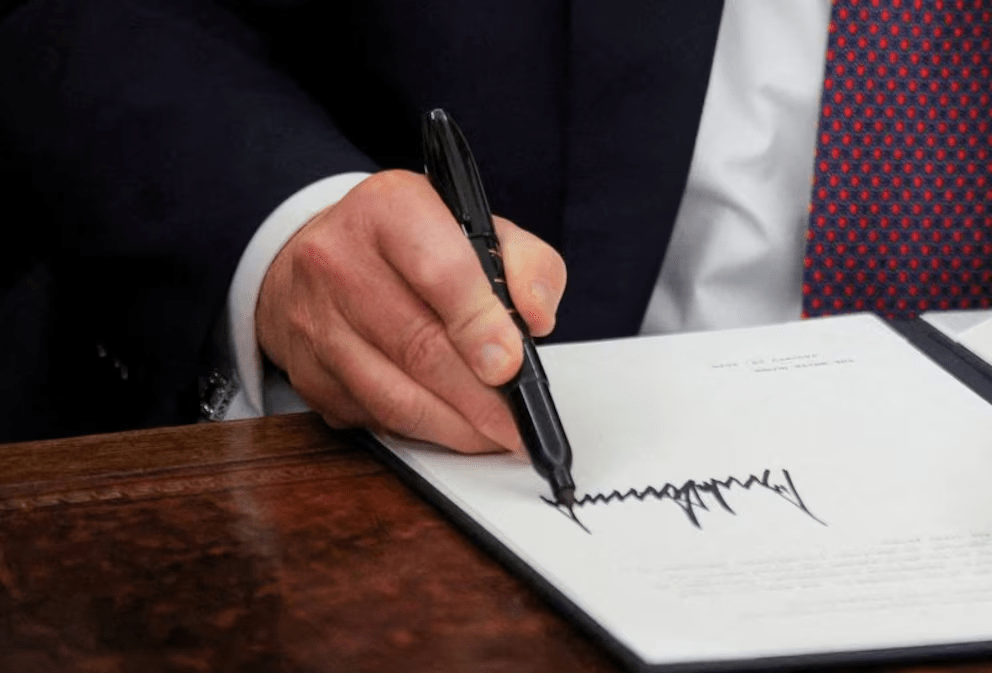
The case of Canada was handled separately. Trump signed a specific executive order that raises tariffs from 25% to 35%, alleging that Canada “has not cooperated to stop the steady flow of fentanyl and other illicit drugs and has retaliated against the United States for the president’s actions to address this unusual threat.” Additionally, a 40% tariff was introduced on Canadian goods considered to be transshipped to avoid tariffs.

Brazil will face an additional 40% surcharge, on top of the base 10%, as retaliation for the trial of former president Jair Bolsonaro, whom Trump considers an ally.
In contrast, Mexico secured a 90-day extension on the application of most tariffs following a conversation between Trump and his Mexican counterpart, Claudia Sheinbaum.
Meanwhile, China reached a temporary agreement: the U.S. reduced its tariffs from 145% to 30%, while Beijing lowered its tariffs from 125% to 10%. Restrictions on rare earth minerals and semiconductor trade were also lifted. Negotiations for a final deal must conclude by August 12. Trump said talks “are going well,” without providing details.
In addition to the new global tariffs, 50% tariffs on aluminum and steel remain in effect.
Trump confirmed that several copper products will receive the same treatment, with exceptions such as cathodes exported by Chile.
At a press conference, White House Press Secretary Karoline Leavitt stated: “Trump is restoring America’s economic sovereignty by reducing our dependence on foreign countries, driving trillions of dollars in investment in the U.S., and creating hundreds of thousands of well-paying jobs.”
Trump also declared that implementation of the plan “is going very well, very smoothly,” and that for countries that did not sign an agreement, “it’s already too late.” When asked about the potential impact on prices, he said: “The only price that has gone up is the hundreds of billions of dollars coming in.”
Asked about the rejection by Brazilian President Luiz Inácio Lula da Silva of his trade agenda, Trump responded: “He doesn’t have to do business with the United States, and I’m fine with that.”
Full list of countries and territories with adjusted reciprocal tariffs:
- Afghanistan: 15%
- Algeria: 30%
- Angola: 15%
- Bangladesh: 20%
- Bolivia: 15%
- Bosnia and Herzegovina: 30%
- Botswana: 15%
- Brazil: 10% (+40% additional)
- Brunei: 25%
- Cambodia: 19%
- Cameroon: 15%
- Chad: 15%
- Costa Rica: 15%
- Ivory Coast: 15%
- Democratic Republic of the Congo: 15%
- Ecuador: 15%
- Equatorial Guinea: 15%
- European Union: 15%
- Falkland Islands: 10%
- Fiji: 15%
- Ghana: 15%
- Guyana: 15%
- Iceland: 15%
- India: 25%
- Indonesia: 19%
- Iraq: 35%
- Israel: 15%
- Japan: 15%
- Jordan: 15%
- Kazakhstan: 25%
- Laos: 40%
- Lesotho: 15%
- Libya: 30%
- Liechtenstein: 15%
- Madagascar: 15%
- Malawi: 15%
- Malaysia: 19%
- Mauritius: 15%
- Moldova: 25%
- Mozambique: 15%
- Myanmar (Burma): 40%
- Namibia: 15%
- Nauru: 15%
- New Zealand: 15%
- Nicaragua: 18%
- Nigeria: 15%
- North Macedonia: 15%
- Norway: 15%
- Pakistan: 19%
- Papua New Guinea: 15%
- Philippines: 19%
- Serbia: 35%
- South Africa: 30%
- South Korea: 15%
- Sri Lanka: 20%
- Switzerland: 39%
- Syria: 41%
- Taiwan: 20%
- Thailand: 19%
- Trinidad and Tobago: 15%
- Tunisia: 25%
- Turkey: 15%
- Uganda: 15%
- United Kingdom: 10%
- Vanuatu: 15%
- Venezuela: 15%
- Vietnam: 20%
- Zambia: 15%
- Zimbabwe: 15%
Image: Infobae