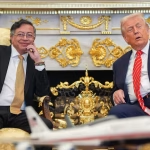
The “Thirst Treaty”: How the Water Agreement Avoided a Trade Collapse
The tension at the border isn’t just measured in walls or patrols; this time, the conflict was over “blue gold.” After weeks of direct threats from the White House about imposing 5% tariffs on all Mexican imports, the governments of Mexico and the United States have announced a historic water agreement that pauses the trade war. The administration of Donald Trump and the government of Claudia Sheinbaum have finally untangled the conflict stemming from Mexico’s failure to comply with the 1944 Water Treaty.
Was it a diplomatic victory or a surrender to economic pressure? The truth is, with the Mexican economy hanging by a tariff thread, there was almost no room to maneuver.


The Heart of the Agreement: Figures and Commitments
The announcement, made official on February 3, 2026, establishes a strict roadmap for Mexico to settle its water debt. Here are the key points you need to know:
- Guaranteed Minimum Delivery: Mexico commits to delivering a minimum of 431.7 million cubic meters (350,000 acre-feet) of water annually.
- Strict Oversight: Monthly follow-up meetings will be implemented to prevent the debt from accumulating again. No more “waiting until the end of the five-year cycle.”
- Repayment Plan: Mexico will present a detailed schedule to pay off the accumulated deficit from the last five years, which, according to official sources, exceeds 980 million cubic meters.
Critical Fact: Water is the lifeblood of the Lower Rio Grande Valley in Texas. Without this agreement, thousands of U.S. farmers faced bankruptcy, which explains Trump’s aggressiveness in the negotiation.
Why Did We Reach the Threat of Tariffs?
To understand the present, we must look to the past. The 1944 Water Treaty is a delicate dance: The United States delivers water from the Colorado River to Mexico, and Mexico delivers water from the Rio Grande to the United States. However, extreme drought in northern Mexico and the lack of modern infrastructure made compliance an impossible mission in recent years.
Trump’s “Big Stick”
Donald Trump used his favorite tactic: tariff pressure. By linking compliance with an environmental/water treaty to foreign trade (USMCA), he forced the Mexican administration to prioritize water deliveries, even above the complaints of farmers in Chihuahua and Tamaulipas.
Is it fair? Maybe not, but in today’s geopolitics, water has become as valuable a bargaining chip as oil.

Comparison Table: The 1944 Treaty vs. the New 2026 Agreement
| Concept | Original Treaty (1944) | New Agreement (2026) |
| Frequency | 5-year cycles | Minimum annual deliveries |
| Payment Mechanism | Flexible based on rainfall | Mandatory monthly monitoring |
| Consequences | Debt accumulation | Immediate risk of tariffs |
| Priority | Multiple uses | Human consumption and external debt |
Impact on the Hispanic Community and Farmers
If you live near the border or have family who depend on farming in northern Mexico, this agreement is a double-edged sword. On one hand, it prevents the price hike of products crossing the border into the U.S., protecting jobs in maquiladoras and export sectors.
On the other hand, farmers in states like Chihuahua face a bleak outlook. By prioritizing water deliveries to Texas to appease Washington, local reservoirs could drop to critical levels, affecting irrigated crops on the Mexican side.
Can it really be fulfilled without sacrificing Mexican farmland? The Sheinbaum administration insists human consumption will be prioritized, but the technical reality is that the water has to come from somewhere, and the clouds don’t seem willing to cooperate anytime soon.

Next Steps for Technical Compliance
- Reservoir Audit: CONAGUA will conduct an actual count of availability in the Rio Grande basin.
- Irrigation Modernization: Investments are promised to make Mexican farmland more efficient and “free up” water for repayment.
- Water Diplomacy: Establishment of a binational technical committee to adjust deliveries in case of natural disasters.
Image: ElHispanoParaTodos/PRESS