


Goodbye to the Department of Education? What No One Is Telling You About the Transfer to the Treasury
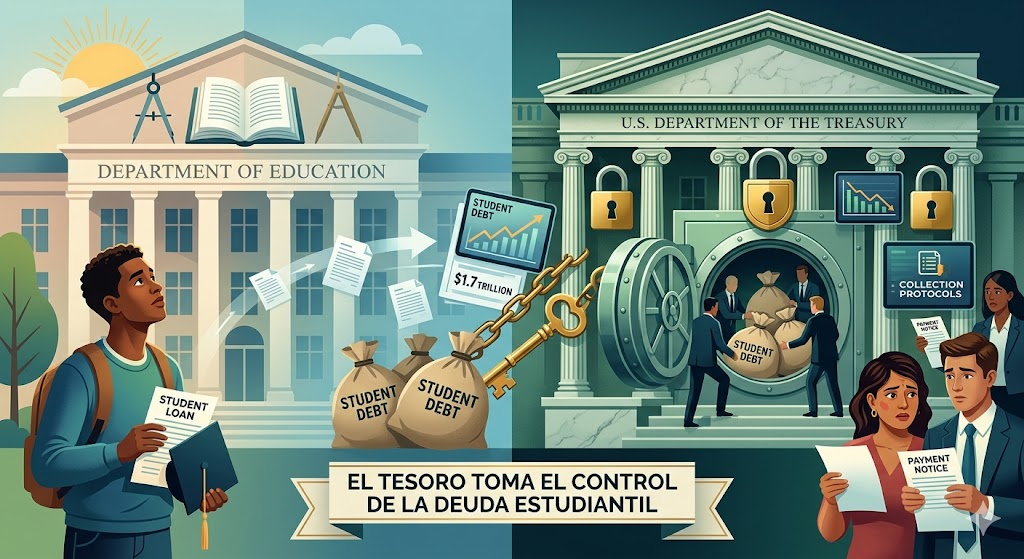
If you have student debt, the ground beneath you just shifted—watch out for collections. This isn’t office gossip: the U.S. government has signed an interagency agreement for the Department of the Treasury to take control of the $1.7 trillion federal student loan portfolio.
The truth is, the Department of Education, under Linda McMahon’s leadership, is being scaled back to its bare bones. But what matters to you isn’t the bureaucracy—it’s your bank account. Why the Treasury? Because they have the muscle the Education Department lacked: the ability to collect debts with the precision of a surgeon and the cold efficiency of a tax collector.

Quick Answer (Snippet Bait): > Starting in March 2026, the Department of the Treasury will assume management of defaulted student loans. In later phases, it will also oversee current loans and the administration of the FAFSA. The immediate impact for borrowers is greater efficiency in wage garnishments and tax refund seizures, as the Treasury doesn’t need “extra permissions” to enforce collections on federal debts under its control.
The 3 Phases of the “Master Plan”: Which Stage Are You In?
The transfer won’t happen overnight, but Phase 1 is already underway. Here’s how the debt crackdown will unfold:
- Phase 1 (Immediate): The “Collections Squad.” The Treasury takes full control of loans in default (more than 270 days past due). This affects roughly 6 million people. The goal is to use private collection agencies and Treasury systems to either “rehabilitate” the debt or collect it by force.
- Phase 2 (Date TBD): Full Management. Loans currently in good standing (paid monthly) will transition to Treasury-run platforms.
- Phase 3 (The Big Shift): The FAFSA. The Treasury will absorb administration of the Federal Student Aid application. This will radically change how students apply for college funding in the future.
Why This Is a “Red Alert” for Your Finances
Here’s where things get interesting (and a little scary). The Department of the Treasury is the same agency that sends your tax refund and manages Social Security. With them in control of your student debt, the “communication” between departments is instantaneous.
Table: Education vs. Treasury (The Rule Change)
| Feature | Before (Dept. of Education) | Now (Dept. of Treasury) |
| Focus | Academic and student-service oriented. | Financial discipline and mass collections. |
| Garnishments | Slow administrative process. | Rapid enforcement via Offset Programs. |
| Forgiveness | Relief programs (e.g., Biden’s) prioritized. | Focus on full repayment and elimination of forgiveness. |
| Intermediaries | Servicers like Nelnet or Mohela. | Transition toward private collection agencies. |
The Ghost of Garnishments in 2026
Can they really take your paycheck? The short answer is yes. With the Treasury in charge, mechanisms that were paused for years are coming back with force:
- Wage Garnishment: They can take up to 15% of your net pay without a court order—just by notifying your employer.
- Tax Refund Seizure: If you were counting on that tax refund to pay bills or fix your car, think again. The Treasury will apply it directly to your loan balance.
- Federal Benefits: Even a portion of certain Social Security benefits could be at risk if the debt stays in the Treasury’s grip too long.
“Moving collections to the Treasury is like replacing a social worker with a Las Vegas loan shark. They’re not here to understand your situation—they’re here for their money.” — Editorial team at El Hispano.
What Should You Do Right Now? (Proactive Steps)
Don’t wait for a letter with the Treasury’s seal. If you have student loans, take these steps:

- Check your status at StudentAid.gov: Make sure your contact information is up to date. If your loan is already in default, the Treasury will be your new “owner.”
- Explore the “One Big Beautiful Bill”: This is the new legislation from the Trump era. Learn about the rehabilitation plans it offers to get out of default before aggressive collections begin.
- Don’t ignore notices: Under the Treasury’s control, legal deadlines are much stricter. A letter ignored today means a smaller paycheck tomorrow.
Image: ElHispanoParaTodos/PRESS





