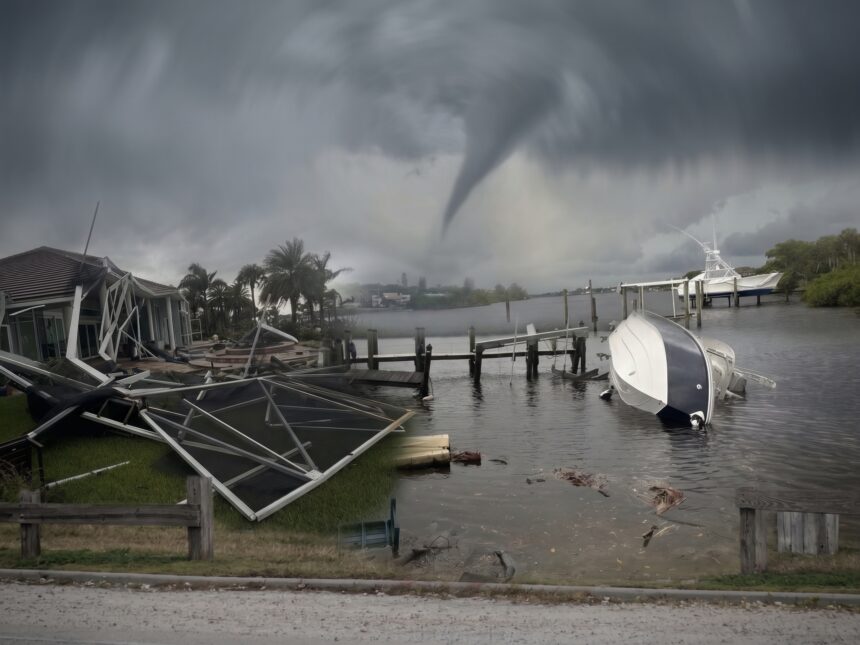
The afternoon and evening of Sunday, August 23, a severe storm system spawned a tornado that left structural damage to dozens of homes in the Port St. Lucie area and surrounding regions.
Following morning assessments, meteorological authorities have confirmed the intensity and path of the phenomenon.

Intensity and Confirmation by the National Weather Service (NWS)
The National Weather Service (NWS), based in Melbourne, confirmed that the phenomenon that struck the area was a EF-0 category tornado.
According to official data, the tornado recorded wind gusts of between 65 and 75 miles per hour (mph). Will Ulrich, an NWS meteorologist, explained that the tornado touched down very close to the Tarpon Bay Yacht Club.
Key details of the event:
- Duration and path: The tornado remained on the ground for approximately 14 minutes, covering a distance of over 2 miles. At one point during its path, it moved along the St. Lucie River as a waterspout before touching down again in another neighborhood.
- Property damage: Between 20 and 30 homes were damaged. Fortunately, no homes were completely destroyed, but the winds caused minor structural damage to roofs, ceiling panels being torn off, fences and tree branches falling, and lifted some pool enclosures from their foundations.
During the emergency, the NWS issued warnings urging residents to take shelter immediately in interior rooms on the lowest floor of sturdy buildings and stay away from windows.

Recommendations for Affected Residents
If your property sustained damage from this EF-0 tornado, it is vital to follow these steps to ensure your safety and facilitate your recovery process:
- Avoid hazards: Do not approach downed power lines and report them immediately to your local energy authorities and 911.
- Document the damage: Before beginning any cleanup or repairs, take detailed photographs and videos of all damage to your home, roof, yard, and vehicles.
- Contact your insurance: Report the claim to your insurance company as soon as possible. Have your policy number and photographic evidence ready.
- Make temporary repairs: Cover holes in roofs or broken windows with tarps to prevent further damage from possible rain, but be sure to keep receipts for materials, as they may be reimbursable.
- Hire licensed professionals: Avoid unlicensed contractors who often appear after disasters. Always verify credentials before signing any repair agreements.
How to Protect Yourself and Safeguard Your Belongings in the Future
Florida is prone to rapid tornado formation, especially during the summer storm and hurricane season. To be prepared for future events, consider the following recommendations:
- Have multiple ways to receive alerts: Download weather apps with push notifications and acquire a NOAA weather radio with a backup battery. NWS alerts save lives.
- Designate a “safe room”: Identify an interior room without windows on the lowest floor of your home (such as a hallway, bathroom, or small closet) to take shelter in case of a tornado warning.
- Secure your surroundings: Regularly trim trees near your home and secure or store outdoor furniture, grills, and trash cans when severe storms are forecasted.
- Review your insurance coverage: Ensure your homeowner’s policy specifically covers wind and tornado damage, and verify that coverage limits are updated according to renovations or the current value of your belongings.
- Emergency kit: Keep a supply backpack with a first-aid kit, flashlights, batteries, water, closed-toe shoes (for walking on debris), and important documents in waterproof bags.
Images From Facebook.