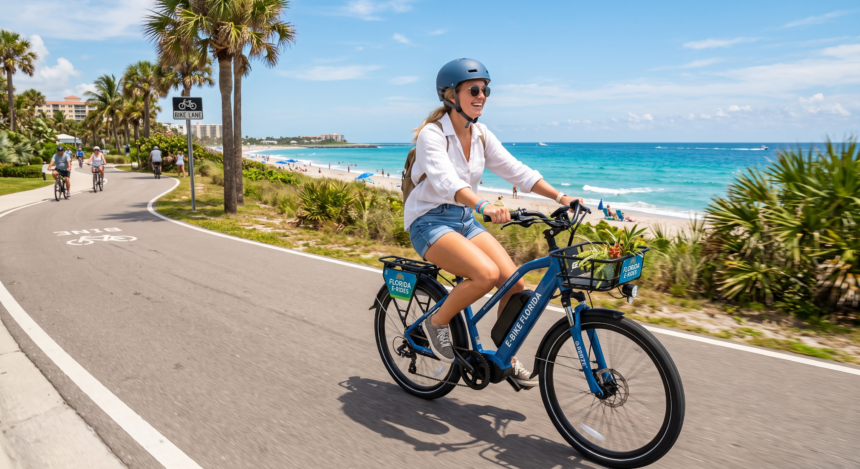
The use of electric bikes (e-bikes) has transformed how residents get around in South Florida, offering an eco-friendly and efficient alternative.
However, their rapid popularity in Palm Beach and the Treasure Coast has also raised public safety concerns, prompting authorities to implement stricter regulations.

Current Regulations and New Laws (2026)

In Florida, electric bikes are classified into three categories, and while they generally do not require registration or insurance, there are specific regulations:
- Class 1: Pedal-assist only, up to 20 mph.
- Class 2: Throttle and pedal-assist, up to 20 mph.
- Class 3: Pedal-assist only, up to 28 mph.
Pay attention to local rules: Laws vary significantly by municipality.
- In much of Palm Beach, e-bikes and scooters are banned from sidewalks to protect pedestrians.
- In Martin County (Treasure Coast), the Sheriff’s Office has implemented a “zero-tolerance” policy, shifting from education to issuing fines and even potential criminal charges for violators. Authorities are actively pursuing those who ride illegal e-bikes (vehicles without pedals, with power exceeding 750W, or that exceed 28 mph) or those who ride recklessly.
- 2026 Legislative Changes: The state has advanced proposals to require Class 3 e-bike riders to have a valid driver’s license or learner’s permit due to their high speeds. Additionally, a mandatory speed limit of 10 mph is being considered when riding within 50 feet of pedestrians on sidewalks and shared paths.
The Hidden Risk: Accidents and Reckless Behavior
Electric bikes are gaining speed rapidly, which means reaction time is reduced, and impacts are far more severe. On the Treasure Coast, multiple complaints have been reported about cyclists—often minors—performing dangerous maneuvers, ignoring traffic laws, and harassing drivers.
The most serious accidents in our region typically occur in:

- Busy intersections along US-1.
- Commercial areas and parking lots.
- Sidewalks with high pedestrian traffic and coastal roads like A1A.
Riding at unsafe speeds, even within the e-bike’s assist capacity, dramatically increases the likelihood of fatal injuries and can be used as evidence of negligence in a legal claim.
Benefits of Micromobility
Despite the challenges, electric bikes offer significant advantages when used responsibly:
- Reduce traffic congestion in busy areas.
- Lower carbon footprints, promoting environmentally friendly and quiet transportation.
- Provide accessible mobility for people who cannot or prefer not to drive a car.
Community Usage Recommendations
To ensure this transportation alternative is safe for all residents, we suggest following these essential guidelines:

| Safety Recommendation | Details |
| Helmet Use | The law requires it for riders under 16, but authorities strongly recommend it for all cyclists, regardless of age. |
| Visibility and Awareness | Wear bright or reflective clothing, use lights at night, and avoid using earbuds while riding to stay alert to your surroundings. |
| Respect Pedestrians | Where local law permits riding on sidewalks, cyclists must always yield to pedestrians and give an audible warning before passing. |
| Predictable Riding | Obey traffic signals, avoid weaving between cars, signal turns, and begin braking well in advance. |
We urge parents to supervise the type of vehicle their children use and ensure compliance with traffic laws. Road safety is everyone’s responsibility, and keeping our streets free of tragedies requires awareness and mutual respect.