


How safe are Florida’s bridges? It’s a question many people are asking after the Baltimore bridge catastrophe.
For those in Stuart, the incident brings back memories of when the Roosevelt Bridge was closed in 2020 over fears it might collapse.

“It was pretty terrifying,” said John Couperous, a Stuart business owner. “A lot of people were pretty upset.”
“They started saying it was going to collapse,” agreed Lisa Freitas, of Lisa Gay Fashions.
At the time, the U.S. Coast Guard issued a radio warning to stay away from the Roosevelt Bridge due to the risk of an “imminent collapse.”
Chunks of concrete had fallen from the bridge, leaving a large crack in its wake.

“It was panic, it was panic,” said Freitas.
“I remember there was some structural damage,” added Couperous.
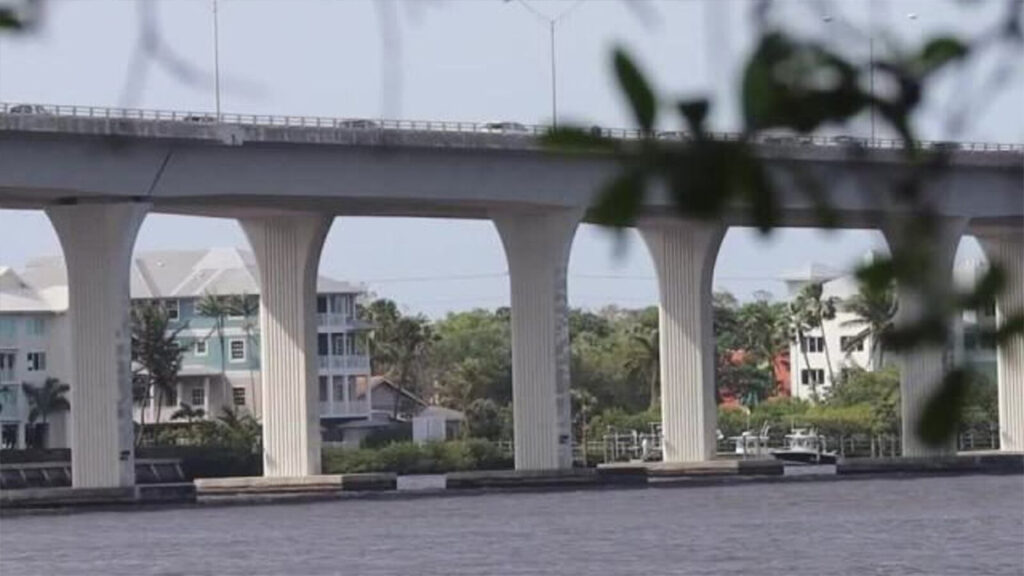
“Just thinking that such a new bridge could have the structural problems it had,” added Steve Rogers.

Florida Department of Transportation (FDOT) crews repaired the bridge and have since said it was never in danger of collapsing.
However, with the Baltimore catastrophe in mind, those fears have resurfaced for some residents.
“Terrifying, first of all, terrifying,” said Freitas.
“It’s definitely scary to hear something like that happen,” said Couperous.
“A potential collapse is terrifying, and our bridge isn’t as old as Baltimore’s,” said Rogers.
The Baltimore bridge collapse was caused by a cargo ship impact.
However, civil engineer Joe McHugh, who now works in bridge forensic analysis, said we can still learn from the bridge’s structure. He said the Francis Scott Key Bridge design may be outdated.
“These bridges should be built to withstand that,” said McHugh.
McHugh said the bridge was built in the 1970s and noted that most newer bridges have infrastructure to prevent the entire bridge from falling if one of the piers is struck.
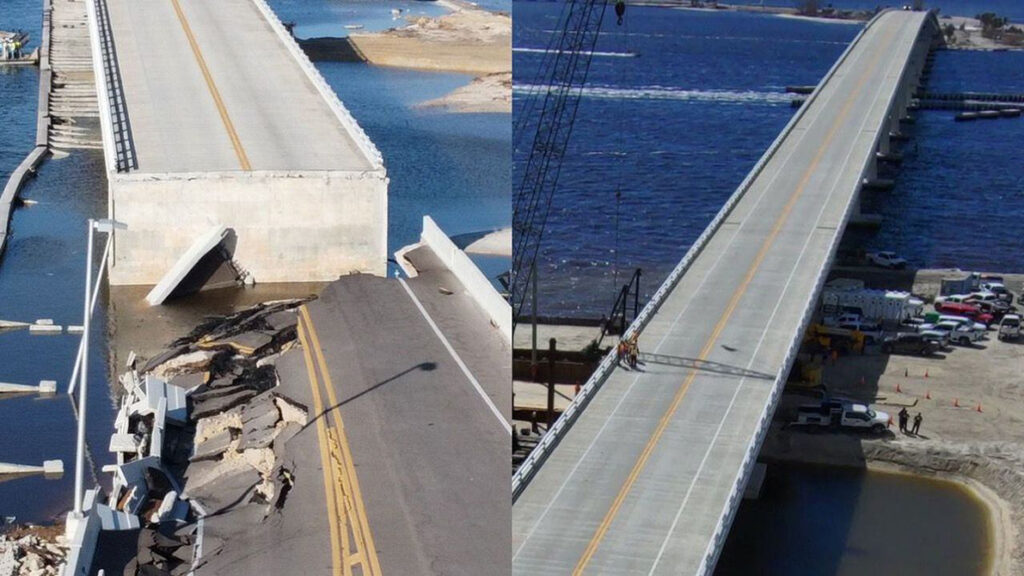
Data from the Florida Department of Transportation (FDOT) was analyzed to see how bridges are holding up in Martin, St. Lucie, Indian River, and Palm Beach counties.
It was found that 30% of bridges in Indian River County are 50 years or older, and 10 bridges in that four-county area are labeled “structurally deficient,” including the North Causeway Bridge in Fort Pierce, which sees an average of 8,600 cars daily, and the Sebastian Inlet Bridge, which averages 3,200 cars daily.
“I’m sure that puts a lot of nervousness in people’s minds,” said Couperous.
It may sound frightening, but McHugh said it’s actually just a technical term.
“It could be peeling paint and qualify as structurally deficient,” said McHugh, “but not necessarily unsafe.”
The FDOT echoed that sentiment, saying a structurally deficient bridge, when left open to traffic, generally requires significant maintenance and repair to remain in service. It will also eventually need rehabilitation or replacement to address deficiencies.
To remain in service, structurally deficient bridges are often posted with weight limits to restrict the gross weight of vehicles using the bridges to less than the maximum weight typically allowed by statute. However, the FDOT says bridges labeled “structurally deficient” are not in any way dangerous to cross.
A 2021 infrastructure report card issued by the American Society of Civil Engineers ranked Florida’s bridge inventory among the best in the country.
In 2020, nearly 65% of Florida’s bridges were in good condition compared to the national figure of 45%, and only about 3% of Florida’s bridges were in poor condition compared to over 7% nationally.

An FDOT spokesperson also issued this statement:
“The Florida Department of Transportation (FDOT) extends its deepest condolences to all those affected by the recent incident. We also extend our gratitude to the first responders currently involved in search and rescue operations. Leveraging our extensive structural engineering expertise and robust bridge inspection processes, FDOT stands ready and prepared to provide any necessary assistance.
Safety and the integrity of our bridge infrastructure is a fundamental commitment we rigorously uphold. Every public bridge within the state undergoes regular inspections conducted by FDOT’s team of trained bridge inspectors. Following any traffic-related incident or adverse weather conditions, such as a hurricane, these bridges are promptly reassessed.
Regarding safety, infrastructure designs consider the unique features and specificities related to the communities in which they are built. In Florida, contemporary bridge designs and constructions incorporate robust measures to mitigate the impact of maritime vessels.
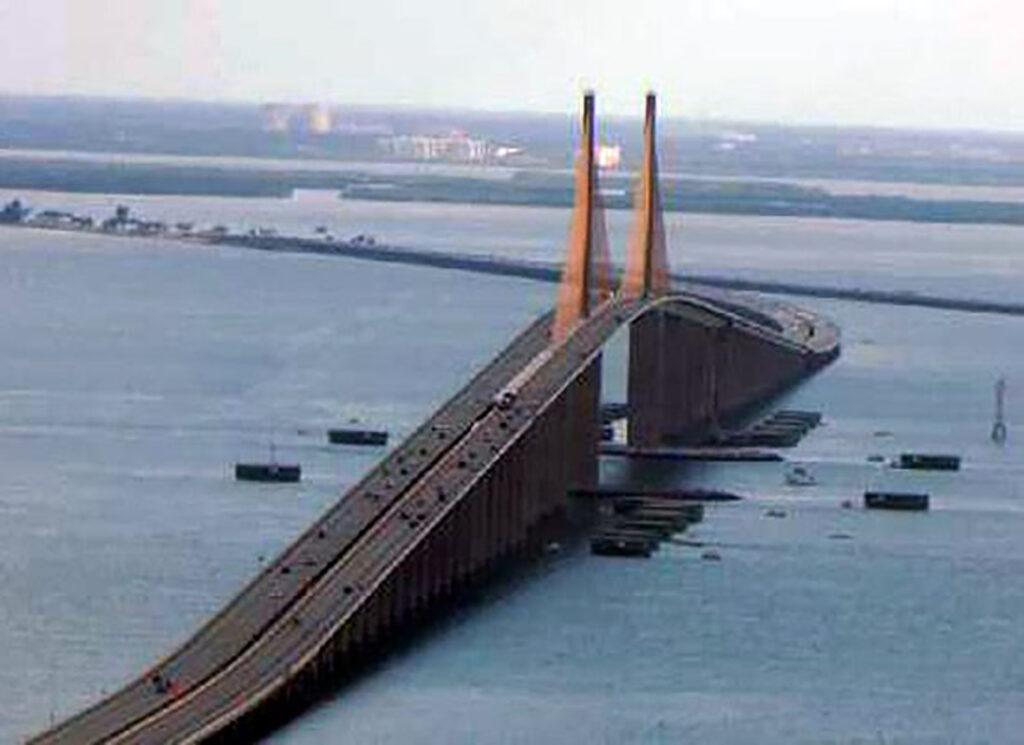
For example, numerous safety enhancements have been implemented on the Skyway Bridge in the Greater Tampa Bay region to protect it against collisions. These measures include raising the bridge, widening the channel, and incorporating two layers of protection for the bridge piers. Notably, elements such as ‘dolphins,’ which serve as physical barriers, as well as rock islands that completely surround the main channel supports and extend to the seabed. Additionally, Florida maintains ongoing coordination with various stakeholders, including local authorities, the U.S. Coast Guard, and port authorities, to ensure comprehensive safety measures are implemented.”
McHugh reassures drivers that they shouldn’t be afraid to cross Florida’s bridges.
Image: Wflx





