A single mother of three in Florida will have to face municipal fines exceeding $165,000. After the Florida Supreme Court refused to review her appeal, putting an end to a legal battle that spanned several years and has raised concerns among property rights advocates across the country.
This is Sandy Martínez, a homeowner in the city of Lantana, Palm Beach County. According to court documents, Martínez accumulated over $100,000 in fines for parking several vehicles in the driveway of her own home. A practice that, according to municipal authorities, violated the local code because two tires occasionally touched the grass.

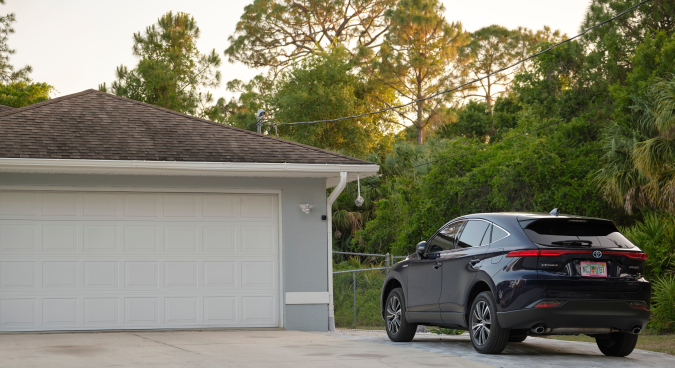
Daily fines for a minor violation
The case file details that the city imposed fines of up to $250 per day for nearly a year, resulting in a six-figure debt for an infraction considered administrative. The penalties began when municipal inspectors determined that four vehicles were parked at the residence, which exceeded the permitted driveway width by a few centimeters.
This condition caused part of the tires to rest on the grass, which local authorities interpreted as a violation of the municipal parking code. From there, the fines accumulated daily without, according to the homeowner, any reasonable solution offered by the city.
In addition to the parking fines, Martínez received tens of thousands of dollars in additional penalties related to a fence damaged during a storm and cracks in her driveway pavement, further worsening her financial situation.
“Ridiculous fines” and no legal recourse
Martínez has called the fines “ridiculous” and stated that the accumulated debt has prevented her from selling her home. Despite Florida’s homestead law, which protects a primary residence from foreclosure.

While this protection prevents the municipality from directly seizing the house, the homeowner argues that the fines have completely wiped out the equity in her property, affecting her financial stability and that of her children.
“The damage is already done. I can’t sell, I can’t refinance, and I don’t see a way out,” she said in statements made during the judicial process.
Constitutional arguments rejected
Martínez was represented by the Institute for Justice, a nonprofit legal organization that defends constitutional and property rights. The attorneys argued that the fines violate the Excessive Fines Clause of the Florida Constitution, as they are clearly disproportionate to minor and non-dangerous infractions.

However, this week the Florida Supreme Court declined to review the case, leaving the lower court decisions intact and definitively closing the legal avenue to reverse the fines imposed by the city of Lantana.
“Six-figure fines for parking on your own property are shocking,” said Ari Bargil, a senior attorney at the Institute for Justice. The litigator criticized the state’s highest court’s decision and warned that the ruling sets a troubling precedent for other homeowners in Florida.
Concerns beyond Florida
The case has drawn attention outside the state, particularly in places like New York, where thousands of homeowners face strict municipal regulations, high administrative fines, and conflicts with local authorities over property maintenance, parking, or usage issues.
Civil rights experts warn that, while these fines are presented as tools to enforce urban codes, in practice they can become disproportionate financial punishments that disproportionately affect working families, single mothers, and low- to middle-income individuals.
In Sandy Martínez’s case, although her home cannot be foreclosed, the fines remain in effect and continue to accrue interest and charges, leaving the homeowner in financial limbo with no clear options to resolve the debt.
A process that has come to an end
The Florida Supreme Court’s decision definitively closes the judicial process initiated by Martínez in 2021 and upholds the fines imposed by the city of Lantana. For legal advocates, the case exposes the limits of constitutional protections against municipal fines and reopens the debate on how far local governments can go in imposing penalties for minor infractions.
Meanwhile, Sandy continues to live in the home she cannot sell, with a debt that far exceeds the value of the violations that caused it and with few legal alternatives to restore her family’s financial stability.
Image: DiarioNY