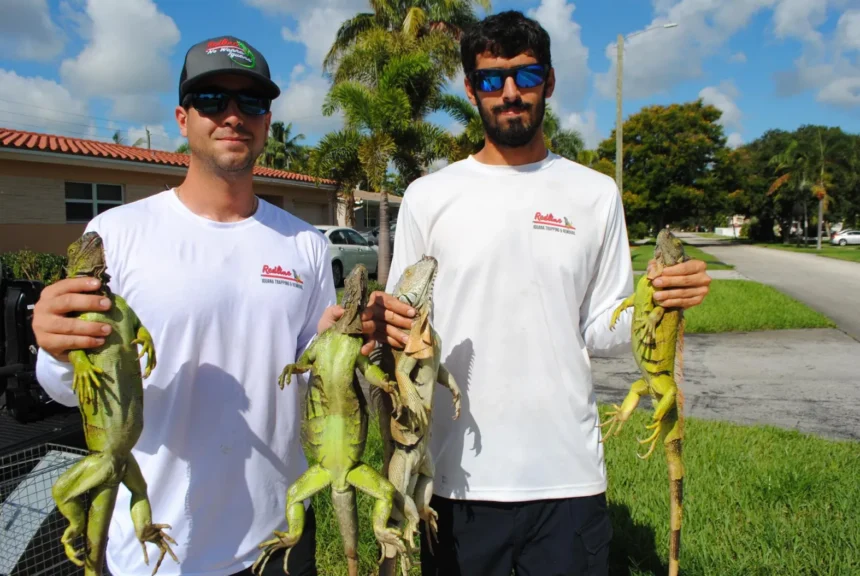
A cold front moving across Florida this weekend has sent temperatures to their lowest levels since late March, reigniting preventive alerts about possible scattered falls of green iguanas from trees. Although the temperature drop is significant statewide, meteorologists say the cold in South Florida is unlikely to be extreme or prolonged enough to cause a widespread mass fall, primarily affecting young or small specimens.
Temperature Forecast by Region
| Region / City | Forecast Low | Forecast High | Typical November Average |
| South Florida (Miami / West Palm Beach) | 50–59 °F (10–15 °C) | 70–73 °F (21–23 °C) | 81–82 °F (27–28 °C) |
| Central Florida (Orlando) | 47 °F (8 °C) | 65 °F (18 °C) | 59–79 °F (15–26 °C) |
| North and Northwest (Tallahassee / Panhandle) | As low as 34 °F (1 °C) with frost advisory | 61 °F (16 °C) | 73 °F (23 °C) high |
Why Do They Fall from Trees, and What Does the FWC Recommend?
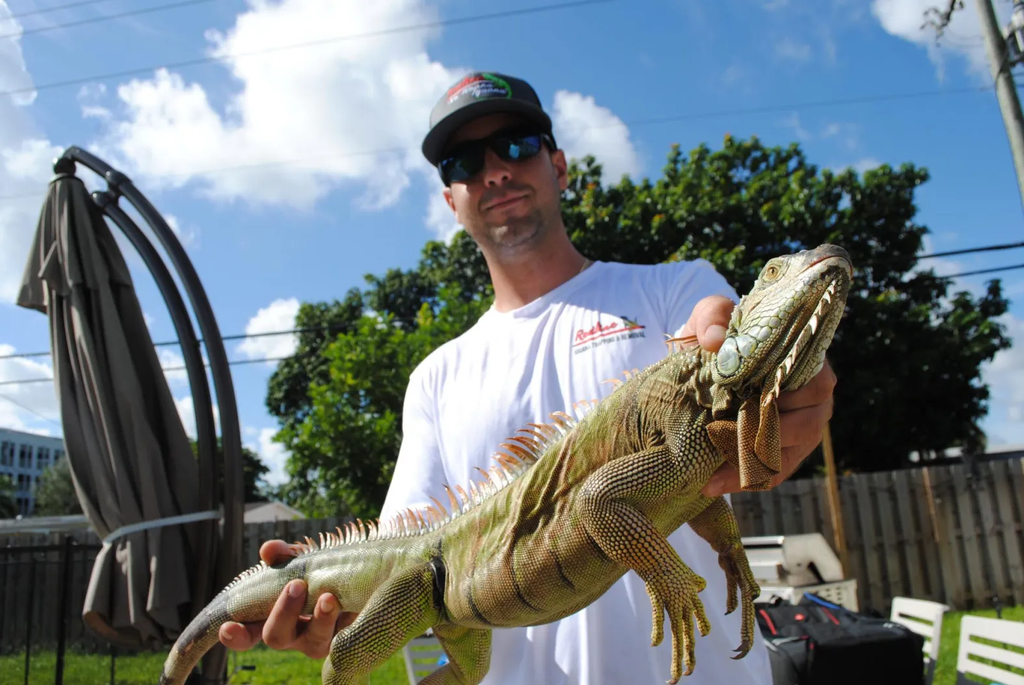
Green iguanas are cold-blooded reptiles native to Central and South America that do not tolerate low temperatures well. When the environment suddenly cools—especially near 40 °F (4 °C) or below—their metabolism slows, and they enter a temporary state of torpor, losing muscle control and their grip on branches. They do not die from this stupor but regain mobility once it warms up again.

In response, the Florida Fish and Wildlife Conservation Commission (FWC) maintains the following guidelines:
- Do not take them home or into your vehicle: Authorities urge the public not to pick up motionless iguanas to warm them in enclosed spaces. Once their body temperature rises, they wake up suddenly and may bite, scratch, or strike with their tail out of defensive instinct.
- No transport or possession allowed: Since green iguanas are classified as an invasive species in Florida—due to the damage they cause to gardens, foundations, sidewalks, and native plants—it is illegal to keep live iguanas without a permit, release them, or transport them to another location.
- No collection centers this time: Unlike the intense cold snap in February, when the FWC set up temporary drop-off points and collected more than 5,000 specimens in two days, the agency confirmed it will not activate that special operation during this cold front.