The FBI Won’t Call You to Ask for Zelle: The Truth About the Wave of Scams in South Florida
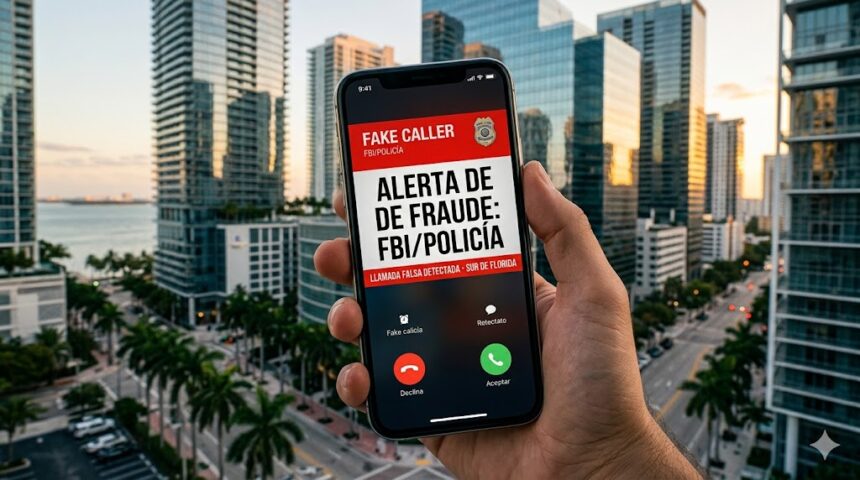
If you live in Miami, Fort Lauderdale, or West Palm Beach and receive a call from a “Fake Federal Agent” threatening jail unless you pay an immediate bond, hang up the phone. It doesn’t matter if your screen shows “FBI Miami” or “Plantation Police Department.” It’s a technical trap designed to cloud your judgment with panic.
The reality is harsh: According to the Internet Crime Complaint Center (IC3), Florida alone lost over $12 million to government impersonation scams last year. And in 2026, the tactic has evolved with the use of artificial intelligence to clone voices and unprecedented aggression.

Quick Response (Snippet Bait): Federal and local authorities in South Florida will NEVER call you to demand immediate payments, request transfers via Zelle, cryptocurrencies, or gift cards, or threaten immediate arrest if you don’t provide financial information. If you receive such a call, it’s a government impersonation scam (spoofing). Hang up immediately and report the incident at ic3.gov.
Anatomy of the Deception: Why Does It Seem So Real?
Here’s what’s interesting (and terrifying). Criminals are no longer just scammers with poorly written scripts; they now act like elite “social engineers.”
1. The Caller ID Trick (Spoofing)
Using software applications, scammers can make the caller ID on your iPhone or Android display the real number of the FBI’s Miami offices or your local police station. Seeing an official number creates immediate trust, which they exploit.
2. Use of Real Agents’ Names
How do they know the name of the police chief or a special agent? It’s simple: the information is public. Criminals mention real names and badge numbers so that if you decide to look them up on Google while on the call, you’ll “confirm” the person exists.
3. Urgency: The Weapon of Fear
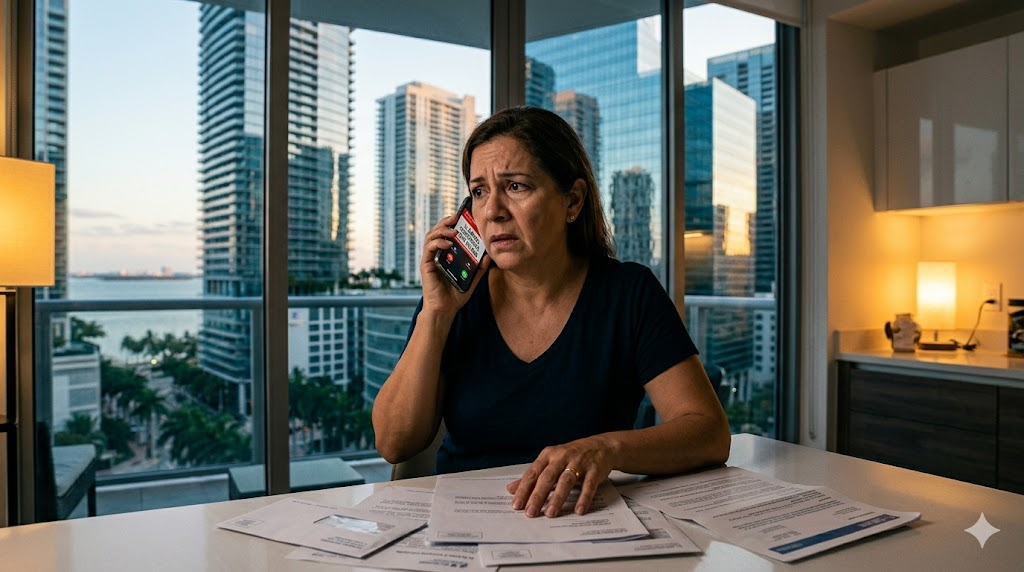
The main technique is intimidation. They’ll tell you your Social Security number has been suspended, that there’s an arrest warrant in your name for money laundering, or that you’re a “key witness” in a criminal case and must pay a “protection fee” for your assets.

Red Flags You Can’t Ignore (Survival Checklist)
To avoid being caught off guard, we’ve prepared this comparison table between an official interaction and a scam:
| Characteristic | Real Agency (FBI / Police) | Scammer (Criminal) |
| Initial contact method | Official mail or in-person visit (subpage). | Phone call, SMS, or WhatsApp. |
| Payment method demanded | Legal processes in courts. | Zelle, Crypto, Gift Cards. |
| Tone of conversation | Professional and procedural. | Threatening, urgent, and aggressive. |
| Privacy | They allow you to verify and hang up. | They forbid you from hanging up or speaking to family. |
What to Do If You Receive a Call from a Fake Agent (Step by Step)
The truth is, it’s easy to panic when someone yells that a patrol car is on its way to your house. But take a breath and follow this protocol:
- Hang up without saying a word: Don’t try to “troll” the scammer. Speaking confirms your line is active and that you’re a potential target for future scams.
- Don’t trust the number on your screen: Remember that spoofing is commonplace in South Florida.
- Manual verification: If you’re truly in doubt, look up the agency’s official number on its government website (.gov) and call them yourself. Never use the number the suspect provided.
- Protect your data: Never give out the last four digits of your Social Security number, your date of birth, or—much less—your banking passwords.
Pro Tip: Many of these calls originate from call centers outside the U.S., making them hard to trace, but local authorities are working with telecom providers to implement the STIR/SHAKEN protocol and reduce these junk calls.
Where to Report in Florida
If you or an elderly family member (who are often the favorite targets) have fallen for this scam, time is critical:

- FBI Internet Crime Complaint Center: Visit ic3.gov.
- Florida Attorney General’s Hotline: Call 1-866-9-NO-SCAM.
- Local Police: File a report to document the fraud attempt.
Image: ElHispanoParaTodos/PRESS